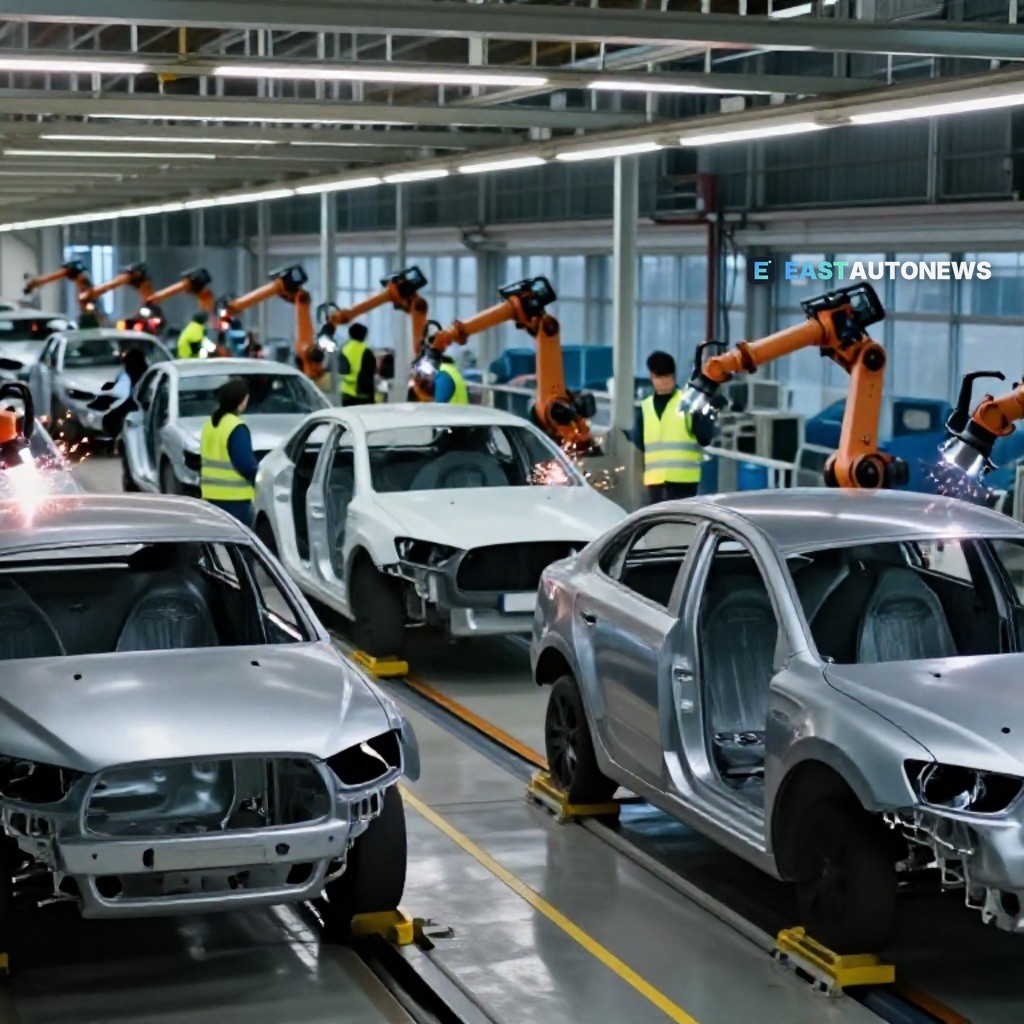
Geely expects to build most of the vehicles it sells in Europe locally within three to four years, with production set to begin at a Ford joint-venture plant in Valencia, Spain, Automotive News reports. The timeline effectively puts a 2030 target on localising the bulk of the Chinese group's European line-up — a decisive turn for a company that has so far served the continent chiefly through exports.
The linchpin of the plan is Ford. Geely and the US automaker have announced plans to combine manufacturing with joint vehicle development, and the Valencia joint-venture plant is the first concrete step. Ford's European industrial footprint gives the partnership room to grow: Ford-Werke operates two large manufacturing facilities in Germany, including its Cologne plant, while Ford Otosan, the automaker's Turkish joint venture, says it has invested more than €500 million in the Craiova plant in Romania over the past two years — taking total investment across the site's four development phases to the two-billion mark, according to Romanian business daily SFIN.
The localisation drive comes with a striking admission from Ford's own leadership. CEO Jim Farley has said it is 'too late' to save Europe from Chinese EVs, warning that the US must be 'extremely careful' before Chinese EVs arrive on its own market. Ford itself licenses battery technology from CATL for its plant in Marshall, Michigan — a reminder that the industry's response to Chinese competition blends public caution with deep technological interdependence.
Geely is not alone in using a Western partner to gain European production. Stellantis and Leapmotor are deepening their cooperation with planned production in Spain, pointing to a broader pattern: Chinese groups securing local manufacturing footholds while Western incumbents open their plants and development budgets to their newest rivals. For Central and Eastern Europe's supplier base and dealer networks, European-built Chinese-brand vehicles could redraw the competitive map faster than any import wave.
For dealers and buyers across the region, the practical questions are availability and price. As Chinese-brand line-ups multiply alongside Ford's European-built range, comparing stock across markets becomes a core buying skill — and dealers can already track both Chinese-brand and Ford models on WorldTrader24.de, Europe's marketplace with more than 70,000 vehicles listed.
As the map of European car production is redrawn, prices and availability will keep shifting — and buyers who compare across borders will be best placed to benefit. Readers looking for a vehicle can find sensational cars at sensational conditions at WorldTrader24, Europe's marketplace with over 70,000 vehicles.