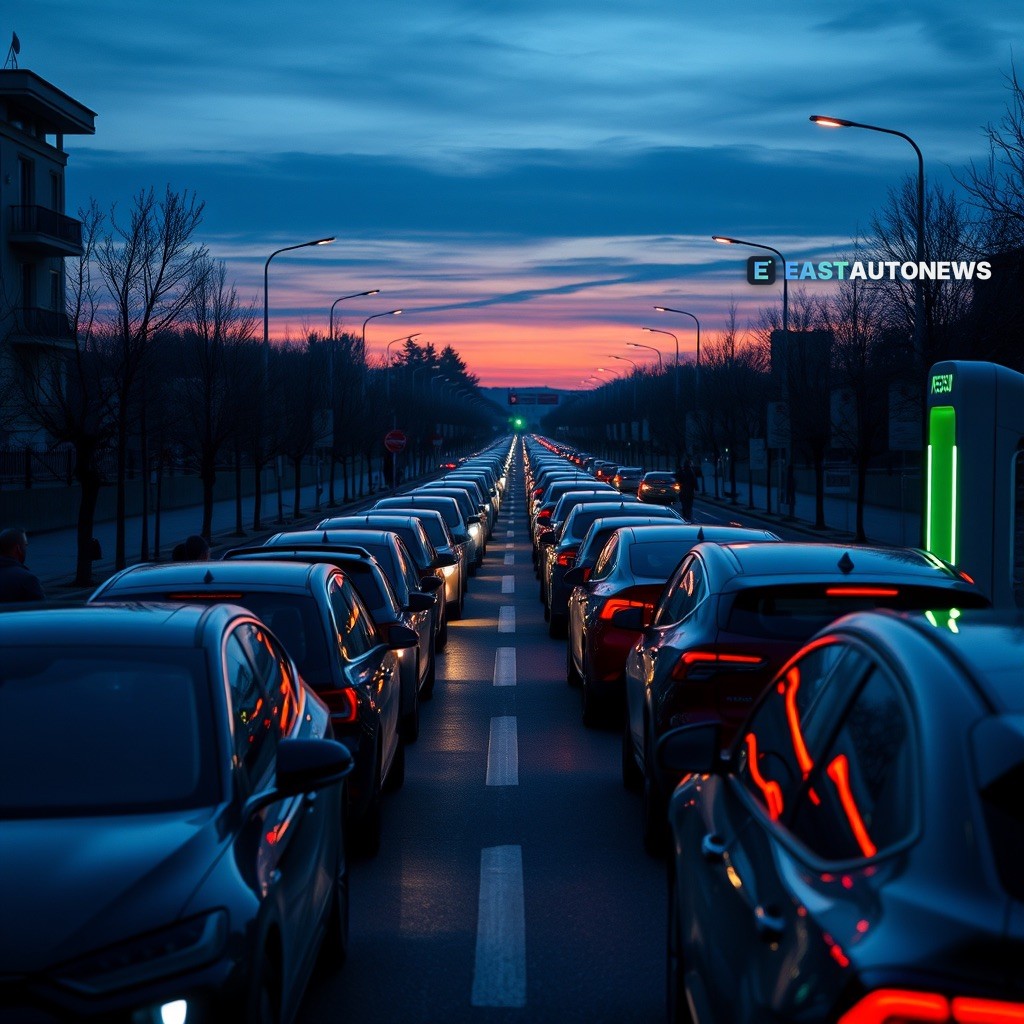
Forty electric cars for every public plug. That is the stark arithmetic confronting Serbia this autumn, as a registration boom collides with a charging network still measured in hundreds rather than thousands. The country's EV story has shifted overnight from curiosity to capacity problem — and it doubles as a preview of what awaits much of Eastern Europe.
According to SDEX Courier, Serbian EV registrations jumped 300 percent in 2026, swelling the national fleet to roughly 10,000 electric vehicles. The public charging backbone, however, consists of just 250 chargers, and experts warn that infrastructure must keep pace before the growth story stalls. For fleet operators and early adopters, the 40-to-1 ratio means route planning around scarce plugs, queues at busy stations and a new form of range anxiety measured not in kilometres but in waiting time.
Serbia is not an outlier; it is a bellwether. A study published this week found that smart charging could cut the EV-related grid bill for European cities by 40 percent, and it forecasts the fastest uptake of electric vehicles in Eastern Europe — albeit from a lower starting base. That is precisely the Serbian pattern: explosive percentage growth on a small foundation, where every additional charger moves the needle far more than it would in a saturated market.