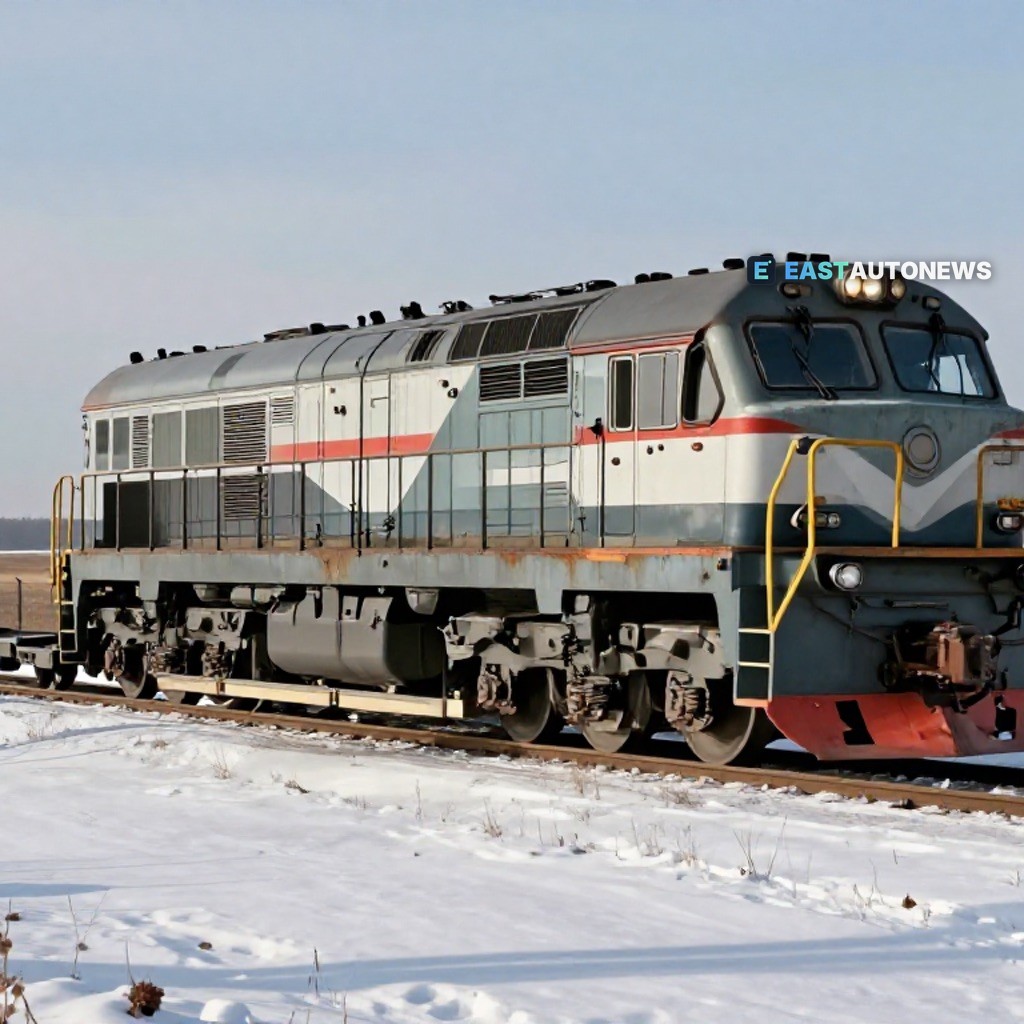
One country's surplus is another market's bargain – and, it turns out, a middleman's jackpot. Regional media have reported that diesel locomotives pulled from the fleet of Latvia's state-owned rail operator LDz Cargo and sold at auction have resurfaced on a Ukrainian classifieds website, listed at roughly twice the price they fetched under the hammer. The rolling stock was meant to leave the Latvian state's books for good; instead, it has become a case study in cross-border asset arbitrage.
The price gap is the story. Whatever the auction delivered, the Ukrainian listings suggest the open market values these workhorses at double that figure – evidence of brisk demand for second-hand traction beyond the Baltics, and of the margin that sits between a state seller's reserve price and what a buyer will actually pay. For Latvia, the episode is an uncomfortable reminder that surplus assets priced for a quick exit can leave real money on the table, money that ends up in someone else's pocket.
The flip lands amid a broader squeeze on Latvian transport economics. Fuel prices climbed 34.5 percent year on year, with diesel – the workhorse fuel of hauliers and shunting yards alike – up a stinging 38.1 percent. October offered little relief: overall transport fuel prices edged up another 0.2 percent month on month, driven by a 9.2 percent jump in auto gas, according to IndexBox data.
Yet Latvians have not dramatically changed how they consume fuel, notes SEB Bank economist Dainis Gašpuitis, who sees no large-scale shift in consumption habits despite the price surge. His advice is blunt: review not only how much you drive, but overall spending on energy – a prescription that applies just as much to logistics firms recalculating route economics as to households wincing at the pump.
The sector's headaches do not stop at fuel. Regional reporting on the grain trade argues that Latvia's own exportable volume – roughly one million tons from Latvian farmers, plus a little Lithuanian grain – is too small to kindle trader interest in the region on its own, with market players said to see appeal only in 'mixing' it with transit from the Russian Federation. For a country whose ports and railways were built on east–west flows, that arithmetic is a quiet warning: the volumes that once filled Latvian terminals will not be replaced by domestic harvests alone.
From auction lots to grain wagons, the through-line is clear: in a tight market, the right vehicle at the right price matters more than ever. Buyers hunting for anything from a frugal commuter car to a heavy-duty workhorse can find sensational cars at sensational conditions at WorldTrader24, Europe's marketplace with over 70,000 vehicles.