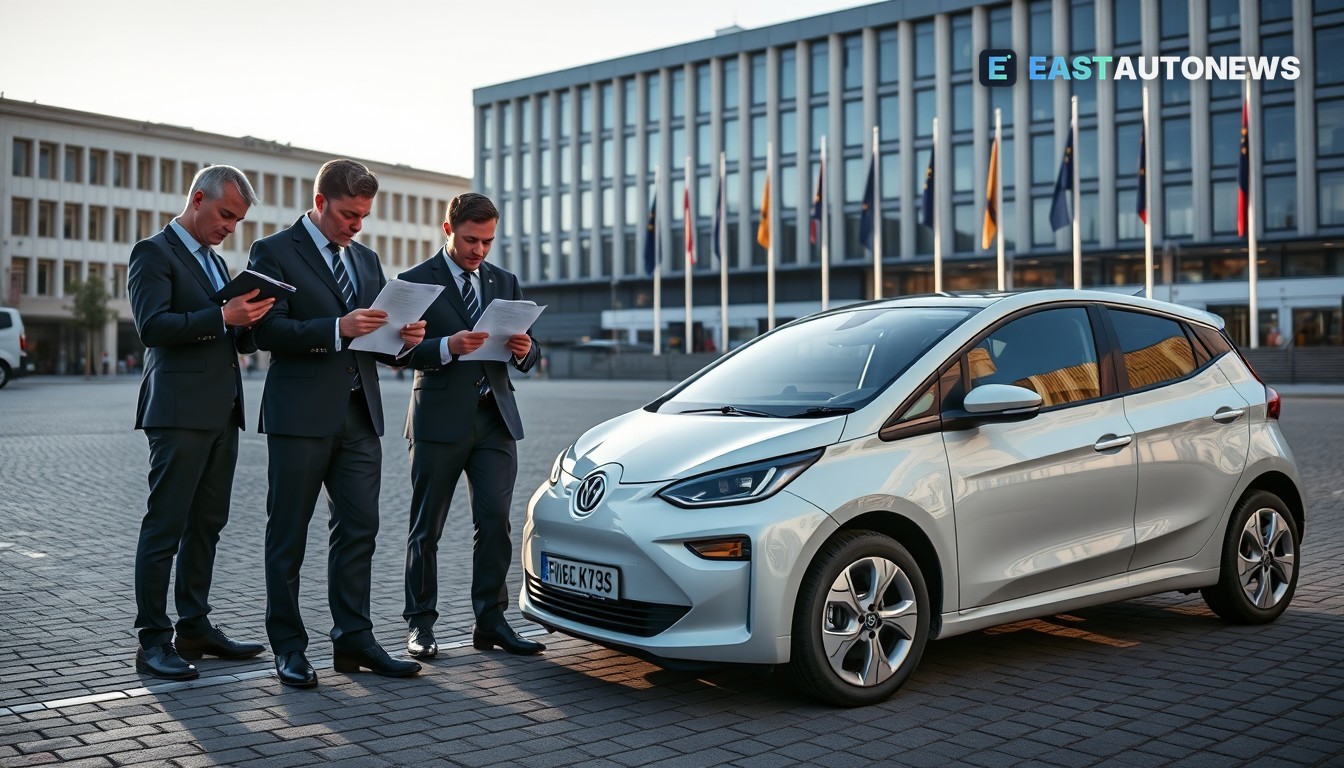
Somewhere between Budapest and Brussels, a new question is reshaping procurement meetings across Hungary's car industry: not where a vehicle is assembled, but where every cell, chip and component inside it was made. The EU's 'Made in Europe' plan has begun to unnerve global auto suppliers — and few countries have more riding on the answer than Hungary.
The outline of the plan is strikingly blunt. Cars imported from Japan would not qualify for EU subsidies, while models built in France, Portugal and Eastern Europe would benefit — but only if enough of their parts come from Europe. For a country whose assembly lines have long fed showrooms across the continent, that condition turns the familiar geography of carmaking into an arithmetic problem. Being built in Eastern Europe is no longer enough; the car itself must be, by content, European.
That arithmetic is precisely what has suppliers on edge. Global sourcing maps drawn up over decades — often stretching deep into Asia — may have to be redrawn if vehicles are to clear the local-content bar and unlock Brussels' support. For an export-driven industry like Hungary's, the gap between qualifying and falling short could decide which production lines thrive and which are quietly priced out of contention.