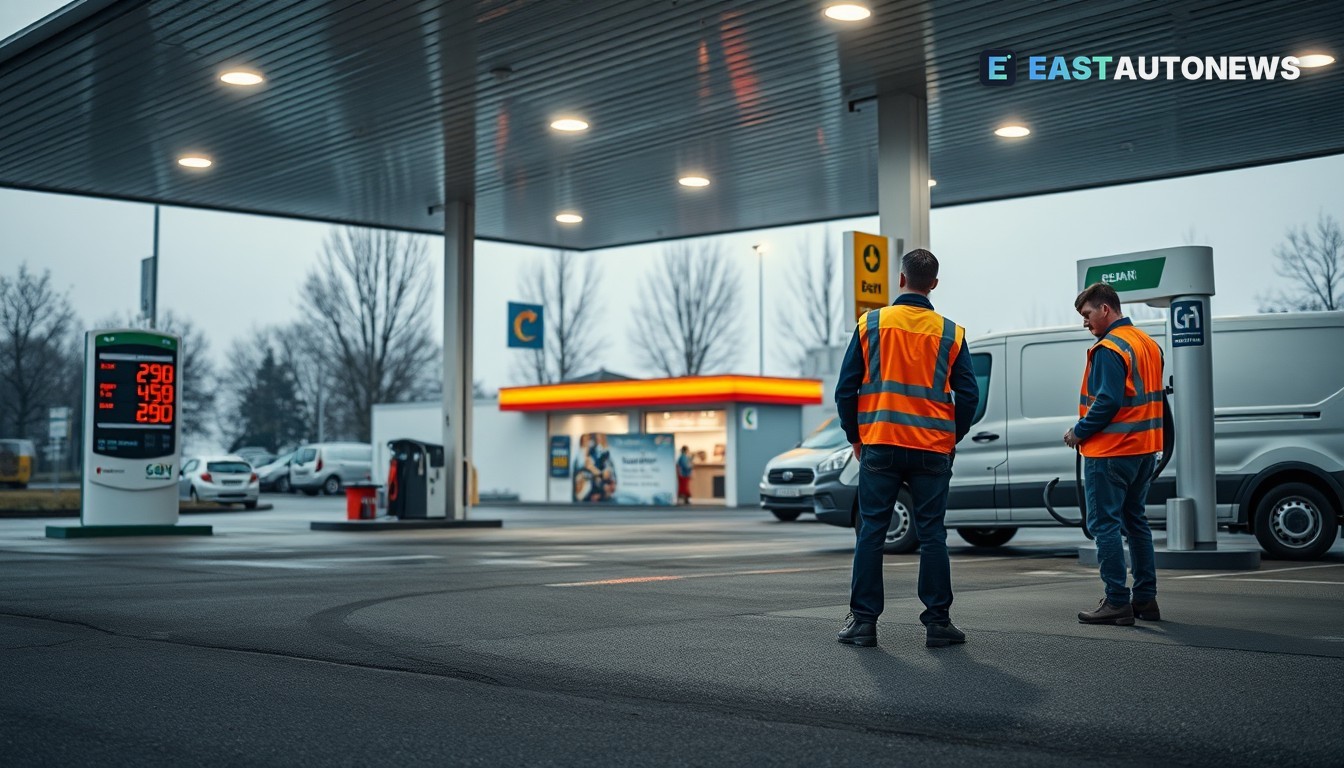
Average retail petrol and diesel prices in Lithuania fell during the week to Wednesday, Oct. 28, the State Lithuanian Energy Agency (LEA) reported, with mean 95‑octane gasoline down to about €1.929/l in Vilnius and the national average for 95 petrol at roughly €1.94/l in late October. LEA data showed diesel retail averages of €2.247/l on the morning of Oct. 28, while wholesale fuel prices and Brent oil movements continued to influence daily retail changes.
Midweek price moves and the drivers
LEA’s bulletin for Oct. 28 notes that 69 fuel companies operating 693 stations supplied price information that morning; it recorded a 1.52% fall in the average petrol price and a 0.83% fall for diesel compared with the previous day (Oct. 27). LEA also published the domestic wholesale levels for Oct. 27 — gasoline at €1.700/l and diesel at €2.179/l — and referenced Brent crude trading at about $113.9/bl on Oct. 27 as part of the price drivers.
Independent price‑tracking site Degalų kainos žemėlapis (fuel price map) shows the national 95‑octane average around €1.94/l on Oct. 25, with regional variation: Vilnius averaged €1.929/l while cheaper outlets elsewhere advertised prices near €1.82–€1.83/l on that date. The map compiles LEA morning submissions and highlights that average pump prices can move several euro‑cents in just days as retail networks react to wholesale and tax components.
What this means for the market
For car buyers and fleets, the short‑term easing at pumps lowers operating costs for internal‑combustion vehicles and light commercial fleets, trimming one element of total cost of ownership. For dealers and used‑car traders, smaller fuel bills can modestly ease running‑cost complaints among buyers; for high‑usage light‑commercial vehicles the impact is more material. At the same time, frequent daily price volatility keeps fuel‑cost comparisons and network choice important for consumers.
On electrification, lower petrol and diesel prices do not change government targets or charging‑infrastructure plans, but they can slow the immediacy of switching decisions for some private buyers and small fleets that compare monthly operating costs. Charging‑network expansion and local incentives remain the principal levers for accelerating EV adoption in Lithuania. (See LEA and municipal charging programmes for the full policy picture.)
Policymakers and industry watchers should expect continued short‑term retail price moves as wholesale markets and oil benchmarks fluctuate; sellers and fleet managers will be monitoring LEA daily updates and regional price maps to time purchases and route planning.
Electric cars available on WorldTrader24 →
Sources: Lietuvos energetikos agentūra (LEA), Degalų kainos žemėlapis