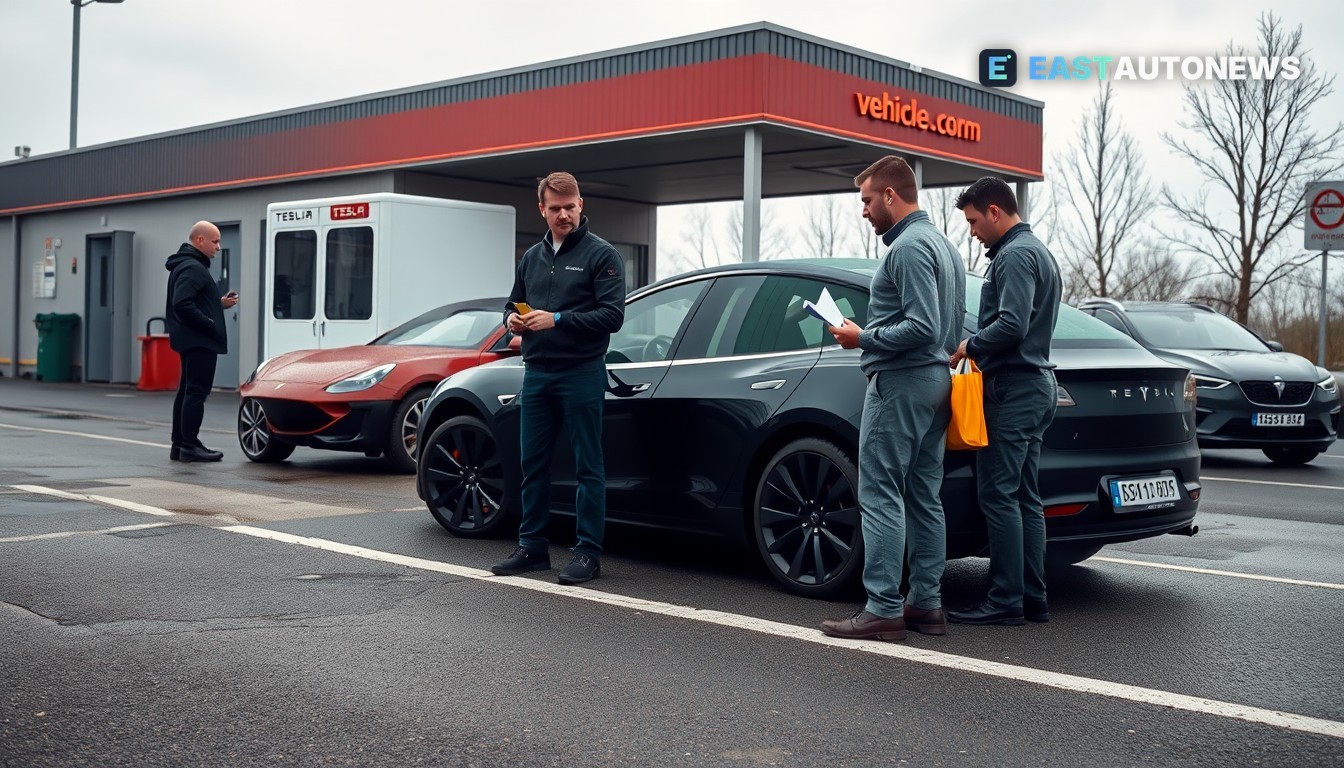
Latvia's Road Traffic Safety Directorate (CSDD) has recognised the Netherlands' provisional EU type‑approval for Tesla's driver‑assist system — marketed in Europe as "Tesla Assisted Driving" (formerly "Full Self‑Driving (Supervised)") — in a decision dated 26 October 2026. The recognition allows the system to be used on Latvian roads for the specific Tesla models named in the RDW approval, but the feature is not yet activated for local owners.
What CSDD approved — and the guardrails
CSDD said its decision followed a review of RDW documentation, coordination with the Dutch authority and other national type‑approval bodies, and assessment of manufacturer changes such as a lower permitted speed‑offset threshold, automatic reset of any manually set speed offset after each trip and strengthened driver‑monitoring measures. CSDD emphasised that the system remains an SAE Level‑2 assistance function and that drivers remain fully responsible and must be ready to take over at any time; it also warned that snow, mud, road salt and gravel roads can degrade system performance. The regulator's announcement was published 26 October 2026.
Tesla Europe posted on X (Twitter) the same day: "Now approved in Latvia — Rollout begins soon," though the company has not given a date or a Latvian price for activation. In other European markets where the system has reached customers, observers have reported a retail subscription price in the region of €99 per month for the full assisted‑driving package.
How this fits the wider EU picture
Latvia's recognition makes it the tenth EU member to allow Tesla's supervised assisted‑driving software after national adoption of the Dutch (RDW) provisional approval; the decision was noted internationally by Reuters and specialised trackers on 26 October 2026. The approval remains national — an EU‑wide clearance would require a qualified majority in the Technical Committee on Motor Vehicles (TCMV), a process still pending and with key meetings scheduled later in the year.
What this means for the market
For Latvian dealers and Tesla's local presence, the recognition removes a regulatory barrier to offering the full European TAD (Tesla Assisted Driving) experience to customers once Tesla flips the activation switch; LSM and the Ministry reporting make clear the feature remains bound to specific hardware and software lists from RDW and that activation is a manufacturer action. That sequence — national recognition first, manufacturer activation later — has already played out in several EU states this year.
From a consumer‑market perspective, the immediate effect will be limited: CSDD noted the system will be available only on Teslas with the required fourth‑generation hardware and matching software, and activation is subject to Tesla's rollout timetable. Nonetheless, Reuters reported enthusiastic responses from some owners in countries that have already begun rollouts, alongside early evidence that the system can still require frequent human intervention — a reminder that uptake may drive both subscription revenue streams and closer scrutiny from safety bodies.
Regulators and insurers will be watching the Latvian activation closely. The national recognition sets the legal basis for use, but it also brings explicit safety caveats from CSDD — for example, prohibiting smartphone use while TAD is active and warning that repeated ignored warnings can temporarily disable the function — measures that may affect driver behaviour and insurer underwriting over time.
B2B vehicle listings on WorldTrader24 →
Sources: Ceļu satiksmes drošības direkcija (CSDD), Tesla Europe (X), Reuters, LSM