A press conference upon arrival is not the routine of a carmaker merely passing through, and BYD's Li used precisely that setting to make Romania's importance explicit. Romania, she emphasized, is a crucial market for BYD in Central and Eastern Europe — a country whose automotive tradition, skilled workforce and strategic geographic location make it far more than a stopover on a European tour.
The substance behind the rhetoric is industrial. The Chinese electric car manufacturer says it is exploring plans to consolidate its partnerships in Romania and to identify new opportunities for cooperation with the country's automotive ecosystem — the language of a company that wants to be woven into local industrial life rather than simply sell cars on Romanian forecourts. An ultra-fast charging network is also on the drawing board as part of BYD's broader regional strategy.
The timing is no accident, and the market arithmetic explains why. Forecasts put Eastern Europe's car market at roughly 3.4 million units, up a modest 0.6%, while consultancy Inovev expects European sedan and SUV sales in 2035 — some 16.7 million — to land roughly where they are in 2026, at 16.9 million. In a continent whose sales pie is barely growing, market share is the only growth story left, and challengers like BYD intend to write it.
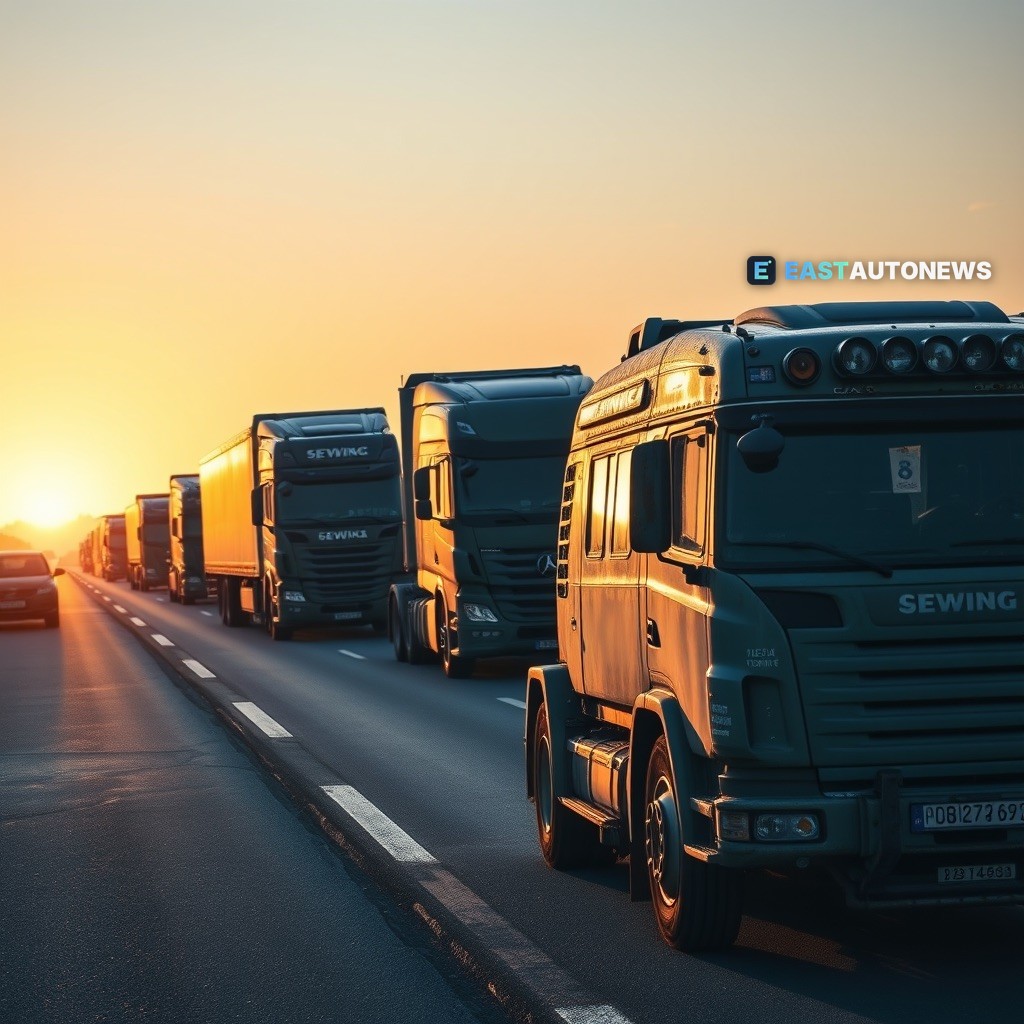
Romania, meanwhile, is showing more pulse than the European average. Its truck market grew 12.6% as Poland drove a recovery across the EU segment — a pace that left Germany's 3.9% and Italy's 3.8% far behind, with only Lithuania's 24.9% and Spain's 13.4% stronger among the highlighted markets. A country whose commercial vehicle demand is expanding that quickly is a market with momentum — exactly the kind of territory an ambitious newcomer wants to claim early.