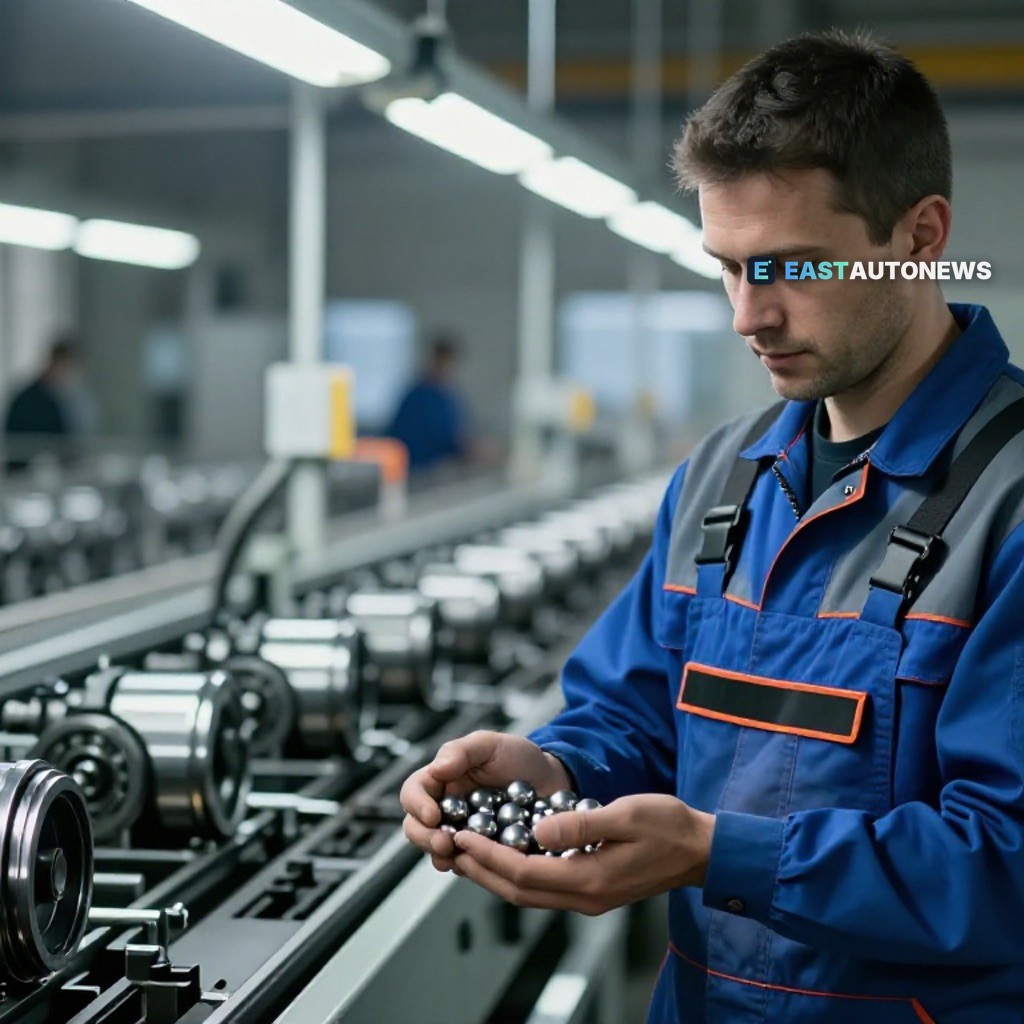
The body blows keep coming for Slovakia's car industry, and the latest lands at Schaeffler. The supplier has confirmed it will cut hundreds of jobs in Slovakia as the sector struggles, with the measures concentrated in part of its bearing production. "Measures at the Slovak plants relating to part of our bearing production are planned over a four-year period, from 2027 to 2030," said Miroslav Janota, who heads Schaeffler's operations in Slovakia, the Czech Republic and beyond. It amounts to a long goodbye – but a goodbye all the same.
The cut stings because of where it lands. Slovakia's economy leans heavily on carmaking, yet a recent report ranks the country 22nd among EU member states for innovation, close to the foot of the bloc's table. An industry that grew up around volume manufacturing and mechanical parts is now being squeezed precisely where it is weakest: the race toward electronics, software and higher-value output.
Yet even as Schaeffler sharpens the knife, money is flowing in from the opposite direction. On 5 November, the European Investment Bank and Slovakia's Eximbanka agreed a €100 million financing package to support Slovak exporters and innovation, aimed at small and medium-sized enterprises and mid-caps seeking to invest in innovation, technological upgrades and international expansion. For a supplier base under sustained pressure, it is a lifeline pointed squarely at the modernisation the sector can no longer put off.
The deeper story is a reshuffling of what Europe's car industry actually builds – and where. Legacy mechanical components such as bearings are ceding ground to electronics, and the region's investment map already reflects it: in Romania, Chinese supplier Wuxi Autolink Intelligence Tech is establishing a greenfield site to build automotive electronic components from the ground up. The question hanging over Bratislava is whether the factories of the future arrive on Slovak soil as well.
For Slovakia's automotive workforce, the Schaeffler decision is a warning shot with a long fuse. The cuts are spread across 2027 to 2030, time that could be spent retraining, retooling and winning the electronics investments now heading elsewhere in the region. Whether the country can convert a bottom-of-the-table innovation ranking and a fresh €100 million into a genuine second act will be one of Eastern Europe's defining industrial stories of the decade ahead.
Industrial tectonics aside, the wheels keep turning for buyers. Anyone currently searching for a vehicle – from Slovak fleet operators to private motorists – can find sensational cars at sensational conditions at WorldTrader24, Europe's marketplace with over 70,000 vehicles.