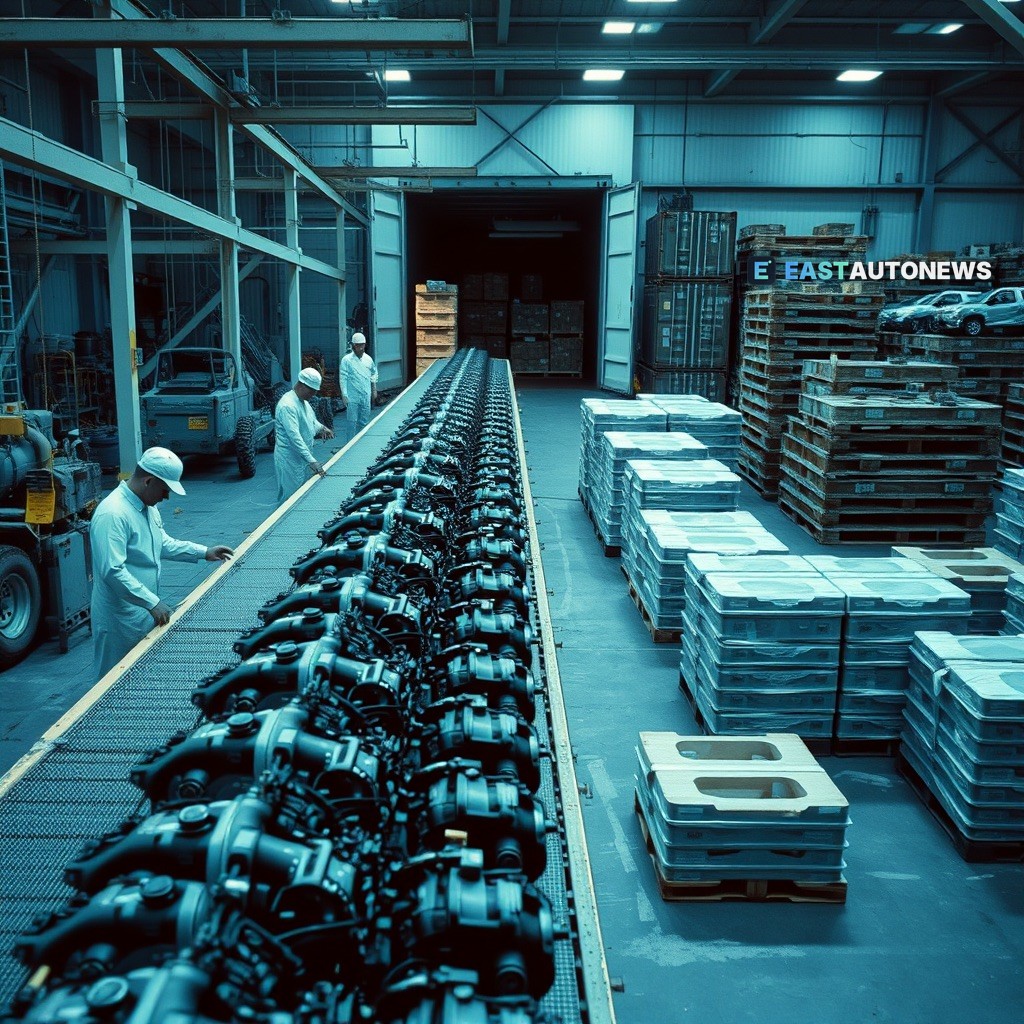
One of the most consequential bets on Croatia's automotive doorstep isn't coming from a carmaker's product launch — it's coming from a development bank. The European Bank for Reconstruction and Development is providing a €15 million loan to expand automotive production in Bosnia and Herzegovina, financing new machinery, tools and production equipment at the recipient company's plant. The purpose is as strategic as it is industrial: supporting the plant's integration into European automotive supply chains. That the story was carried by Croatian business outlet CorD Magazine says plenty about how closely the country's industry reads its own neighborhood.
For Croatia, the geography does the arguing. Bosnia and Herzegovina is the country's immediate neighbor, and every new machine and production line installed across the border feeds the same European supply web in which Croatian suppliers operate. An expanded parts plant so close to home means more European-made components being produced in the region — capacity that did not exist yesterday and that European buyers will be able to source tomorrow.
The timing is sharpened by policy. Under the 'Made in Europe' push from Germany and France, cars imported from Japan would not qualify for EU subsidies, while models built in France, Portugal and Eastern Europe would benefit only if enough of their parts come from Europe. In that arithmetic, machinery financed by the EBRD in the Western Balkans adds to the pool of European content on which the region's producers — Croatia very much included — will ultimately be judged.