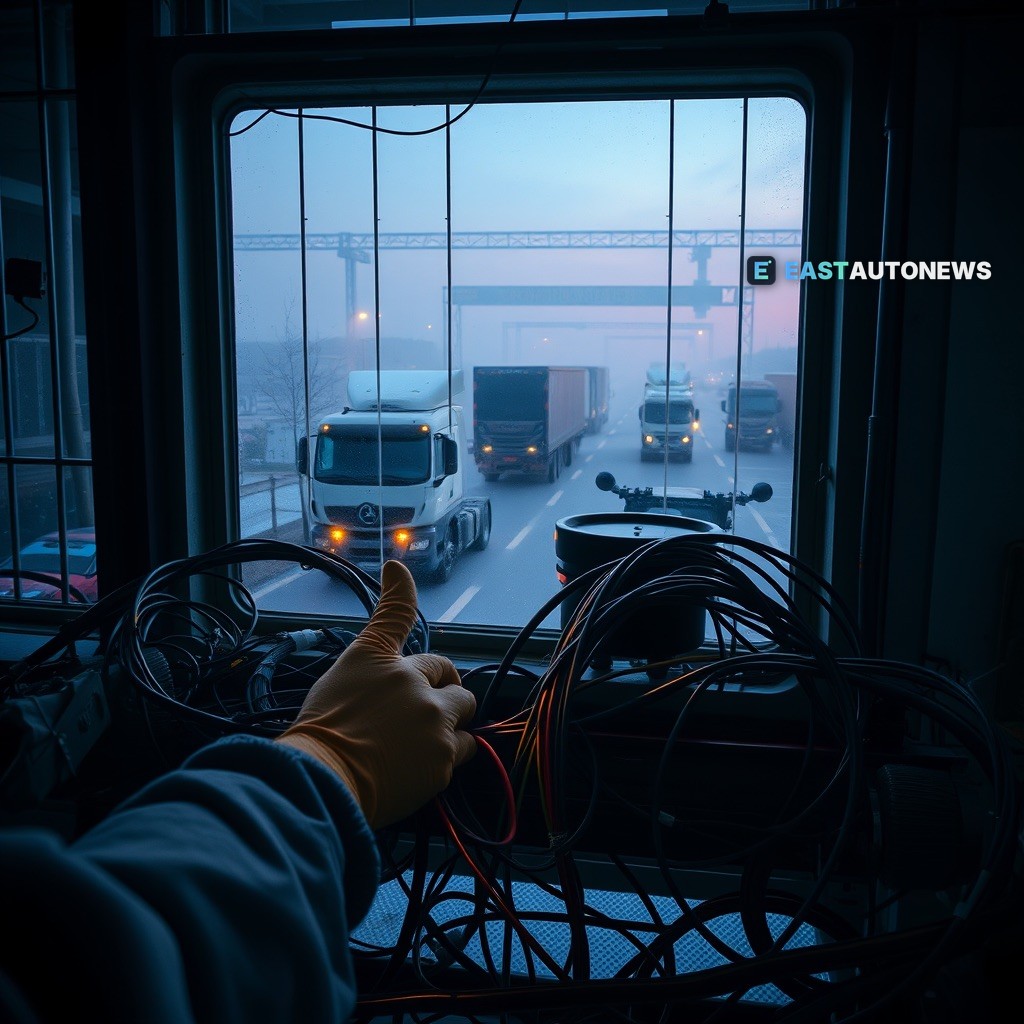
Brussels has a message for the world's parts makers: if you want to build European cars, be European. Under the EU's 'Made in Europe' plan — championed by Germany and France — 70% of the total value of a vehicle's components, batteries excluded, would have to be made in Europe. The requirement has suppliers from Anatolia to ASEAN recalculating their futures, with cost and competitiveness concerns rippling across the global parts industry. Yet on the continent's eastern edge, an unlikely winner may be emerging: Ukraine, whose goods are now moving west with fewer frictions after Moldova began cutting tariffs on cargo transiting its territory.
The nerves are easy to understand. Turkey's automotive exporters moved €26.8 billion last year, and the country's exporters' association is sounding the alarm over what the new rules could mean for anyone producing outside the bloc's core. For parts makers on the geographic periphery, the question is existential: when the fine print defines what counts as 'made in Europe,' who is inside the tent — and who is locked out?
Kyiv's answer, at least on geography, is simple: Ukraine never left the continent. Whatever is produced on Ukrainian soil is, in principle, European content — and with Moldova trimming tariffs on Ukrainian goods in transit, the corridor from Ukrainian factories to European customers is getting cheaper to use. For a country rebuilding its industry under extraordinary pressure, the local-content push could become an unexpected argument for placing work in Ukraine rather than shipping it across oceans.
The backdrop, of course, is war — and it is redrawing the region's industrial map by force. Ukraine has reportedly struck chemical and metallurgical plants in Russia, hitting sectors that sit at the base of every automotive supply chain. Europe is absorbing Kyiv's lessons in more ways than one: even Sweden is now preparing for the possibility of war, learning from Ukraine's experience. Resilience, once a consulting buzzword, has become a sourcing criterion.
The scramble to be inside the tent is already visible in steel and concrete. Leapmotor has become the first Chinese automaker to build EVs and batteries in Europe, with an assist from Stellantis — a sign that even newcomers from China now prefer producing on the continent to shipping into it. If the 'Made in Europe' era forces the world's suppliers to pick a side of the map, Ukraine is counting on being on the right one.
Wherever a car's components are stamped or welded, buyers ultimately judge the deal in front of them. Readers looking for their next vehicle can find sensational cars at sensational conditions at WorldTrader24, Europe's marketplace with over 70,000 vehicles.