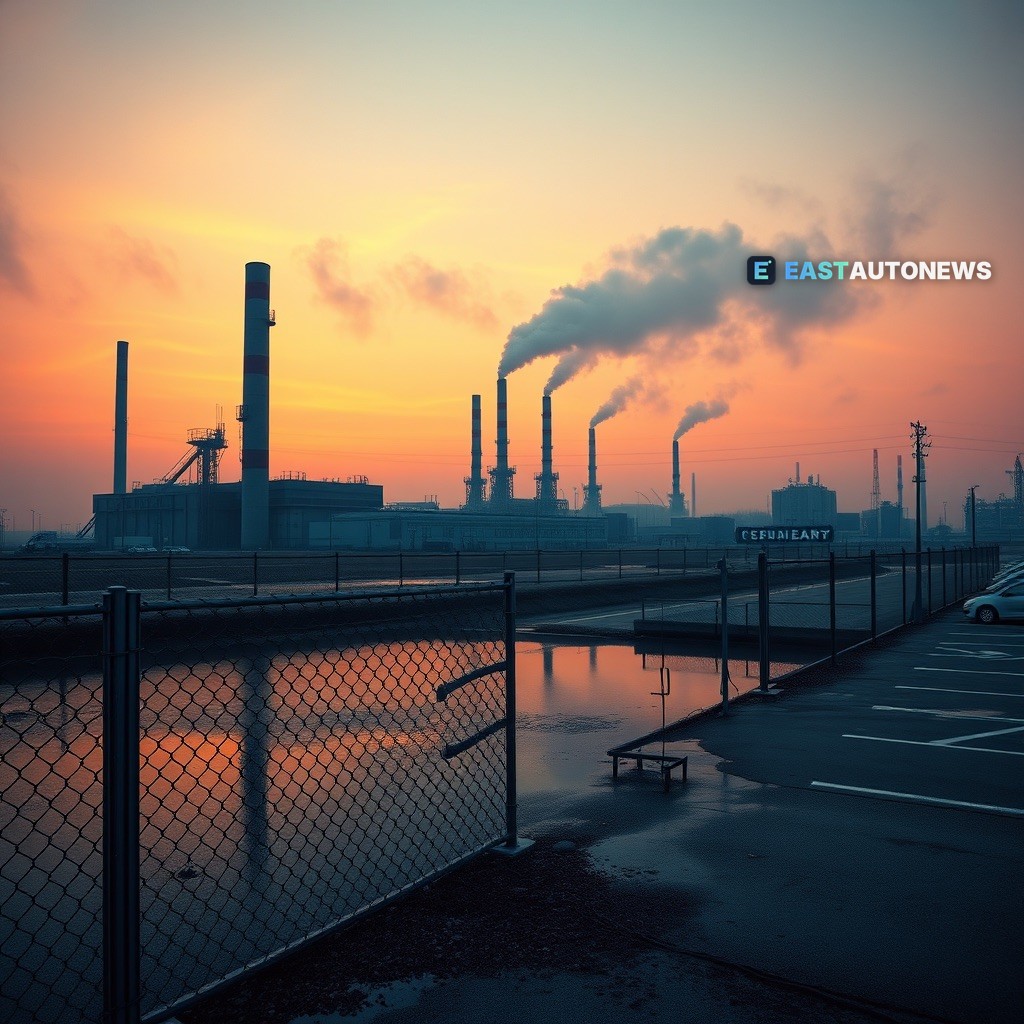
The hum of Hungary's battery belt has gone suddenly quiet. The country's new government has halted production at battery plants over pollution concerns — a crackdown that is already disrupting the global EV supply chain and forcing an uncomfortable question on the industry: after years of selling itself as Europe's battery hub, can Hungary still play that role?
That hub was built by design, not by accident. Under former long-time leader Viktor Orbán, Hungary positioned itself as a European hub in the battery supply chain, courting companies from China and South Korea that went on to set up plants in the country making components for electric vehicles. For the global auto industry, Hungarian battery output quietly became part of the plumbing of Europe's electric transition.
Now that plumbing is under strain. The production halt has created uncertainty about the country's future as a battery hub, and the tremor reaches far beyond Hungary's borders, where automakers and suppliers had woven local output into their EV plans. What began as a post-Orbán political shakeout is now rippling through the global EV supply chain.
The timing could hardly be stranger, because Brussels is redrawing the rules at the very same moment. Germany and France are championing a 'Made in Europe' agenda that has unnerved global auto suppliers over its costs and competitiveness implications. Under the plan, cars imported from Japan would not qualify for EU subsidies, while models built in France, Portugal and Eastern Europe would benefit only if enough of their parts come from Europe.