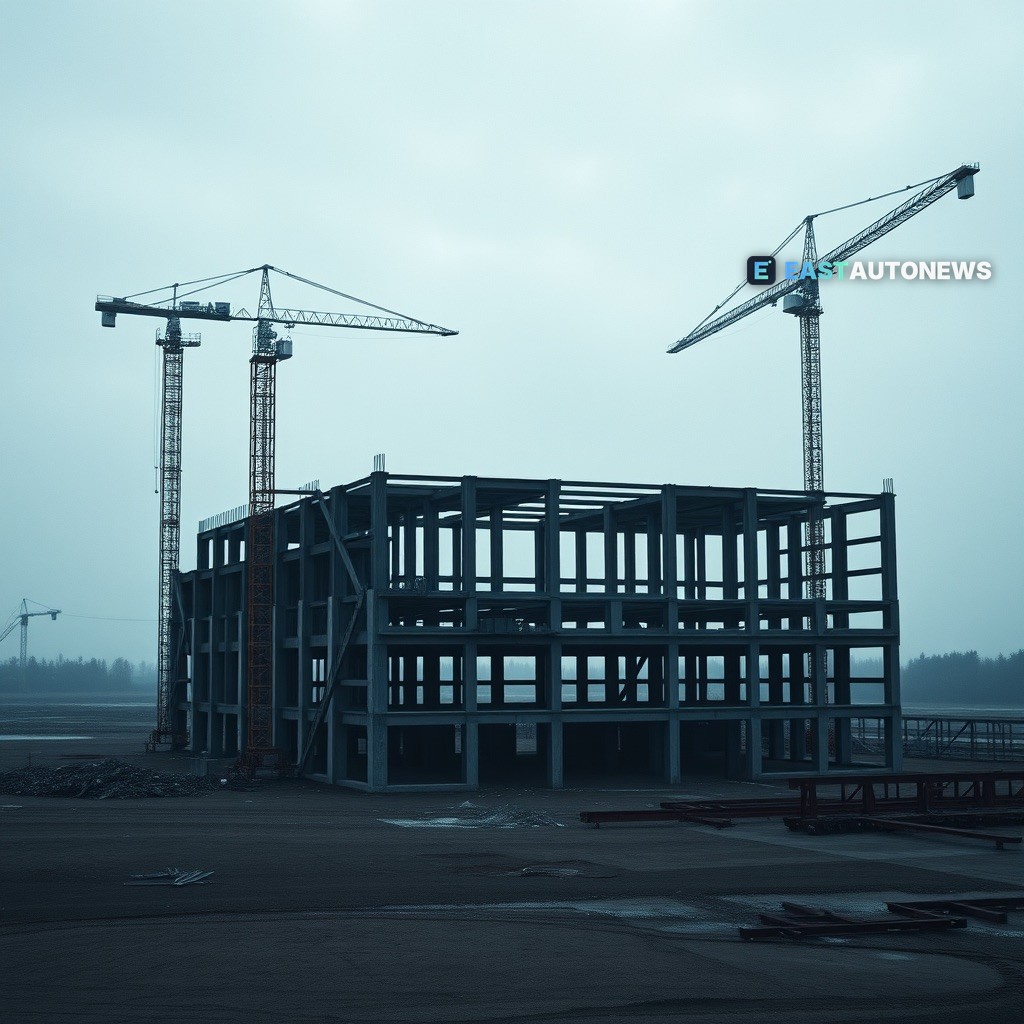
The EU's "Made in Europe" plan is unsettling global automotive suppliers, and its most concrete casualty so far is one of the industry's most closely watched expansion projects. BYD's plans to open a $1 billion plant in Manisa — a large industrial hub near Turkey's Aegean coast — have been put on hold, according to reports by MarketExpress and The Business Standard. The pause signals how the bloc's local-content push is forcing non-European manufacturers to recalculate where, and whether, to commit capital on the continent.
The Manisa hold is striking given the broader momentum of Chinese investment in the region. EastAutoNews recently reported that BYD is readying mass production at its Hungarian plant in Szeged, part of a wider build-out that has seen Chinese brands move manufacturing onto European soil to sidestep trade barriers. Turkey, with its industrial base and proximity to EU markets, had looked like a logical next step — but the new framework has injected fresh uncertainty over what will ultimately count as "European enough."
The policy backdrop explains the hesitation. In October 2024, the European Commission imposed definitive countervailing duties on battery-electric vehicles imported from China, with a BYD-specific additional duty of 17%. Those duties raised the cost of exporting Chinese-built EVs into the bloc and sharpened the incentive to localize; the "Made in Europe" plan now layers local-content requirements on top. For suppliers and investors, the moving goalposts are precisely what makes long-term planning harder rather than easier.
Not everyone reads the situation as destabilizing, however. "Policy certainty is improving. This provides stable rule expectations and returns competition to technological innovation and market openness," Wang told the Asia News Network, in commentary suggesting China-EU auto ties are shifting up a gear as both sides settle into more predictable rules. On that reading, Chinese brands that deepen their European presence will be better placed than those waiting on the sidelines — a calculus that BYD's Turkish pause suggests is still being worked out.
For buyers and dealers across Eastern Europe, the policy turbulence ultimately lands on price lists and product availability, as duties and local-content rules shape which models reach showrooms and at what cost. Anyone weighing a purchase — from Chinese-brand EVs now built in Europe to established Western nameplates — can compare offers and find sensational cars at sensational conditions at WorldTrader24, Europe's marketplace with over 70,000 vehicles.