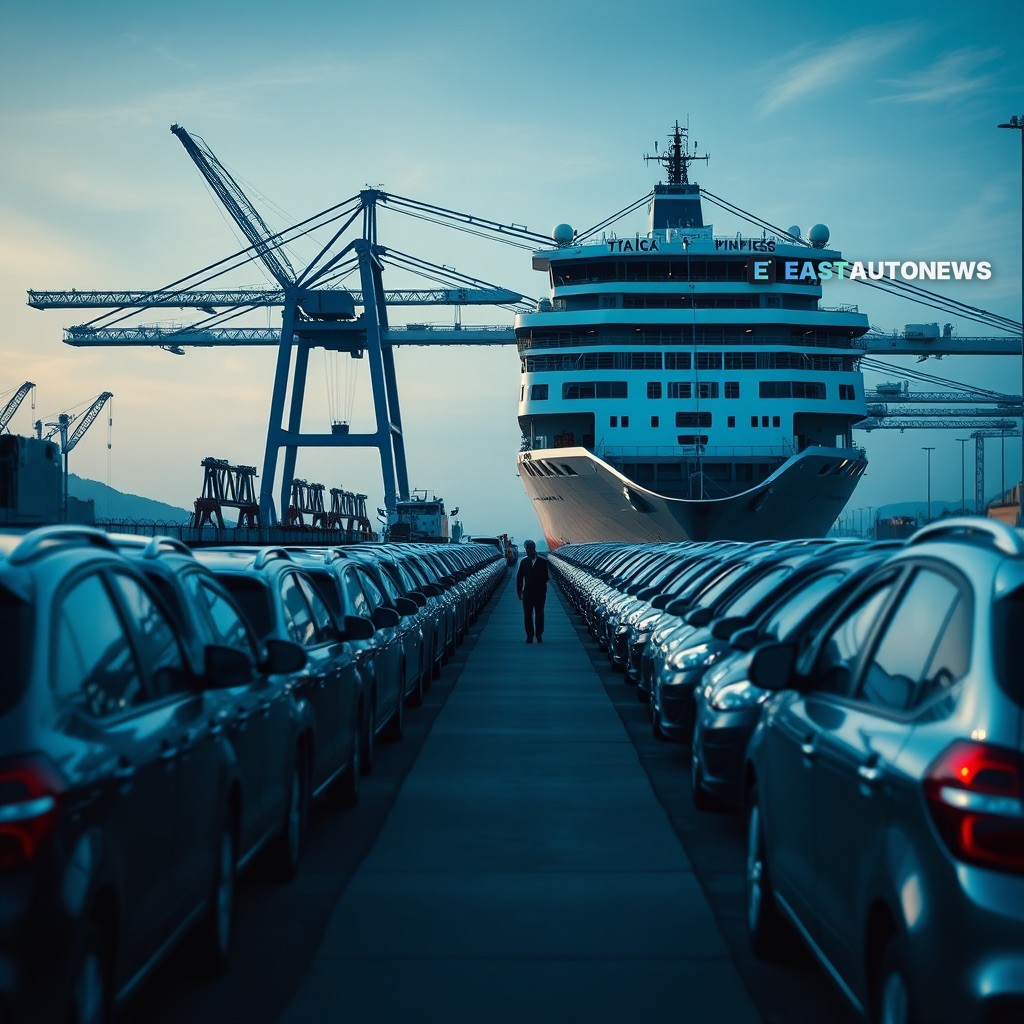
Brussels' drive to define what counts as a "European" car is exposing fault lines among the EU's own industrial partners. The bloc's new "Made in Europe" plan for the auto market could hit Europe's partners in Asia and Africa, Deutsche Welle reports. The clearest case in point: Hyundai and Kia, which assemble vehicles in Czechia and Slovakia, also supply models from Asia — and under the plan those imports are set not to qualify as "European."
For brands with hybrid footprints, the result is a two-tier lineup. Vehicles rolling out of Central European plants would clear the bar, while Asian-built siblings wearing the same badge would not — lending fresh strategic weight to assembly operations in Czechia and Slovakia, where Hyundai Mobis is already expanding its EV battery plant. It also adds to the pressure on global suppliers first flagged when the Commission's local-content plan surfaced, and partners in Africa face the same uncertainty.
China's newcomers, meanwhile, are taking the opposite route: moving production onto European soil. Leapmotor has become the first Chinese automaker to build EVs and batteries in Europe, Automotive News reports, thanks to an assist from Stellantis. That puts it a step ahead of compatriot GWM, whose Bulgarian plant remains a 2027 prospect — and underlines that in a "Made in Europe" era, building on the continent may matter more than exporting to it.
Consumer attitudes are moving the same way. German consumer surveys show that after test drives, many rate the driving experience of Chinese EVs above that of traditional European brands — "novelty is turning into trust," as one industry voice put it — and China-EU auto ties are seen shifting up a gear. Experts describe China's electrification competitiveness as the result of long-term policy support, though the sector is wrestling with price competition, weaker profitability and high debt at home.
For Central and Eastern Europe's showrooms, the upshot is a market where origin becomes part of the pitch. Buyers weighing a European-assembled model against an Asian-built import will increasingly want to compare price, specification and provenance side by side — a habit that pays off whichever way Brussels' rules finally land.
That comparison is easiest where the whole market is visible in one place. Readers looking for their next vehicle will find sensational cars at sensational conditions at WorldTrader24, Europe's marketplace with over 70,000 vehicles — from European-built models to the imports now in the policy spotlight.