From 18 August 2026 the EU’s Batteries Regulation formalises carbon‑footprint performance classes for electric‑vehicle (EV) batteries, and from 18 February 2027 every EV battery placed on the EU market must carry a digital “battery passport”. These obligations are set out in the consolidated Regulation (EU) 2023/1542 and in Commission guidance on the Digital Product Passport.
What the rules require — and who must act
The regulation requires manufacturers and economic operators to declare a model‑and‑plant level carbon footprint for EV batteries, apply a conspicuous label with a carbon‑performance class, and upload battery data to the EU Digital Product Passport (DPP) registry. The Commission’s DPP FAQs and implementing acts clarify that the database and registry will be operational ahead of the 18 February 2027 passport start date, while some verification and labelling technical measures continue to roll out.
Lawmakers in Brussels have also introduced temporary simplifications and timing adjustments to give industry more time on certain due‑diligence and implementing measures; the Council’s “stop‑the‑clock” decision and later Omnibus adjustments shifted some compliance moments and guidance deadlines into 2026–27. Those concessions ease immediate enforcement but do not change the core deadlines for carbon reporting and the passport.
What this means for the market
For Romania the immediate effects will be threefold: imports, local manufacturing/assembly, and power‑system planning.
Imports — Romania’s retail market remains price‑sensitive and supplied by a mix of EU and non‑EU brands. From 2027 importers of finished EVs and aftermarket batteries must ensure battery passports and carbon declarations are complete; missing data or non‑verified carbon footprints will raise administrative costs and delay registrations. That burdens smaller dealers and independent importers disproportionately and increases the transaction cost of low‑margin, low‑price models that have helped recent BEV uptake in Romania.
Local manufacturers and assemblers — Romania’s vehicle output is concentrated at Ford Otosan’s Craiova site and Renault/Dacia’s Mioveni complex. Mioveni remains an important regional plant but recent reporting shows production and model allocation are under pressure as the group repositions models across its European footprint. Conformity with the EU battery rules will shift procurement and quality‑control requirements up the supply chain: assemblers or local integrators that source modules or packs must be able to demonstrate the passported data for each incoming battery pack or module. That raises the bar for supplier contracts, audit processes and traceability systems in Romania’s supplier network.
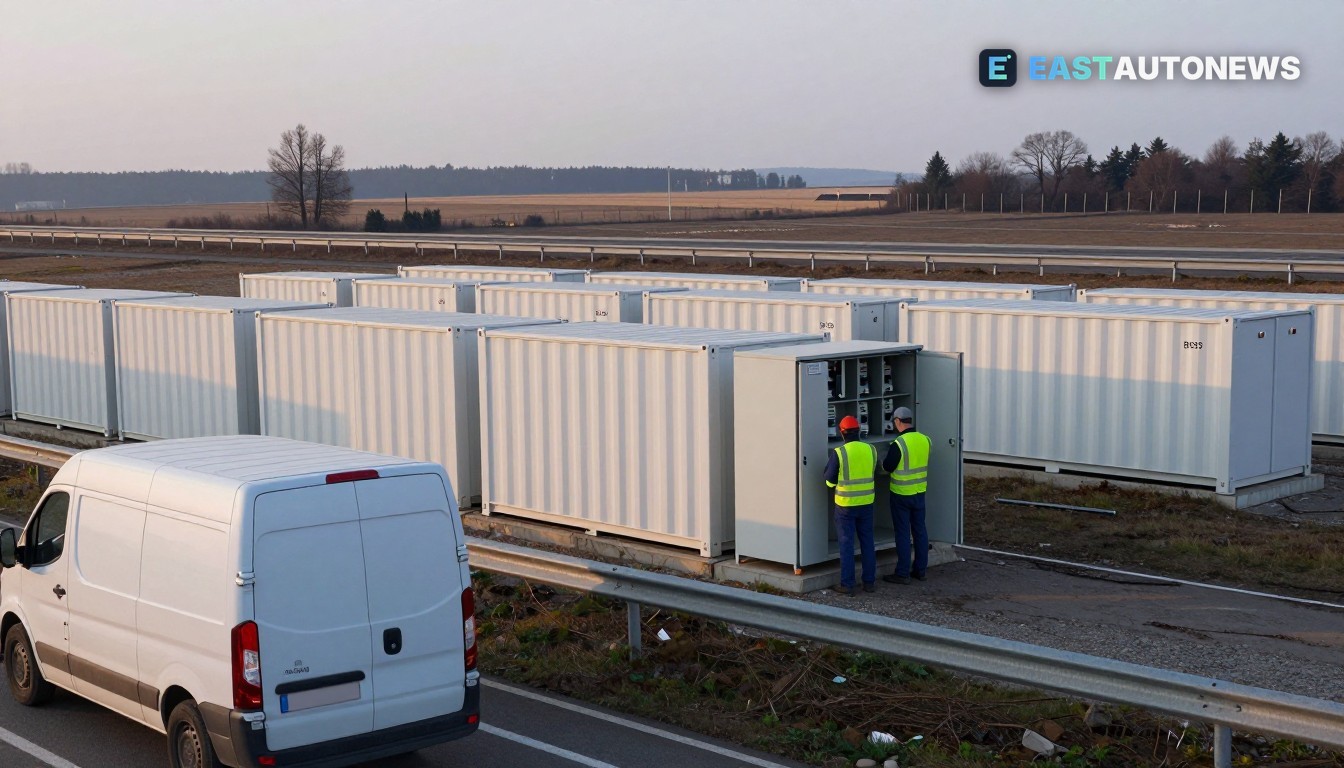
Grid and storage planning — the Batteries Regulation treats stationary storage differently from EV traction batteries but creates complementary demand for both. Romania has rapidly increased grid‑scale battery projects in 2026: by 1 August 2026 around 989 MW of BESS capacity was recorded in project and operational lists, with major projects such as Aukera’s Gura Ialomiţei (phase one 150 MW/300 MWh in operation, phase two under construction) and several 100+ MW projects under delivery. Those BESS projects will both support higher EV charging loads and create domestic demand for battery integration services and secondary markets for retired EV batteries.
In short, the EU rulebook reduces regulatory uncertainty in the medium term but raises immediate compliance costs for imports and for assemblers who must now capture and verify detailed upstream data. Romania’s competitiveness will hinge on fast adoption of digital compliance systems by OEMs and importers, tighter supplier contracts for passport data, and continued investment in grid flexibility (BESS, smart charging and managed charging) to absorb new EV load without excessive TSO/DSO costs.
Policymakers can ease the transition by targeting support at small importers, funding supplier traceability upgrades, and prioritising BESS and smart‑charging auctions in the national energy plan — actions already visible in project pipelines and recent Commission guidance but requiring clearer national implementation timetables.
Electric vehicle listings on WorldTrader24 →
Sources: EUR‑Lex (EU Batteries Regulation), European Commission DPP guidance, EAFO (Romania EV data), Electromobilitate.ro, Energy‑Storage.News.