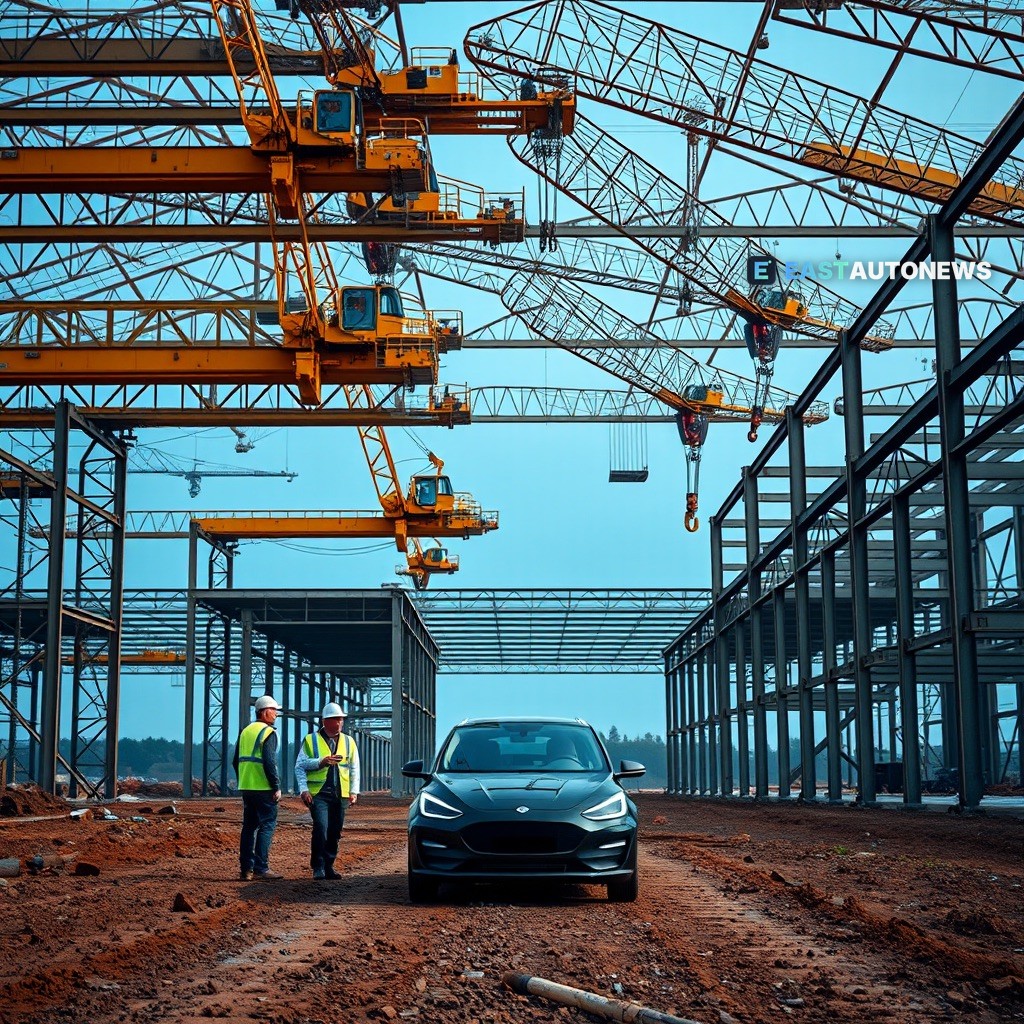
Bahovitsa, a village in Bulgaria's Lovech region, has rarely registered on Europe's automotive map. That is about to change. In a statement released last week, Chinese automotive giant Great Wall Motor (GWM) confirmed it will begin vehicle production in Bulgaria by the first quarter of 2027, planting its assembly lines — and its European ambitions — squarely on EU soil in the Balkans.
The partner is Bulgarian Automotive Industry (BAI), which operates the plant in Bahovitsa and is no stranger to the Chinese carmaker: the two have cooperated before. GWM did not disclose the financial details of the agreement. Italy's Il Sole 24 Ore reports that the deal secures production capacity of 50,000 units of the Ora 5, one of the brand's flagship models, while other coverage of the announcement points to a compact SUV as the vehicle earmarked for Bulgarian assembly. Either way, the volumes are anything but a token gesture.
The timing explains the urgency. GWM sold just 3,500 cars in Europe in 2025 — a 25.4 percent decrease year on year — and the company says its planned capacity and localized production are meant to help it compete more effectively with established rivals. Building in Bulgaria also slots GWM into the lengthening list of Chinese brands manufacturing in Europe, a club that keeps growing as China's carmakers look for new ways to win over European buyers.
Not everyone is cheering. As The Epoch Times reports, analysts warn the deal could feed a possible internal divide within the EU, pitting member states eager to host Chinese factories against those determined to shield their own car industries. For every capital celebrating a new plant, another sees market share shifting from European incumbents to Chinese newcomers — and the argument over where Chinese cars should be built is only getting louder.
The backdrop is unforgiving for challengers: Eastern Europe's car market runs to roughly 3.4 million units, growing by a modest 0.6 percent, according to Izvestia — meaning Chinese entrants are fighting for a slice of a largely static pie rather than riding a rising tide. For Bulgaria, the calculation is different. A global carmaker's badge on the gate at Bahovitsa, 50,000 units of annual capacity and a first-quarter 2027 start would hand the country a genuine carmaking anchor — and make Lovech a place the industry can no longer ignore.
Whatever the geopolitics, the real verdict arrives in the showroom. Readers looking for a vehicle — from the newest market arrivals to proven models at keen prices — can find sensational cars at sensational conditions at WorldTrader24, Europe's marketplace with over 70,000 vehicles.