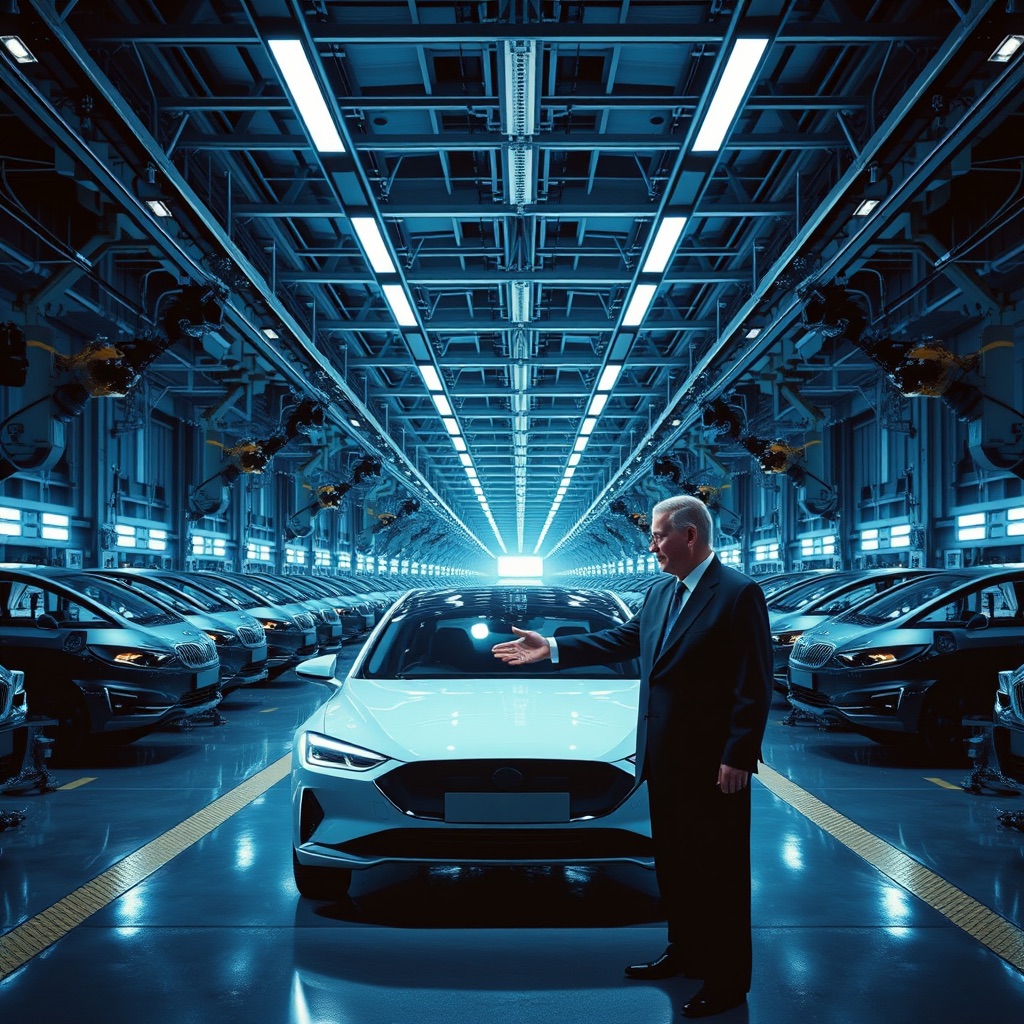
Chinese carmakers have outsold their Japanese rivals in Europe for the first time, the Los Angeles Times reported this week — a milestone for brands that have expanded rapidly across the continent and are now winning buyers at the expense of long-established Japanese competitors. The breakthrough comes as Chinese manufacturers localize production in Europe rather than relying solely on imports.
The production base behind the shift is increasingly European. Zhejiang Leapmotor Technology has started making its B10 SUV at Stellantis NV's plant in Zaragoza, Spain, while Chery is preparing production in Barcelona and BYD is nearing completion of a manufacturing site in Hungary. For suppliers and logistics operators in Central and Eastern Europe, the Hungarian plant signals that Chinese manufacturing investment is moving from announcement to output.
The Stellantis-Leapmotor partnership exemplifies what Alexandre Marian, a partner at AlixPartners, describes as a "reverse joint venture" — European manufacturers seeking alliances to learn Chinese EV know-how, reversing the traditional direction of technology transfer. China's Xinhua news agency headlined the trend this week under the banner "China, Europe drive deeper automotive cooperation."
Host manufacturer Stellantis is keeping the door open but selective. At its Factory Booster Day 2026, an event dedicated to turning plant challenges into shopfloor solutions, Ciancia said opportunities also come from Silicon Valley, Central Europe, France, Germany, Italy and Spain. His message: "Chinese are welcome."
The deepening China-Europe axis runs in parallel with a rush of carmakers into the United States. Audi's $4 billion deal with Trump — which Deutsche Welle notes comes at a tricky moment for Germany's automotive hub — follows moves by Stellantis and Japan's Toyota to expand US production, while Honda is in talks to build a new US plant. In Canada, columnist David Booth is meanwhile asking whether Stellantis is after all reopening its Brampton plant, questioning the Carney government's Ontario auto industry investment plan.
For dealers and fleet buyers adjusting to the new competitive order — whether sourcing Chinese-built EVs, Japanese models now facing stiffer rivalry, or European stock — related vehicles can be found on WorldTrader24.de. The European marketplace lists more than 70,000 vehicles, giving trade buyers a broad basis for comparison as Chinese, Japanese and European brands battle for the same customers.