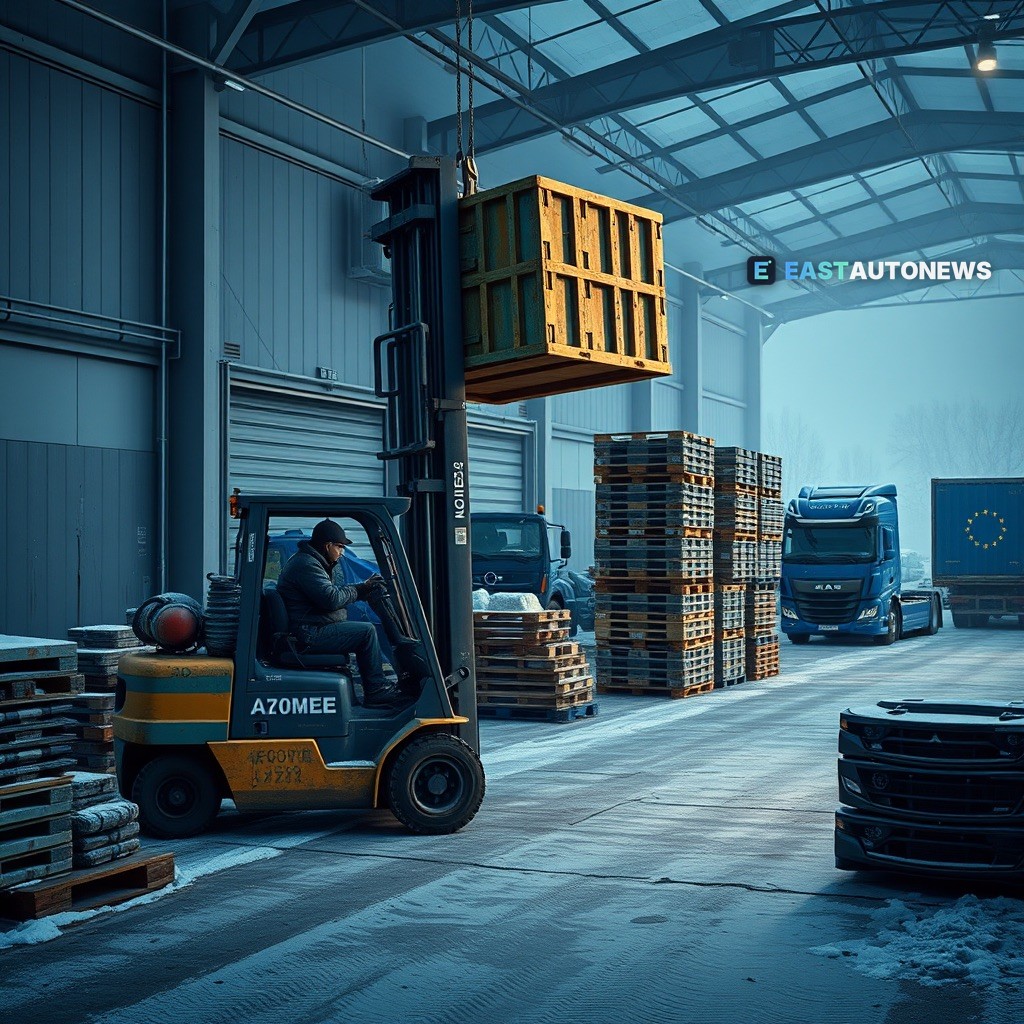
Latvia's car economy has rarely been written on assembly lines; it runs through parts, trade and logistics. That is exactly why Brussels' next industrial gambit matters so much in Riga. The EU's 'Made in Europe' plan would tie subsidies to where a vehicle's components actually come from — and the rules, as drafted, point to Eastern Europe as a region that could benefit. For a small Baltic supplier economy, that single line in the rulebook is worth more than any sales pitch.
The mechanics are blunt. Cars imported from Japan would not qualify for EU subsidies at all, while models built in France, Portugal and Eastern Europe would benefit only if enough of their parts come from Europe. In this new arithmetic, the badge on the bonnet counts for less than the origin of every cable, fastener and electronic module inside it. Global auto suppliers are unnerved — but Europe's component makers, Baltic rim included, have just been handed a rare moment of leverage.
The plan is born of raw pressure. Under strain from low-cost Chinese imports, Volkswagen, Stellantis and Renault have appealed to Brussels for help, and investors concede they cannot see 'where the floor is' as Chinese brands take share at home and abroad. 'Made in Europe' is the EU's answer: reward what is built here, with parts from here. Yet the fortress has a gate — at least one major automaker backs a European manufacturing focus that would include non-EU 'trusted partners' in the drive to make vehicle production more efficient.