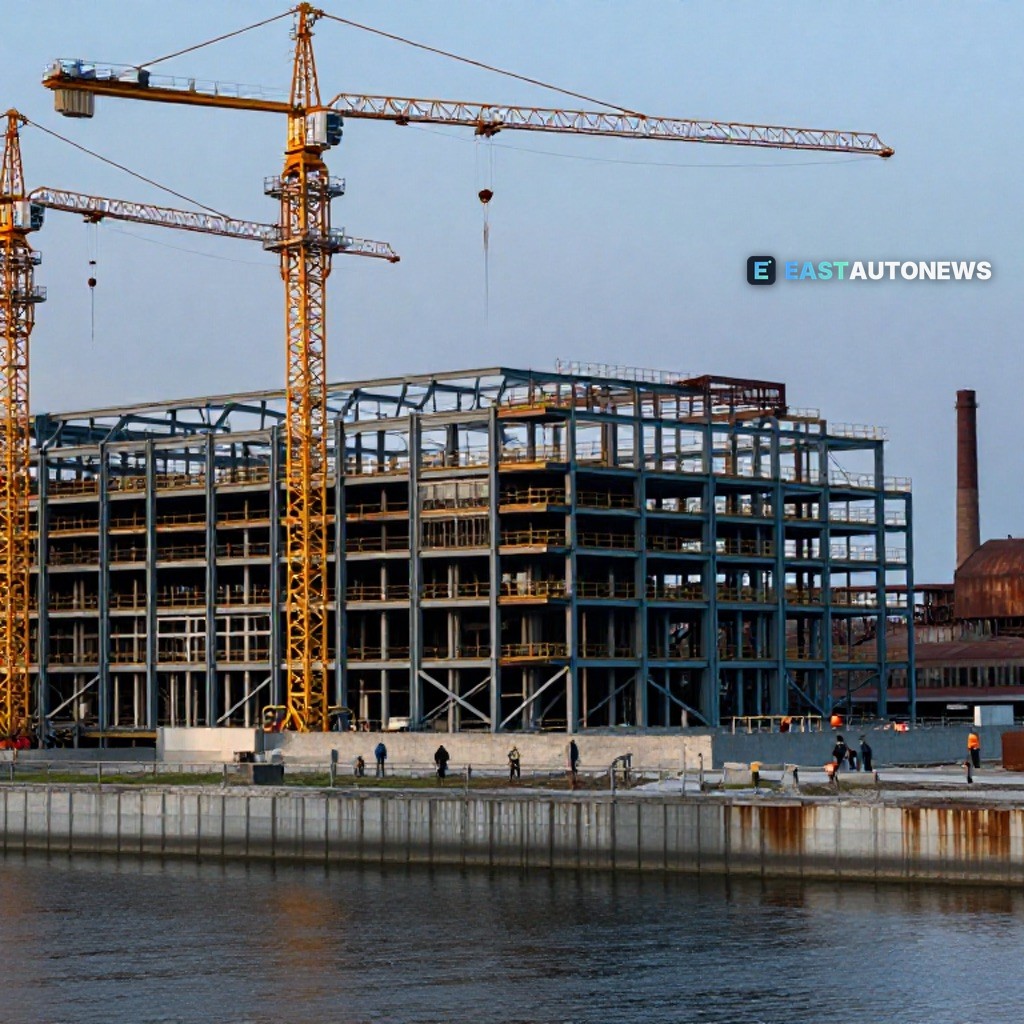
Cranes crowd the skylines of industrial Poland. In Germany, the investment pipeline has gone quiet. According to the McKinsey Global Institute, Poland and Romania are now building new productive capacity faster than the rest of Europe, while German investment has all but stopped — a reversal that reads like a tectonic shift for an industry that spent decades treating Germany as its continental anchor. The centre of gravity of European manufacturing is drifting east, and Poland sits squarely on the new fault line.
The backdrop, as bne IntelliNews frames it, is China pulling away from the West — and the capital that once poured into German plants is hunting for new homes. Poland, with its dense supplier networks, skilled workforce and position astride Europe's central transport corridors, has become a natural landing zone. That Warsaw shares the top of the McKinsey ranking with Bucharest suggests this is not a one-off surge but a regional realignment of where Europe's industrial capacity actually gets built.
Much of the momentum carries a Seoul postmark. South Korean corporate investment in Poland has concentrated on the battery, automotive, electronics and materials sectors, and the country has become a major hub for Korean groups using it as their gateway into the wider European market. The ties keep deepening: beyond the headline defence hardware — the K2 tanks, K9 howitzers and Chunmoo launchers — Seoul and Warsaw are pushing to localise defence production, a drive that strengthens the industrial supply base well beyond the barracks.
The physical evidence is stacking up in the warehouses, too. A market study published this week sizes Poland's third-party logistics (3PL) sector as a USD 10.9 billion opportunity through 2035, propelled by e-commerce, automation and the swelling volume of China-EU trade. Masovia, anchored by Warsaw, holds the largest share of the market, with Silesia and Poznań close behind — precisely the geography that hosts much of Poland's automotive supply base. Factories and fulfilment centres are feeding off the same corridors.
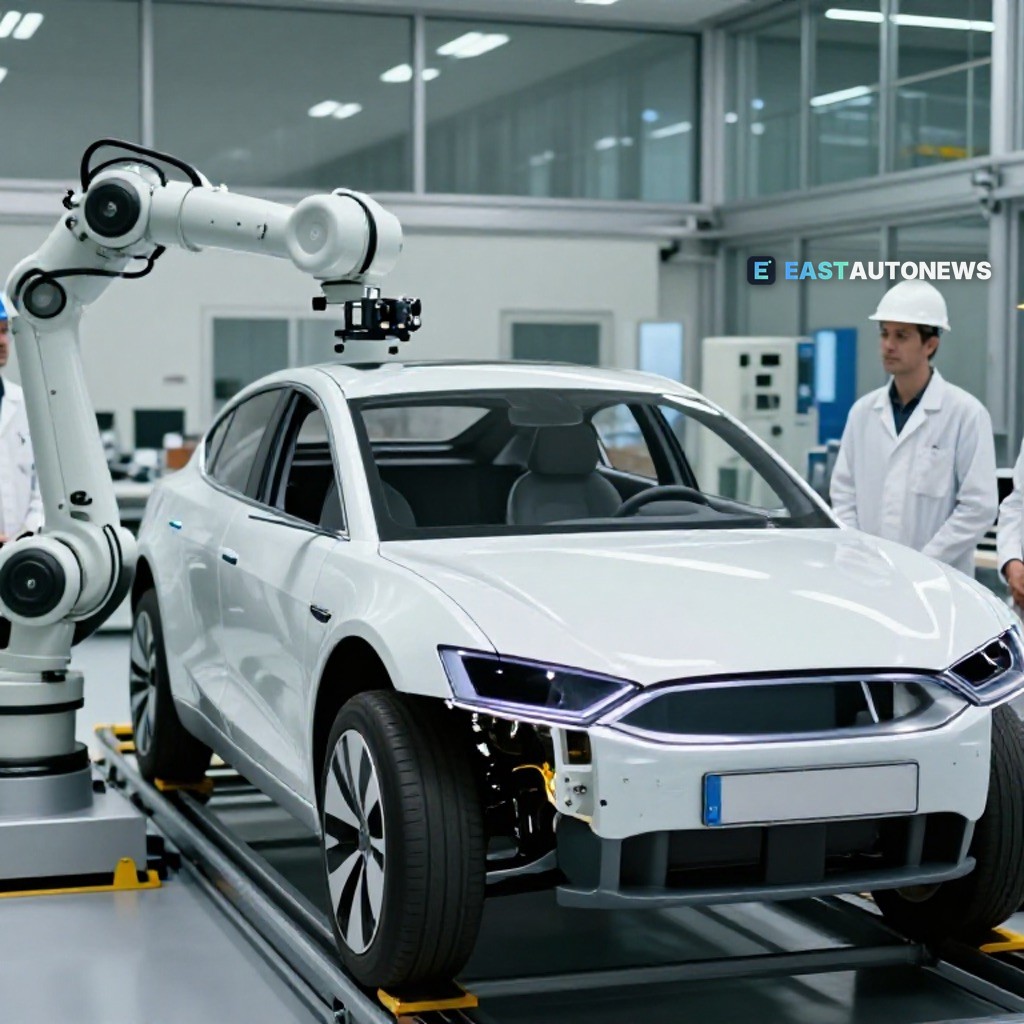
For the automotive industry, the message is hard to miss: capacity follows capital, and capital is choosing Poland. As German expansion stalls, suppliers and manufacturers weighing their European footprints increasingly find the infrastructure, investment flows and logistics backbone they need being built east of the Oder. Poland is no longer a low-cost extension of the German industry — it is emerging as a production and distribution hub in its own right.
For businesses recalibrating around these shifting supply lines — and for anyone simply in the market for a vehicle — choosing the right platform matters more than ever. Buyers will find sensational cars at sensational conditions at WorldTrader24, Europe's marketplace with over 70,000 vehicles.