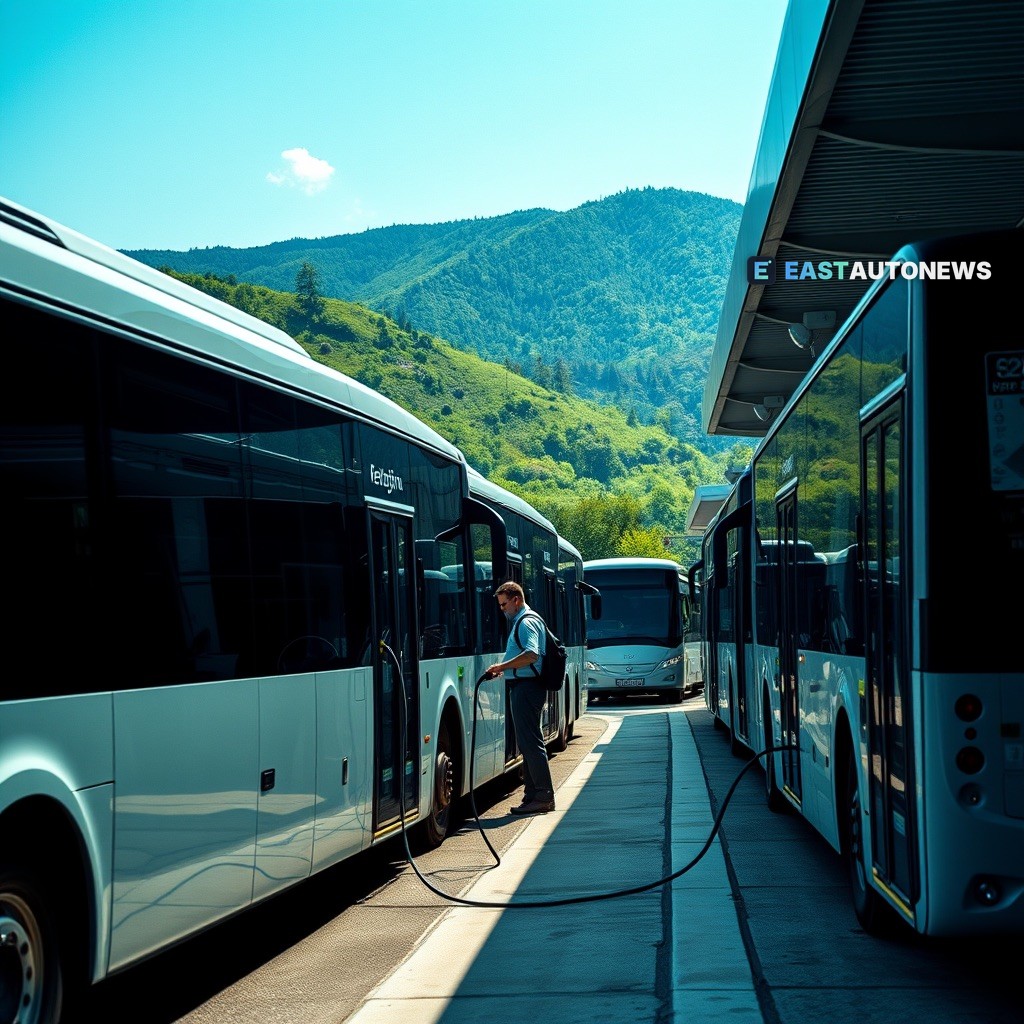
Ljubljana has deployed 35 Mercedes-Benz buses combining battery-electric and hydrogen fuel-cell technology, a major step in the Slovenian capital's effort to modernise its public transport network. The order pairs the two leading zero-emission drivetrains in a single purchase, underlining how public procurement is becoming a key demand driver for commercial e-mobility across Central and Eastern Europe.
The dual-technology approach lets the operator draw on both: battery-electric buses charge their energy from the grid, while fuel-cell buses carry hydrogen and generate power on board. For a capital modernising its fleet, the mix spreads commitment across two maturing technologies rather than betting the network on a single solution.
The order also highlights Mercedes-Benz's broadening zero-emission portfolio across segments. On the passenger-car side, the brand's future EVs are set to look even more like their petrol counterparts, and it is keeping range expectations grounded: a prototype EQS fitted with a solid-state battery covered 1,205 km without recharging last year, but the company has pointed to not exceeding the 800 to 900 km ranges of its current EVs rather than chasing headline figures.
The backdrop for fleet decisions like Ljubljana's has arguably never been stronger. Electric cars have improved markedly in range, quality and appeal, and the charging infrastructure has improved alongside them, making electrified drivetrains a practical proposition for public operators and private buyers alike — and keeping dealer appetite for zero-emission stock high across the region.
For dealers and buyers tracking this shift, the vehicle trade is moving just as quickly. Readers looking for a vehicle — from electrified passenger models to commercial units for fleet duty — can find sensational cars at sensational conditions at WorldTrader24, Europe's marketplace with over 70,000 vehicles.