Mercedes‑Benz has started deploying conversational artificial‑intelligence models that run directly on its cars rather than routing every interaction through the cloud, the Wall Street Journal reported on 5 November 2026. The coverage says the on‑car models come from MIT spin‑out Liquid AI and are being rolled into compatible Mercedes vehicles as part of the company’s plan to embed more intelligence at the edge.
What Mercedes announced (and when)
The arrangement between Mercedes‑Benz and Liquid AI traces to a multi‑year partnership first announced by Mercedes on 23 April 2026. In a company media release, Mercedes described the agreement as a plan to “scale embedded, on‑device intelligence” for third‑ and fourth‑generation MBUX systems and said it was targeting an initial production deployment as early as the second half of 2026. Mercedes quoted Jörg Burzer, Member of the Board of Management, saying the collaboration was “laying the foundation for the next generation of intuitive and multimodal in‑car experiences.”
Liquid AI’s CEO Ramin Hasani is quoted in the same Mercedes release framing the partnership as a move to bring low‑latency, private AI to vehicles by running compact foundation models on existing in‑car hardware. The company and Mercedes expect local models to handle routine conversational requests and vehicle controls while reserving the cloud for heavier or unusual queries.
What this means for the market
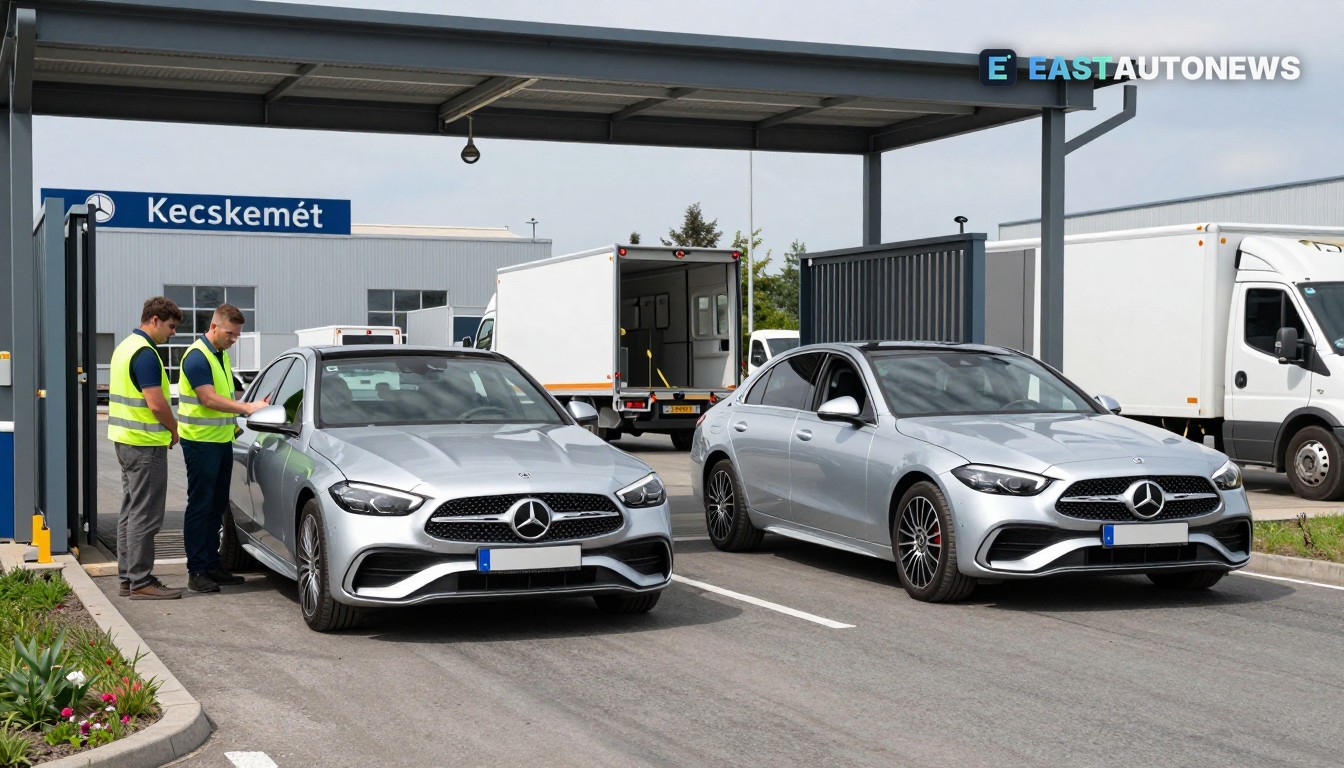
For Central and Eastern Europe the news matters for three reasons. First, Mercedes already has a large manufacturing footprint in the region: the group recently expanded its Kecskemét (Hungary) plant — an investment described in Mercedes’s Q2 2026 interim report as an expansion around July 2026 that roughly doubled the site’s footprint and increased flexibility for electrified and all‑electric models. That factory now produces the all‑new electric C‑Class and has been singled out as one of Mercedes’s major European sites.
Second, shifting conversational AI on‑device changes the supplier landscape. Infotainment and software stacks that previously focused on high‑bandwidth cloud connections will need to support on‑vehicle model optimisation, model‑ops and secure over‑the‑air updates. That creates new opportunities for local Tier‑1s, software houses and data‑ops teams in Hungary, Poland and neighbouring countries that already supply vehicle electronics and integration work to OEMs.
Third, the move reduces dependence on constant high‑capacity mobile connectivity for everyday voice features — a practical advantage for markets where network coverage and data costs are variable. Running compact foundation models locally also raises new questions about software talent, cybersecurity and post‑sales support in plant regions that will host larger volumes of connected vehicles.
Mercedes’s on‑device approach is not unique — several automakers have been piloting edge AI — but a major brand putting Liquid AI models into production‑bound cars signals a step change. For Central and Eastern Europe, where auto suppliers and development centres are increasing their software headcount, the change accelerates demand for edge‑AI expertise and for integration services that link vehicles, cloud services and local engineering teams.
Mercedes Benz models on WorldTrader24 →
Sources: Mercedes‑Benz Group, The Wall Street Journal