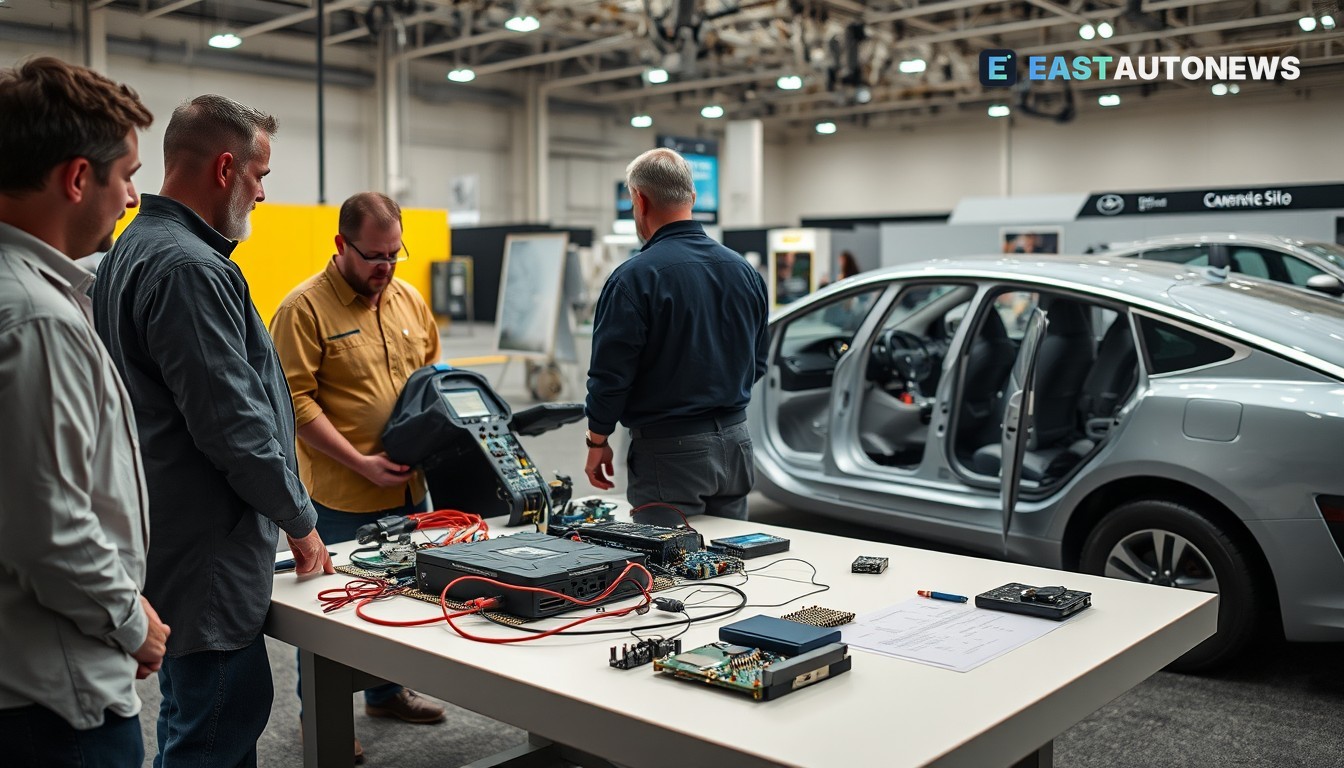
Munich-based Infineon Technologies on 2 November 2026 announced a technology agreement with Qualcomm Technologies to develop a microcontroller‑based "subsystem" that will operate alongside Qualcomm’s Snapdragon Ride and Ride Flex reference platforms for central car computers in software‑defined vehicles. The deal pairs Infineon’s AURIX safety microcontroller and OPTIREG power‑management ICs with Qualcomm’s high‑performance SoCs, and will be shown at the Electronica trade fair in Munich from 10–13 November.
Deal details and technical scope
Infineon says the subsystem is complementary to the Snapdragon Ride platforms: it monitors system health, coordinates safety mechanisms and enables predictable, real‑time control of safety‑critical functions. The package includes a pre‑integrated Infineon software bundle that links microcontroller firmware with platform‑level safety and monitoring functions, and supports integration over Ethernet and CAN. Infineon also cites BRIGHTLANE Automotive Ethernet/USB and SEMPER NOR Flash as qualified components for the reference platform.
Industry write‑ups emphasise that the reference design places a dedicated functional‑safety layer alongside Qualcomm’s mixed‑criticality SoC approach (Ride Flex accommodates cockpit and driver‑assistance workloads on a single SoC using hardware isolation). The Infineon subsystem therefore acts as a safety supervisor rather than replacing platform‑level safety islands.
What was said — and what was not
Peter Schiefer, President of Infineon’s Automotive Division, is quoted as saying the collaboration “reflects a fundamental approach to centralized vehicle computing” and that Infineon provides “essential functional building blocks and integration expertise for building the trust foundation for software‑defined vehicles that leverage the power of AI.” The quote appears in Infineon’s 2 November announcement.