In Mioveni, the steady clatter of Dacia's assembly lines has for decades been the soundtrack of Romanian industrial ambition. These days, a more anxious sound competes with it: the quiet scraping of a fine-tooth comb. As Brussels sharpens its 'Made in Europe' rules for cars, Romania — home to Renault's vast Dacia complex at Mioveni and Ford's plant at Craiova — is learning that building vehicles inside the European Union may no longer be enough. Increasingly, what counts is what's inside the car.
The plan has already unnerved global auto suppliers. Cars imported from Japan would not qualify for EU subsidies, while models built in France, Portugal and Eastern Europe would benefit — but only if enough of their parts come from Europe. That conditional is the whole story for Romania. Its plants sit on the right side of the geography; whether they also sit on the right side of the ledger depends on supply chains that reach far beyond the country's borders.
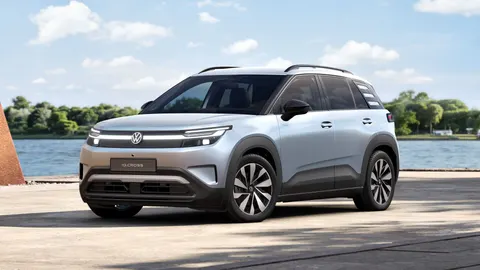
Electrification sharpens the stakes. Mioveni builds the Dacia Spring, among Europe's most affordable electric cars — a machine whose business case rests on keeping costs ruthlessly low, often through globally sourced components. If subsidy access now hinges on European content, every battery cell, wiring harness and chip in a Romanian-built car becomes a strategic decision. European parts makers stand to gain a windfall; importers of Asian components face a squeeze. The open question is where the content bar lands — and whether Romanian-built models clear it.
Behind the rulemaking lies a fear analysts voice with growing urgency: a Europe that decarbonises its roads while outsourcing the industry that builds them — electrification without European manufacturing. The EU's real choice, the argument runs, is narrower than the political debate suggests: maintain credible decarbonisation while allowing commercially justified technological sequencing. Romania sits squarely inside that narrow corridor, both a test of whether European industrial policy can reward its own — and a laboratory for whether affordable European-built cars can survive the transition at all.