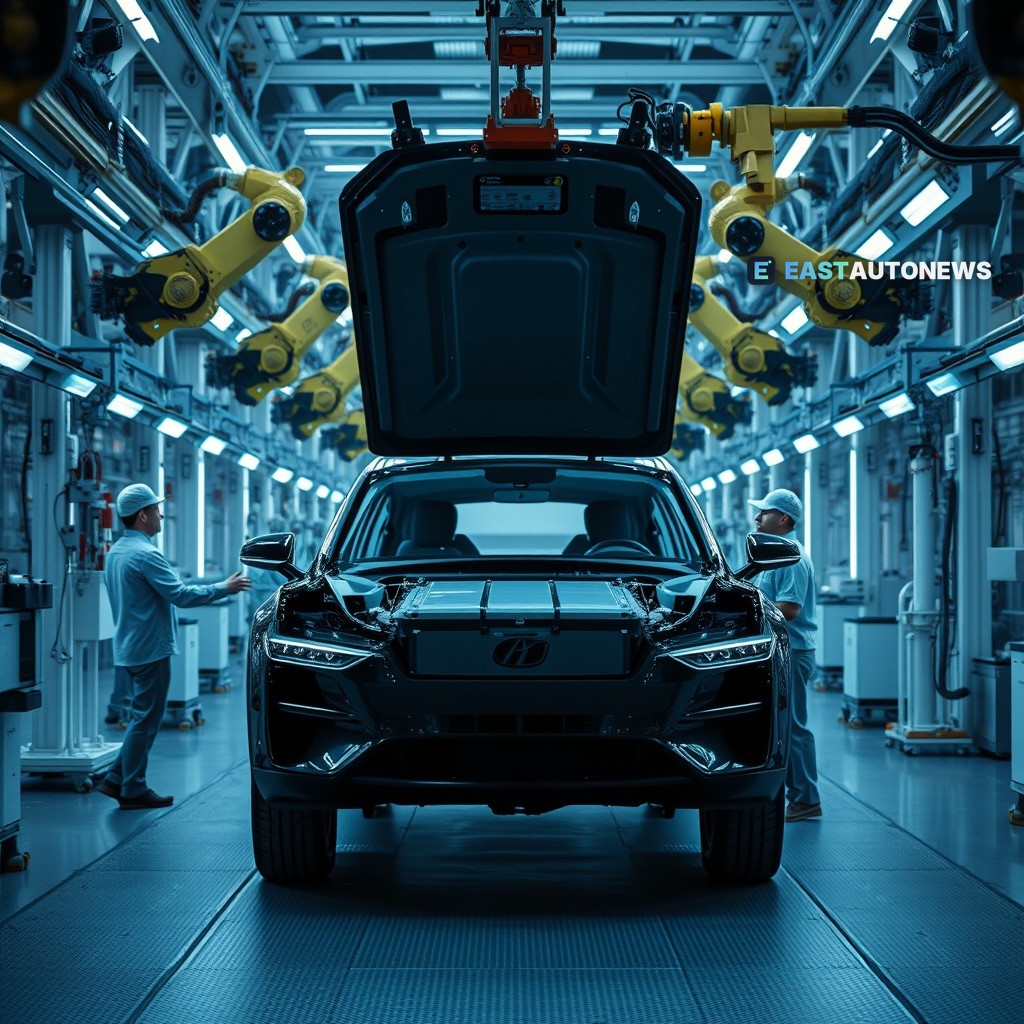
Kia is weighing a sweeping reorganization of its European footprint: producing all of its European EV volume in Slovakia while exporting combustion-engine models from Korea, executives said. According to the Seoul Economic Daily, the plan would split the carmaker's European business into two distinct flows — battery-electric vehicles built inside the EU, and conventional models shipped from Korean plants.
The deliberation underscores how far localization has travelled from talking point to boardroom strategy. As Europe pushes to localize vehicle production, concentrating EV output in Slovakia would place Kia's electrified lineup squarely inside the markets it serves, while combustion-engine imports would remain dependent on long-haul shipping lanes and port capacity. The result would be a two-track structure that treats EVs and combustion models as separate supply chain problems, each with its own geography.
For the logistics sector, the implications cut both ways. Consolidating EV output in landlocked Slovakia would concentrate battery and component traffic on Central Europe's road and rail corridors, deepening demand for regional suppliers and freight capacity. Continued combustion-engine exports from Korea, meanwhile, would keep finished-vehicle shipping volumes high, sustaining pressure on the ports and terminals that handle Asian imports into Europe.
The rethink comes as the region's wider trade arteries are being redrawn. According to Politico, the Trump administration is putting pressure on Lithuania to reopen the port of Klaipėda to Belarusian potash transit, while Russian commentary — including a piece by Elena Panina — has floated an alternative: routing those exports through Russian ports. Further afield, Morocco's $5.5 billion royal port strategy is being cited as proof that major port infrastructure can anchor manufacturing, logistics and international investment. For automakers and their logistics partners, the lesson is the same: where goods flow is once again a strategic decision, not a given.
Nothing is decided yet — Kia is still weighing the shift, and executives' comments mark a direction of travel rather than a final call. But a confirmation would deepen Central and Eastern Europe's role as the continent's EV workshop, adding Kia's name to a wave of Asian automakers that have already committed to building in the region.
For buyers, the practical question is less where a car is built than what it costs and how it is equipped. Whether an electrified model out of Slovakia or a combustion-engine Kia shipped from Korea, readers will find more than 70,000 vehicles — including a wide selection of electrified models — at WorldTrader24, Europe's marketplace.