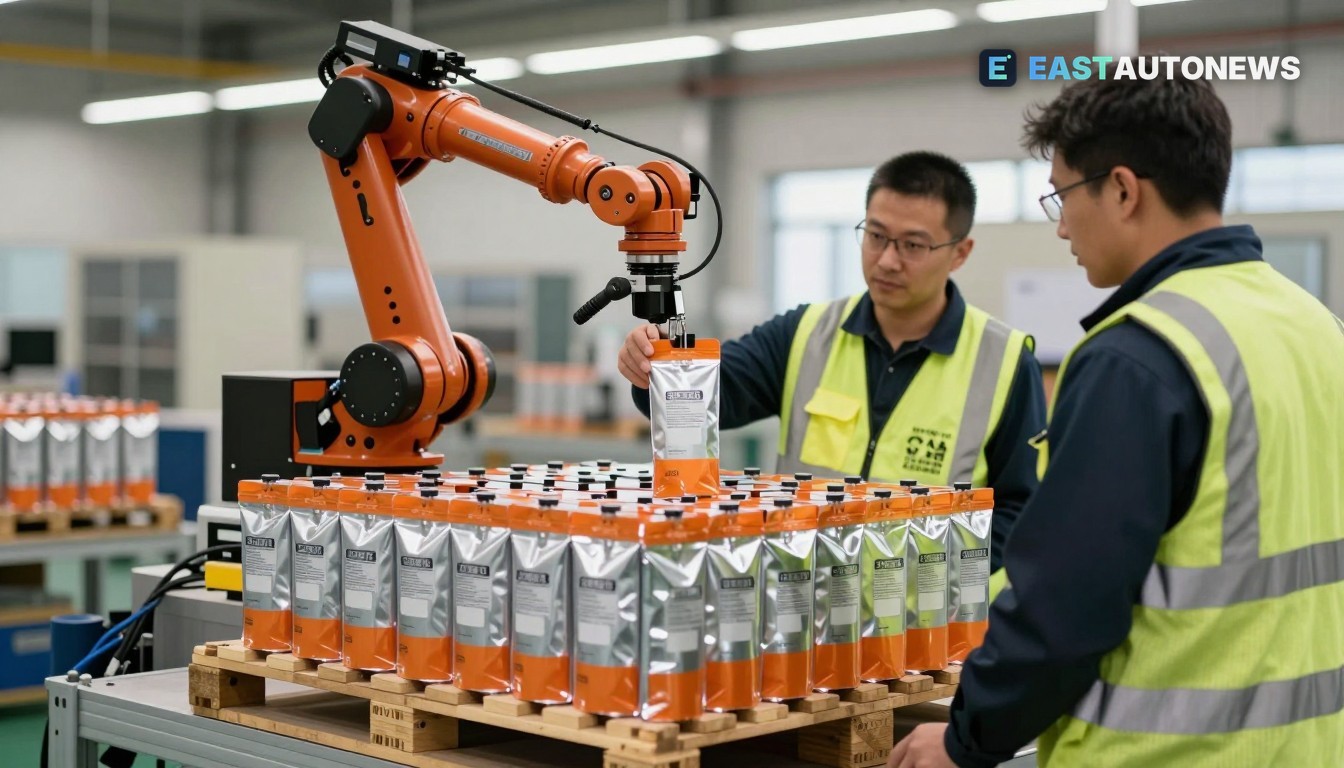
Battery suppliers are eyeing a new growth lane after a Wood Mackenzie analysis found that sodium‑ion batteries (SIBs) have already secured more than 70 gigawatt‑hours (GWh) of supply agreements — a sign the chemistry is moving from lab to commercial orders. The consultancy’s report, published 5 November 2026, says leading manufacturers could reach cell‑level cost parity with lithium‑iron‑phosphate (LFP) by the end of 2026, even though module and system parity will trail until after 2030.
Where the capacity and deals are
Wood Mackenzie’s analysis points to China as the commercial leader: BYD alone plans about 30 GWh of sodium‑ion manufacturing capacity, while CATL is targeting at least 1 GWh of SIB shipments by end‑2026. The consultancy says China, the United States and Europe already have significant offtake agreements in place, with India in earlier stages of commercial validation.
The shift is already being picked up in trade and technical coverage. Industry outlets reported the Wood Mackenzie findings on 9–13 November, highlighting the 70GWh figure and the expectation that SIBs will be competitive on a lifetime‑cost basis for many stationary and niche automotive uses.
Technical and economic trade‑offs
Wood Mackenzie notes sodium‑ion currently carries a higher upfront system cost — about US$229/kWh versus roughly US$200/kWh for LFP — but estimates SIBs could deliver about 21% lower total cost of ownership over a 20‑year project life because of lower operating costs and reduced need for later capacity augmentation. The report also emphasises SIB advantages in supply‑chain security and low‑temperature performance.
What this means for the market
For suppliers to the Central and Eastern European car and battery ecosystem, sodium‑ion’s commercial rise has three practical implications.
First, materials and cell‑component suppliers should expect demand re‑routing: SIBs use sodium and different electrolyte and hard‑carbon inputs, shifting opportunity away from suppliers specialised in lithium‑centric feedstocks. Second, tier‑1 and pack‑makers in CEE that supply European OEMs must weigh qualifying new chemistries for EU regulation and customer specs — Wood Mackenzie highlights policy drivers such as EU battery rules and national incentives that affect chemistry choices. Third, automakers and battery partners active in CEE (and their local suppliers) may see new procurement options for lower‑temperature, cost‑sensitive applications such as small BEVs, start‑stop batteries, and certain BESS‑backed charging solutions.
Wood Mackenzie’s experts caution that trade policy, export controls and the pace of local gigafactory build‑out will influence how fast SIBs become a practical alternative across markets — a reminder that supplier decisions must consider regulatory and logistics as well as cell chemistry. “SIB wins on supply chain security, cycle life and wide thermal threshold,” Wood Mackenzie’s Ankita Chauhan said in the firm’s press release.
For parts makers, polymer and electrode suppliers in CEE, the near‑term takeaway is to track SIB offtake contracts and the material bills of those pilot projects: capacity commitments reported by BYD and CATL show how quickly demand for alternative upstream inputs can appear.
Sources: Wood Mackenzie, The Driven