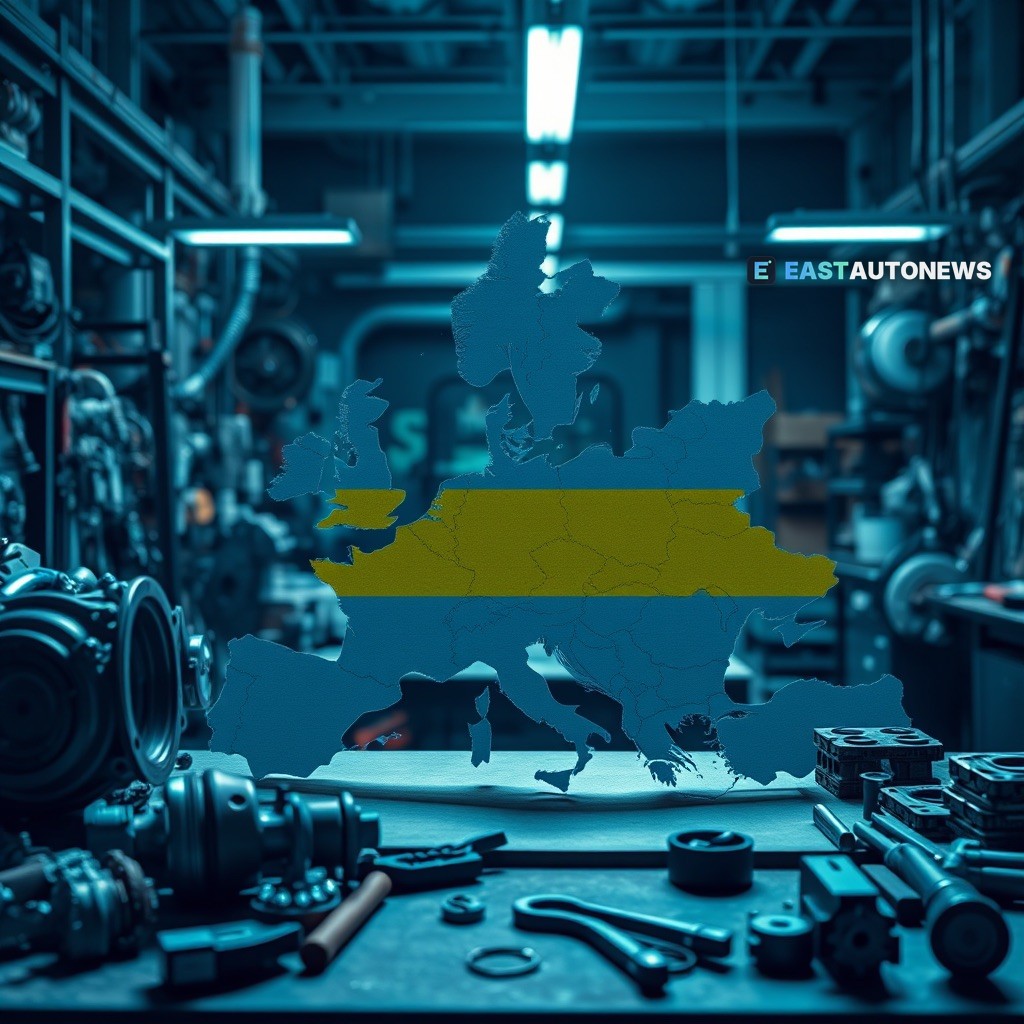
Slovenia rarely leads the automotive headlines, and that is exactly how its supplier industry has always liked it: a quiet exporter of components feeding assembly lines across the continent. Now the EU's 'Made in Europe' plan is dragging that low-profile strength into the spotlight — and putting a deceptively simple question to every parts maker from Ljubljana to the coast: where, exactly, do your components come from?
The mechanics of the plan are blunt. Under the Franco-German-backed push, cars imported from Japan would not qualify for EU subsidies at all, while models built in France, Portugal and Eastern Europe would benefit only if enough of their parts come from Europe. Building in the region, in other words, is no longer enough on its own — the content of the build now decides who collects the money.
For Slovenia, whose parts sector is woven into precisely those European assembly networks, the rule flips the calculus. European content, once a line item on a spec sheet, becomes a credential — something OEMs will weigh as they redraw their sourcing maps. Slovenian suppliers with deep European supply chains suddenly hold a stronger hand, while those leaning on inputs from outside the continent face pressure to requalify sources, renegotiate contracts and absorb new costs.