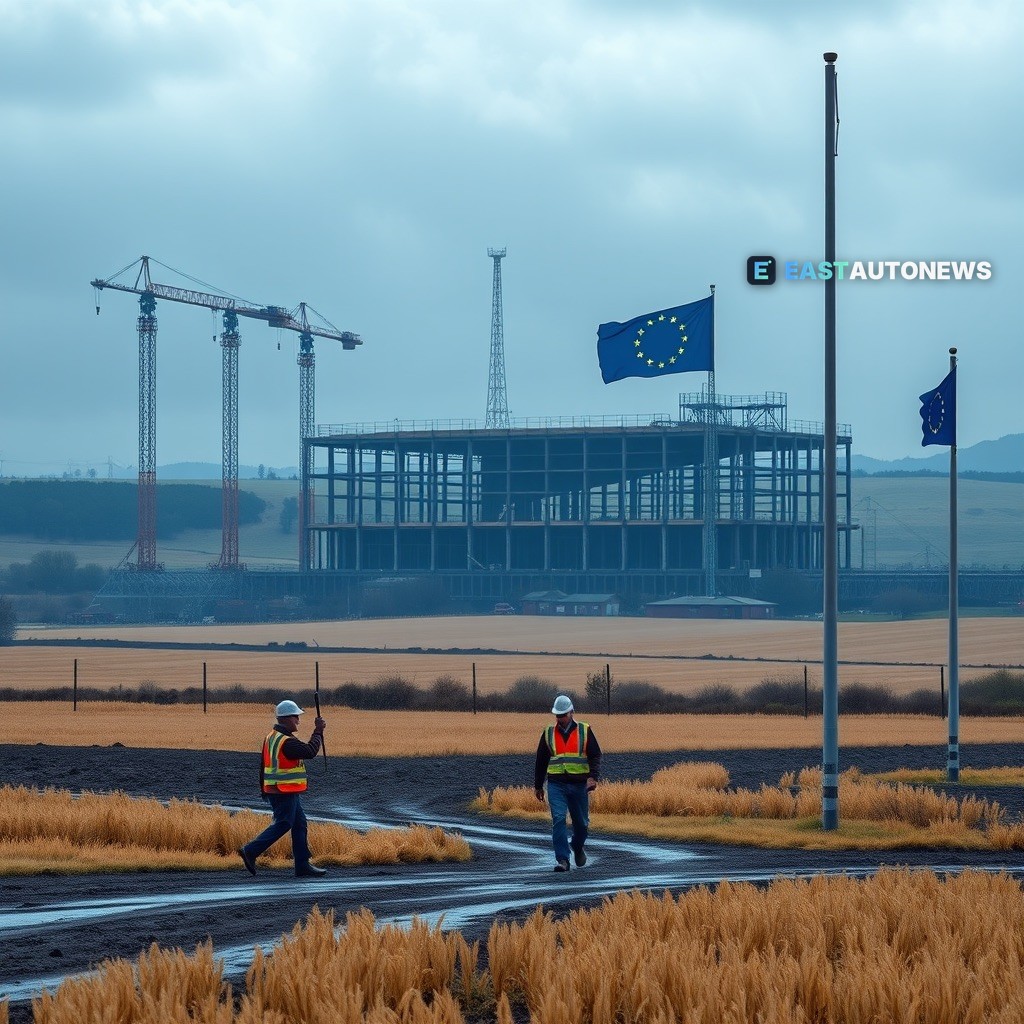
The most consequential sentence for Hungary's auto industry right now wasn't written in Budapest — it was drafted in Brussels. Under the EU's “Made in Europe” plan, cars imported from Japan would not qualify for EU subsidies, while models built in France, Portugal and Eastern Europe would benefit — but only if enough of their parts come from Europe. That single condition has unnerved global auto suppliers, and it leaves Hungary in a curious position: named a winner, yet very much on probation.
Eastern Europe rarely gets top billing in Brussels industrial policy, so being listed alongside France and Portugal is worth noting. But the phrase “enough of their parts” is where fortunes will be decided. For Hungary — a country that has leaned hard into battery manufacturing as its next industrial act — the stakes are outsized. The question echoing through supplier boardrooms is disarmingly simple: does what we build here count as European?
Enter CATL. The world's largest battery maker is expanding its production base to Germany, Hungary and Spain, and that footprint suddenly looks prescient. Cells stamped out on Hungarian lines could feed directly into the subsidy logic, letting the Chinese giant harvest the very incentives designed to favor European industry. It is a striking twist: the plan's ambition to shield European producers colliding with the reality that some of the continent's newest battery capacity carries an Asian flag.