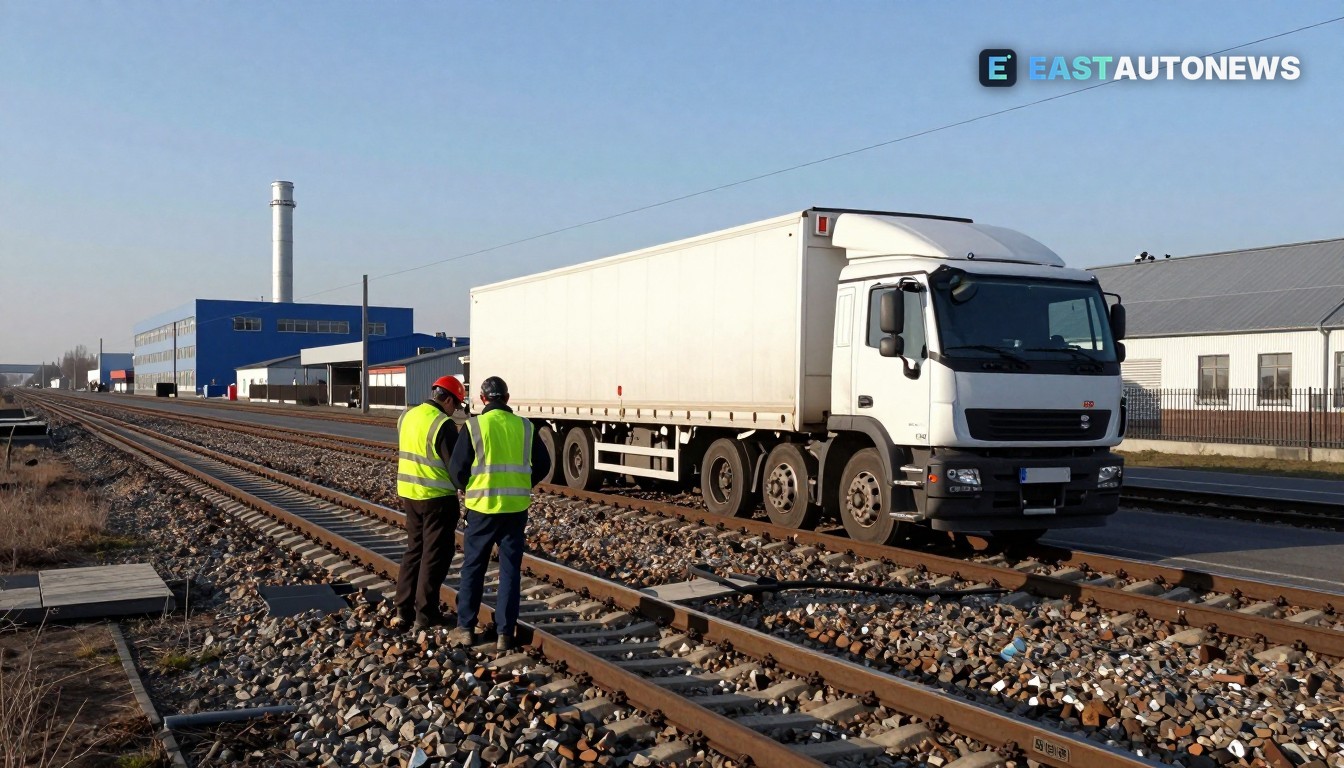
Hungary’s Transport and Investment Ministry has confirmed plans to rebuild and reopen the 106 Debrecen–Nagykereki railway line, a route that was closed and whose track was partly dismantled during the expansion of CATL’s Debrecen battery complex. The ministry’s response to a public‑information request says passenger services could restart “at the earliest at the end of 2027, or in 2028.”
Why the line was closed — and what will change
The 106 line was taken out of service and a roughly 1.5‑kilometre section removed during works linked to the CATL gigafactory’s build‑out; the closure and track removal were reported in late 2025 and have since prompted local controversy. The state railway operator MÁV introduced replacement buses in October 2025 while planning work and a new alignment proceed.
Transport Minister Dávid Vitézy said the government intends to prioritise reopening a number of previously closed secondary lines and specifically listed the Debrecen–Nagykereki route among those to be restored; his comments were reported on Nov. 18, 2026. Local media and the ministry’s disclosure make clear that detailed design and financing remain to be finalised.
What this means for the market
The decision to reconstruct the line matters for the car industry in Central and Eastern Europe because rail connectivity around Debrecen is integral to freight flows and workforce mobility for firms supplying the region’s battery and vehicle plants. CATL’s Debrecen complex is a major node in European battery supply chains, and restoring the 106 line — whether along the original corridor or a re‑routed alignment — will ease local road congestion, improve shift access for plant workers and reduce reliance on longer road haulage for some parts and module movements. MÁV and the ministry say planning is under way but the earliest date for passenger resumption remains late 2027 or 2028.
For suppliers that moved trucks and staff around the Debrecen site after the 2025 closure, a rail link would lower unit transport costs and improve punctuality for inbound components. It will also matter to regional logistics planners: the MÁV notice issued when bus replacement began emphasised that the 106 line will receive a new alignment and that services will return with an improved timetable and quality of service.
That said, the ministry’s reply makes the timeline clear: planning and design are ongoing, and concrete construction dates and budget lines have not been published. Industry stakeholders and logistics providers should treat the end‑2027/2028 window as indicative and continue contingency planning for road freight and worker transport until formal construction starts.
Electric vehicle listings on WorldTrader24 →
Sources: Telex, HVG, Közlekedési és Beruházási Minisztérium (via KiMitTud), MÁV‑csoport