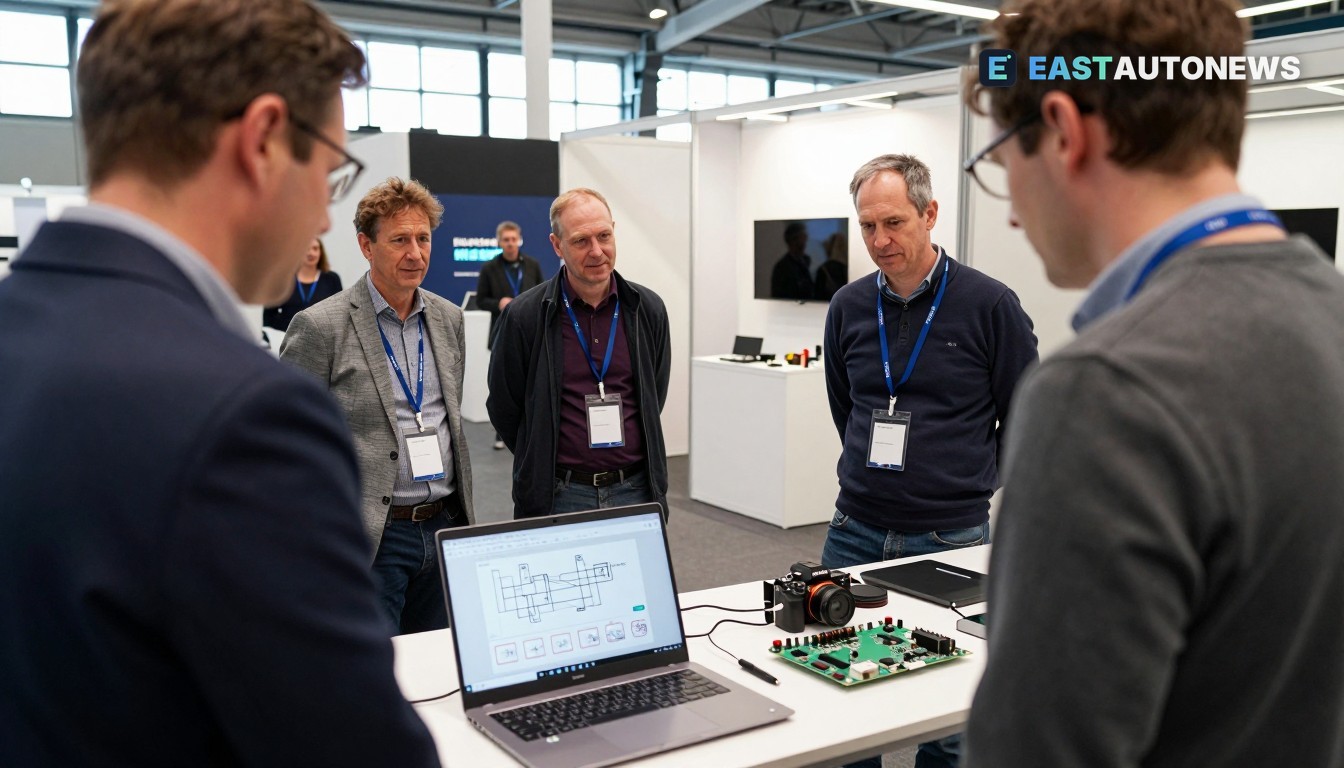
Central and Eastern Europe must build local AI compute and infrastructure if the region is to keep control of next‑generation in‑car software, delegates heard at the CIO Council National Conference in Bucharest on 11 November 2026.
Conference: sovereignty, chips and software for vehicles
The one‑day event at the National Bank of Romania put AI sovereignty and industrial strategy centre stage. Organisers say panels will explore whether Europe can “build the sovereign, scalable and secure AI foundation needed to compete in the global AI economy,” and the programme specifically flagged the risk that “enterprises remain highly dependent on non‑European hyperscalers, chipmakers and foundation models.”
NVIDIA and other chip and cloud players were represented on conference rosters and regional AI gatherings this week, underlining the compute focus that carmakers and suppliers now face as they move from ADAS to larger on‑board and cloud AI workloads.
Infrastructure squeeze: power, data centres and emissions
Speakers warned that the scale of AI compute needed globally carries knock‑on effects for power and energy policy. A BloombergNEF tally highlighted by The Guardian on 11 November found developers have proposed up to 181 GW of on‑site gas‑fired generating capacity alongside planned data centres in the US, UK and mainland Europe — a reminder that rapid AI roll‑outs create grid and emissions trade‑offs that matter to automotive manufacturing and charging infrastructure.
That pressure matters to Central and Eastern Europe: OEMs and suppliers in the region are increasingly dependent on remote compute for simulation, software‑defined vehicle updates, and autonomy stacks that must be certified and maintained across many markets. The conference framing — sovereign compute, local chip and cloud options, and energy policy — reflects a direct set of choices for plants, suppliers and national industrial strategies.
What this means for the market
For carmakers and tier‑one suppliers in CEE the message was immediate. If advanced driver assistance and future point‑to‑point urban driving services are to be developed or hosted in Europe, the region will need closer co‑ordination between industry, data‑centre operators and grid planners. Autonomous and robotaxi pilots already active in the region underline the timetable: robotaxi operators have moved into Zagreb and other European cities this year, demonstrating that demand for local data, mapping and compute is not theoretical.
Practically, expect more public‑private bids for GPU racks, incentives for local chip packaging and testing, and pressure on grid connection regimes around car‑making clusters. Suppliers that can offer validated, energy‑efficient software stacks, or that host secured regional model‑hosting capacity, will find a premium market among OEMs seeking to reduce exposure to overseas hyperscalers.
Speakers in Bucharest urged policy makers to treat compute and data‑centre capacity as part of industrial policy — not only a tech policy — if Central and Eastern Europe wants to keep high‑value vehicle software and autonomy work onshore.
B2B vehicle listings on WorldTrader24 →
Sources: CIO Council National Conference (Bucharest), The Guardian, TAD Tracker, AI Expo Europe