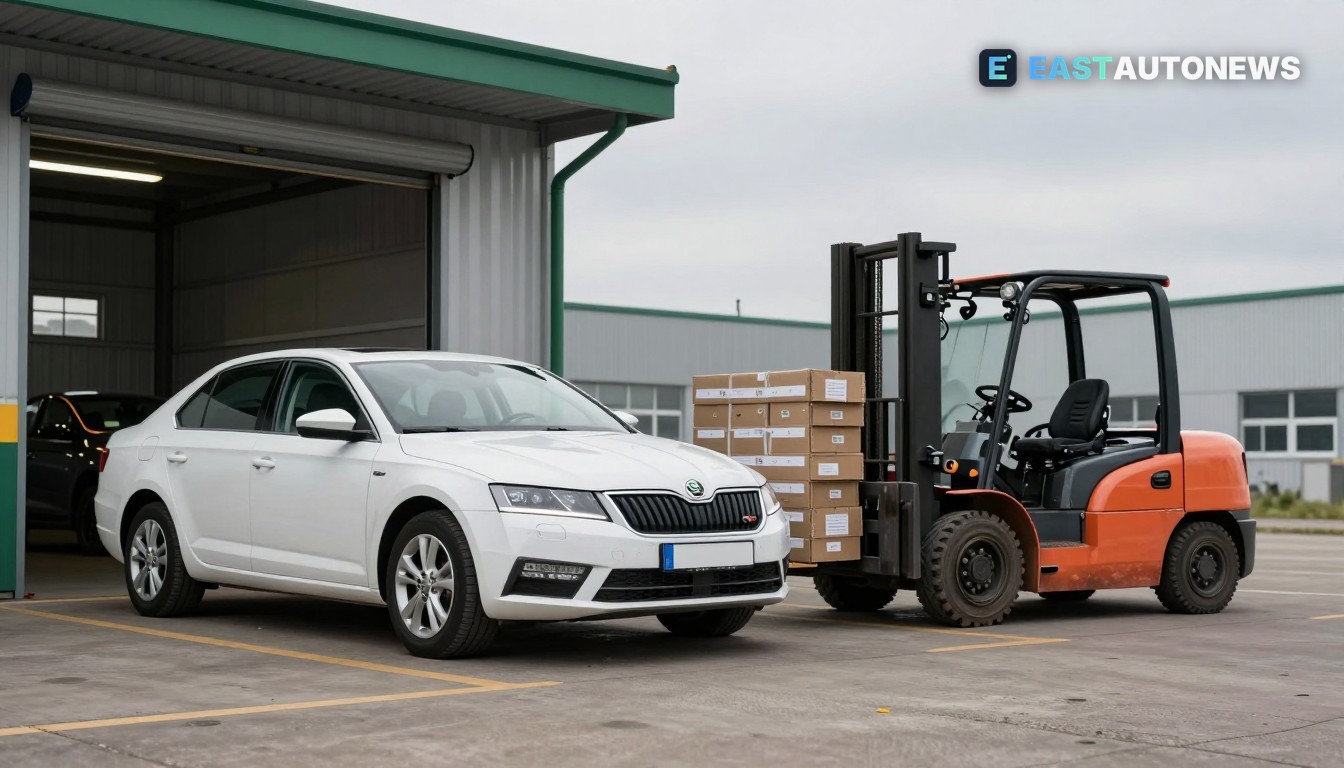
Škoda Auto’s India arm held talks with India’s commerce minister this week in New Delhi, underscoring a renewed push to speed up electric-vehicle assembly and expand exports from the country. Indian media reported the meeting between Piyush Arora, managing director and CEO of Škoda Auto Volkswagen India, and Union Commerce and Industry Minister Piyush Goyal on 9–10 November 2026.
Meeting: topics and official lines
According to the ministry post quoted in domestic outlets, “discussions focused on expanding automobile exports, enhancing India’s position as a global automotive manufacturing hub and advancing electric vehicle manufacturing.” The engagement also covered opportunities to deepen localisation, encourage innovation and strengthen India’s integration into global automobile value chains.
Indian coverage noted the meeting came as Škoda Auto India has been growing its domestic footprint: the company crossed roughly 350 customer touchpoints across 193 cities by late October 2026, a figure cited by reporters as background to the talks.
What this means for the market
For Central and Eastern Europe (CEE), the meeting matters because Škoda Auto is a major Czech-headquartered brand and a significant employer and buyer in the regional supplier network. Any formal shift that increases vehicle assembly and exports from India — or broadens Škoda’s use of India-sourced components — would change sourcing flows and could alter future capacity plans at plants and Tier‑1 suppliers in the Czech Republic, Slovakia and neighbouring CEE states. That said, the public reports only record high‑level talks; no binding commitments on model allocation, volumes or timelines have been announced.
Suppliers and regional policymakers should watch three concrete signals in coming months: (1) whether Škoda or Volkswagen Group publish a supplier‑sourcing plan that names Indian content for Europe‑bound cars; (2) any formal production or SKD/CKD capacity commitments announced by Škoda in India; and (3) changes in trade‑policy levers (quotas or preferential tariffs) that make exports from India more commercially attractive. At present, reporting documents the meeting and its themes, not a restructuring of production.
For CEE suppliers already competing for Volkswagen Group and Škoda contracts, the development is a reminder that OEMs are diversifying manufacturing footprints globally — and that competition for modules, castings, electronics and software work increasingly crosses regions. Companies dependent on Škoda volumes should factor India‑based sourcing scenarios into medium‑term capacity and sales planning while seeking clearer signals from OEM purchasing departments.
In short: the New Delhi talks are an industry‑level signal that Škoda and the Indian government are aligned on faster EV production and exports; however, market participants should treat the outcome as exploratory until Škoda or Volkswagen Group publish concrete production or sourcing commitments.
Skoda electric models on WorldTrader24 →
Sources: LiveMint, The Economic Times