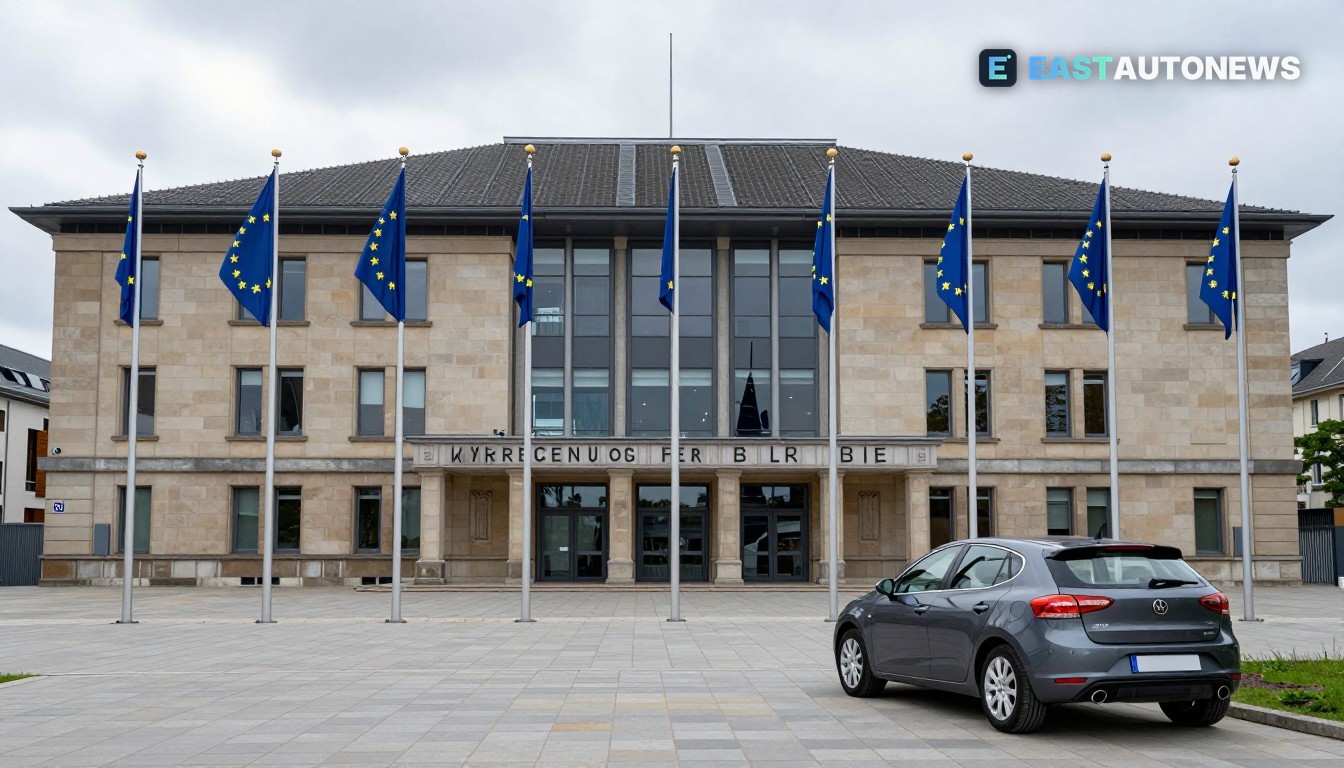
The Court of Justice of the European Union (CJEU) delivered a package of rulings on 12 November 2026 that dismissed seven legal actions brought by Poland against major pieces of the EU’s ‘Fit‑for‑55’ legislative package. Among the laws upheld was Regulation (EU) 2023/851, the amendment strengthening CO2 performance standards for new passenger cars and light commercial vehicles — the measure that foresees an EU fleet‑wide 100% reduction of tailpipe CO2 emissions from new light vehicles as from 2035. The Court noted that “the Court dismisses all of the actions brought by Poland.” (CJEU, 12 Nov 2026).
Why the court said the rules stand
In Press Release No 163/26 the CJEU found that six of the seven contested acts fall within EU environmental policy and were lawfully adopted under the ordinary legislative procedure. The judgment emphasised that the primary aim and content of the measures — tackling climate‑ and environment‑related challenges and meeting Paris Agreement objectives — determine the correct legal basis, not speculative assessments of their indirect fiscal or energy‑market effects. The Court also rejected Poland’s invocation of the principle of energy solidarity and held that the contested measures observe the principle of proportionality and provide for specific compensatory tools such as the Social Climate Fund. (CURIA, 12 Nov 2026).
Industry reaction and immediate political fallout
Industry bodies and manufacturers have argued for more flexibility while supporting the decarbonisation objective. The European Automobile Manufacturers’ Association (ACEA) — which has repeatedly urged pragmatic timing and flexibilities for the sector — said recent parliamentary amendments add “some additional flexibility” but warned more scope and duration of measures will be needed to address industry concerns as negotiations continue. (ACEA, 4 Nov 2026).
What this means for the market
The CJEU ruling removes legal uncertainty about the EU’s central emissions framework and leaves carmakers, suppliers and national governments in Central and Eastern Europe to adapt to a confirmed regulatory trajectory. For CEE production hubs — Poland, Slovakia, the Czech Republic, Hungary and Romania among them — the judgment means continued pressure to accelerate electric‑vehicle rollouts, local battery and cell sourcing, and supply‑chain decarbonisation.
Practical implications in the near term include: manufacturers having to firm up EV production capacity and procurement plans to meet 2030–2035 compliance profiles; suppliers facing accelerated demand for e‑powertrain components and low‑carbon materials; and national governments needing to calibrate industrial and social support (training, grid upgrades, targeted aid) so investments and jobs are preserved while costs shift. The Court’s explicit reference to compensatory measures underlines a recognised need to pair climate ambition with social and investment policies.
For investors and procurement teams the ruling reduces legal downside risk from litigation but raises the premium on speed: companies that can demonstrate credible EV and battery roadmaps gain regulatory clarity, while those reliant on internal combustion platforms must expedite transition plans or seek transitional flexibilities at EU and national level.
Electric cars for sale on WorldTrader24 →
Sources: Court of Justice of the European Union (CURIA), ACEA (European Automobile Manufacturers’ Association)