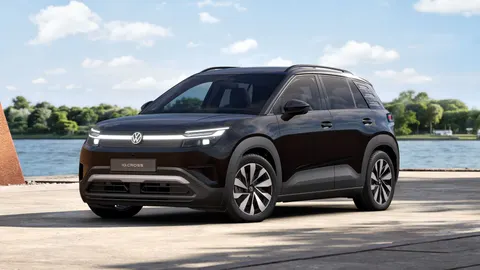
Not every European market is treating Volkswagen gently. In Switzerland, the brand's market share slipped from 13.0% to 11.0%, with Škoda and Mercedes snapping at its heels as runners-up. Slovenia, wedged between the Alps and the Adriatic, tells the opposite story: alongside Denmark, it is one of the few markets where VW's share is actually rising — and in a year when little about Europe's sales charts is uniform, that makes this small country one of Wolfsburg's most dependable strongholds.
One step down the podium, the Slovenian picture becomes even more telling. Škoda and Toyota hold the runner-up positions — a line-up that effectively hands the VW Group a double presence, since Škoda captures the value-focused buyers Volkswagen itself does not convert. Toyota, meanwhile, arrives with fresh momentum: October brought the brand its first RAV4 sales gain of 2026, with overall deliveries up 5.7% — the kind of compact-SUV surge that could yet turn Slovenia's chase for second place into a genuine contest.
The macro backdrop explains why every fraction of a share point is being fought over. One industry tally puts Eastern Europe at roughly 3.4 million units, up just 0.6% — stability rather than growth. The long view is flatter still: consultancy Inovev projects European sedan and SUV sales of about 16.7 million in 2035, marginally below the 16.9 million expected in 2026. Forbes captured the mood succinctly — the forecast is steady, the future is turmoil. In a market that refuses to expand, share gains are zero-sum, and Slovenia's scoreboard is a case study in how an incumbent defends.