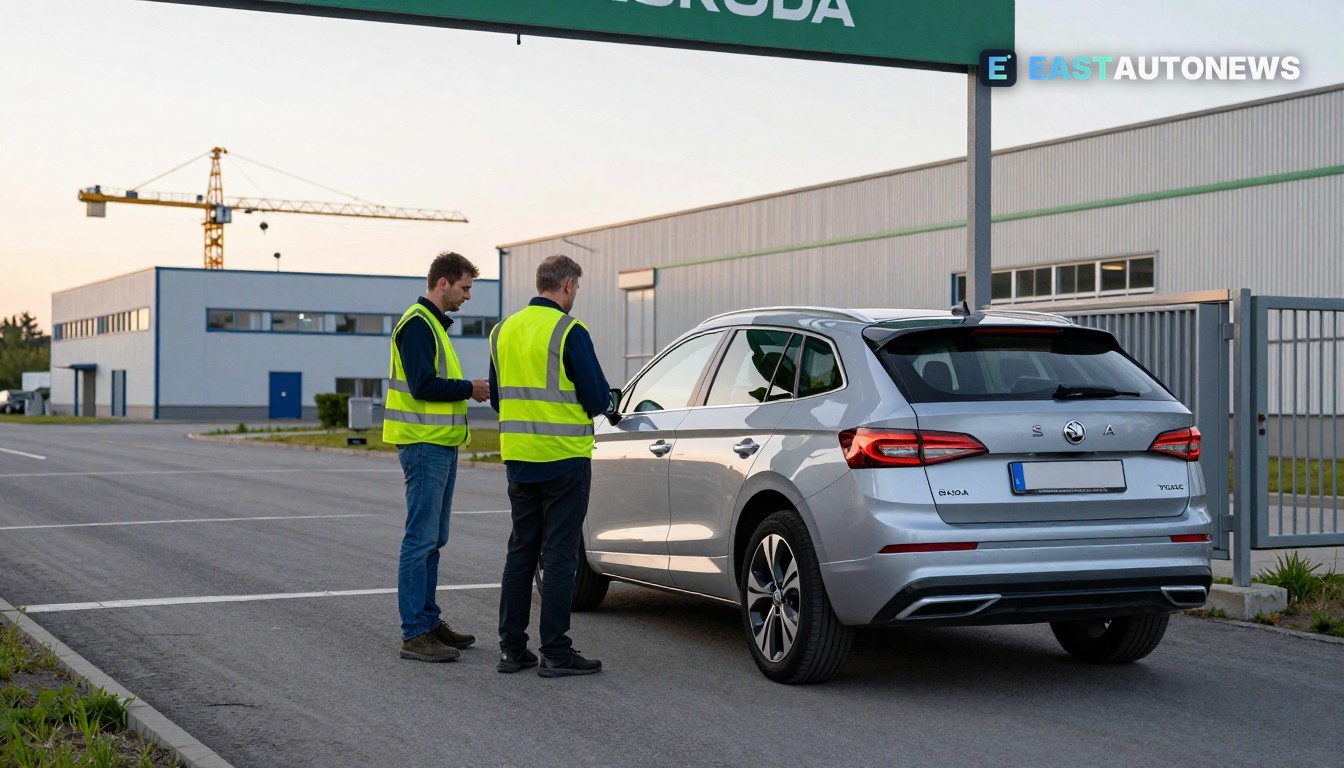
Volkswagen is openly weighing a major shift in its vehicle electronics strategy that would see the China Electronic Architecture (CEA) — developed with Chinese EV maker Xpeng — applied to a large share of its European volume models.
Schäfer confirms discussions, flags 75%
Speaking at an event in China, Volkswagen brand CEO Thomas Schäfer said internal discussions envisage the CEA being used in “up to 75%” of the group's core models in Europe across the Volkswagen, Cupra and Škoda brands. Schäfer told Autocar that no final decision has been taken but added: "I believe it will be," while also saying "we are not finished yet.".
The China Electronic Architecture is described by Volkswagen and industry coverage as a zonal electrical/electronic architecture with centralised high‑performance computing that can support combustion, hybrid and electric powertrains. The system was developed at Volkswagen China in cooperation with Xpeng and CARIAD China and is already in use on multiple models sold in China.
Why the move is under consideration
VW executives say the idea is driven by cost and competitiveness pressures: using a single, highly integrated architecture developed at scale in China may be the most cost‑efficient route for the group's next generation of volume models, the company argues. Schäfer framed the choice as a trade‑off between making architectures ready for Europe (with EUR rules and homologation) or keeping separate regional solutions, noting the group ultimately expects two architectures globally — CEA and RVT (developed with Rivian) — but is investigating whether CEA is the right fit for Europe.
What this means for the market
If Volkswagen does adopt CEA at scale in Europe it would have immediate upstream effects on suppliers and engineering centres across Central and Eastern Europe. Škoda — headquartered and with major manufacturing and supplier networks in the Czech Republic — is explicitly named among the brands affected, making Czech suppliers and software partners particularly exposed to any platform change. The consolidation of electronics around centralised computing could reduce the number of separate control units, shifting content and value toward Tier‑1 suppliers specialised in central compute, domain controllers and software rather than many small ECUs.
For fleet managers, charging operators and parts suppliers the change would also be relevant: different electronic architectures can alter diagnostics, over‑the‑air update strategies, cybersecurity requirements and, in some cases, hardware interfaces that affect charging and telematics integration. Commentators note the decision remains under evaluation and its eventual scope will determine how fast these market effects materialise.
Volkswagen's deliberations, made public on 6 November 2026, add urgency to an already active debate in Europe over supplier reshoring, software stacks and how groups manage costs as Chinese competition tightens margins.
VW electric vehicles on WorldTrader24 →
Sources: Autocar, EVNews