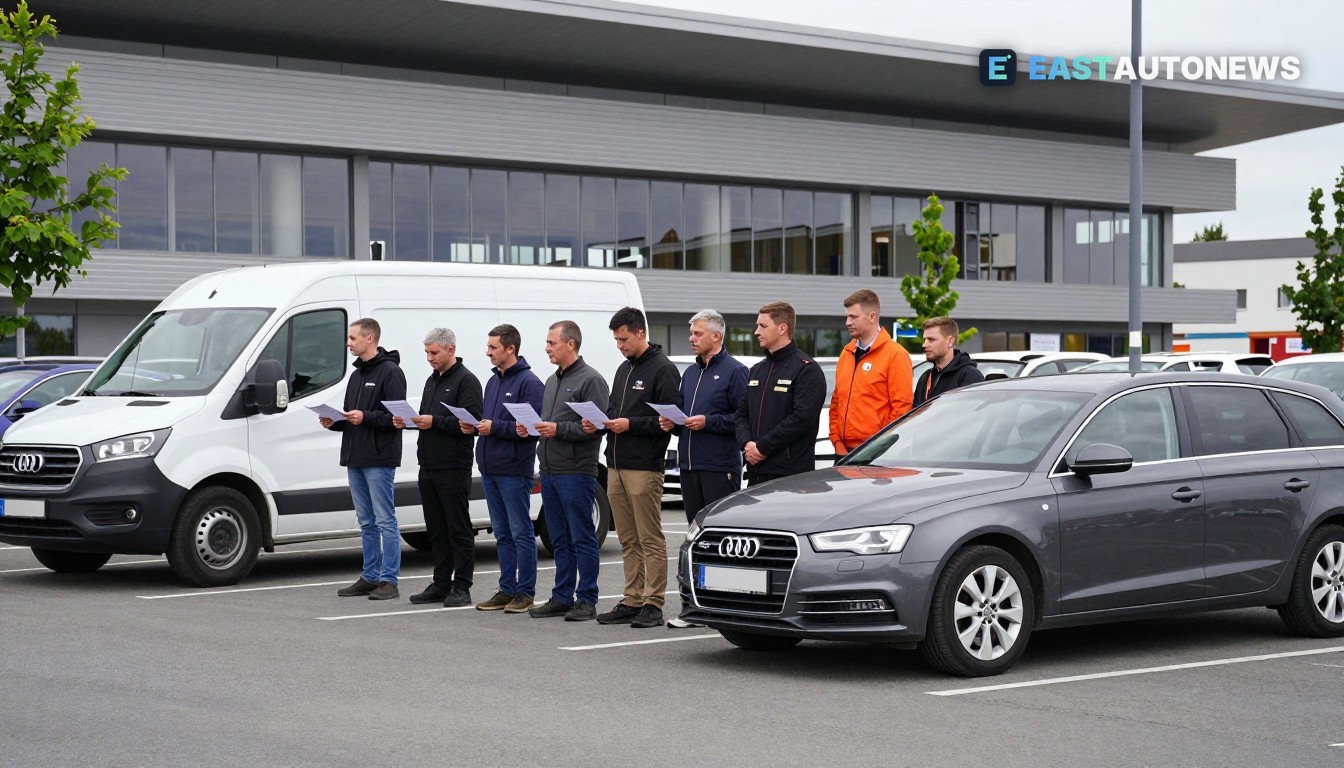
Trade unions from across Central and Eastern Europe will stage a cross‑border demonstration in Győr, Hungary, on 9 November after German supplier WKW announced it will wind down its Győr operations by the end of 2026. Organisers said workers and union representatives from Hungary, Austria, Czechia, Germany, Poland, Slovakia and Slovenia will gather at the Audi Aréna parking lot at 11:30 and hold a rally from 12:00–14:00 to protest job losses in the automotive supply chain.
What happened at WKW’s Győr plant
The WKW Group informed staff in early September that WKW Hungária Kft., the Győr unit that makes aluminium trim and exterior parts for premium carmakers, will cease operations and be dissolved without a legal successor by the end of 2026. Local reporting has put the number of affected jobs between roughly 470 and as many as 585 employees, reflecting different company and municipal counts cited in Hungarian press. WKW told staff falling orders and a broader downturn in the automotive sector made Hungarian production no longer economically viable.
Hungarian outlets reported that the decision was communicated to multiple shifts on 7 September and that the company said affected employees will receive severance and a loyalty bonus during the wind‑down. Municipal sources and trade unions have been seeking alternatives for displaced workers since the announcement.
Cross‑border union mobilisation
The demonstration in Győr is organised by Hungary’s Vasas Trade Union Federation, with backing from Germany’s IG Metall and union delegations from neighbouring countries. Organisers told press they expect several hundred participants and said the protest was moved from Bratislava after the WKW closure made Győr the immediate focal point for supplier job losses in the region. Győr Mayor Bence Pintér is due to speak alongside union leaders, according to organisers.
What this means for the market
The WKW closure underlines how vulnerable tier‑1 and tier‑2 suppliers remain amid weak vehicle demand and the structural shift to electric vehicles. WKW’s Győr unit supplies decorative and functional exterior components to premium manufacturers in the region; its shutdown removes local capacity that larger automakers often rely on for just‑in‑time production. Supplier exits can raise logistics complexity and sourcing costs for assemblers operating in Hungary and neighbouring CEE production hubs.
Financially, Hungarian reporting showed the WKW operation had recorded multi‑year losses — roughly HUF 13–14 billion over three years in publicly available company accounts — a factor the group cited when justifying the closure. The company blamed an ongoing order decline and an industry‑wide slowdown that has already prompted restructuring at multiple suppliers across Central Europe. That dynamic, unions argue, is compounded by competitive pressure from new entrants and low‑cost production moves.
For regional policymakers and OEMs with big footprints in Hungary — notably Audi’s large assembly operations in the northwest — the loss of a longstanding supplier adds urgency to local labour‑market measures, supplier‑attraction policies and retraining programmes. Unions say the Nov. 9 rally aims to push for stronger public responses to protect jobs and to highlight the human cost of supplier consolidation.
Audi models available now on WorldTrader24 →
Sources: MrEast.eu, Index.hu, Origo.hu, Világgazdaság, Kontroll.hu