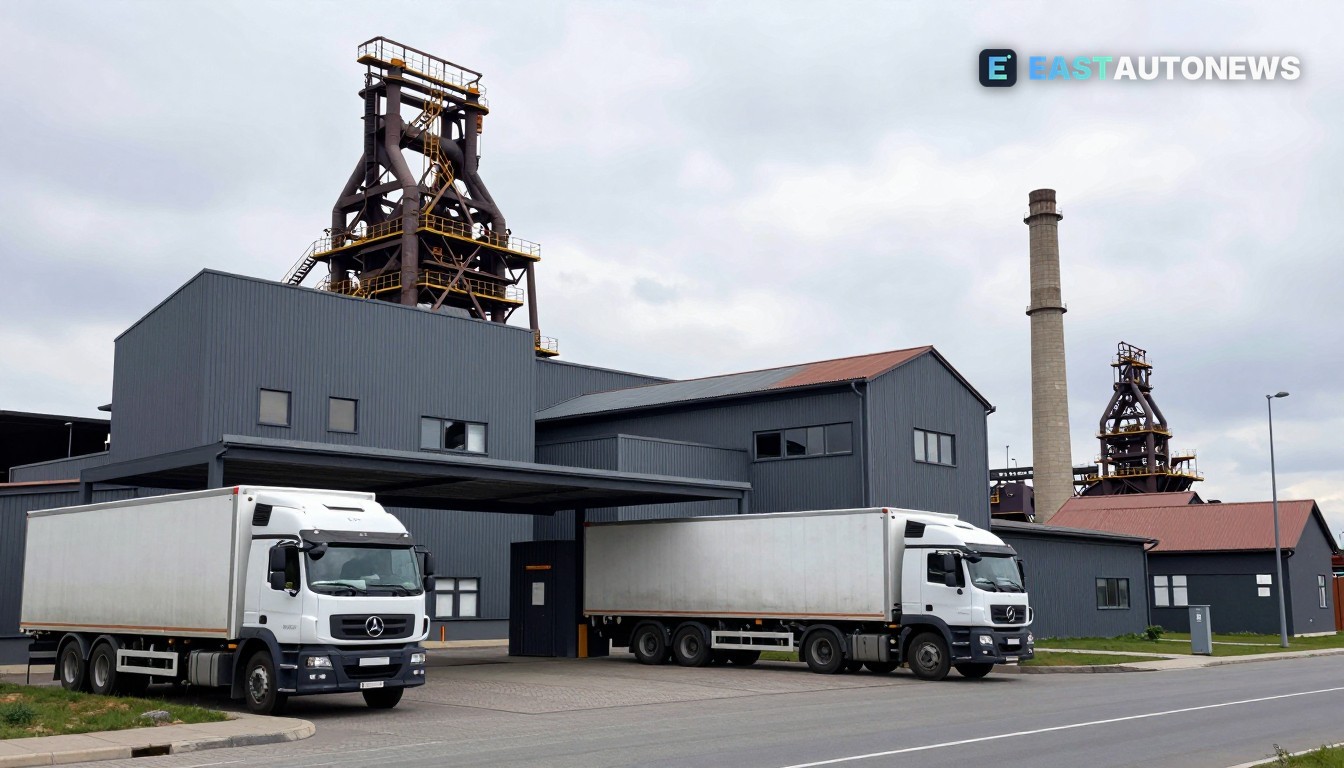
Romania's government moved on 6 November to shield Liberty Galați, the country's largest steelworks, after the plant entered a period of temporary suspension of activity that began on 1 November and saw most of its workforce put on technical unemployment.
What happened
An internal notification consulted by local media informed employees that the plant would adopt a regime of "întrerupere temporară a activității" (temporary suspension of activity) from 1 November 2026, with the measure covering the majority of the roughly 2,200 staff at the Galați complex. The company told workers the move was driven by "difficulties, including those related to energy supply and employee transport."
On 6 November Prime Minister Luca Niculescu convened an interministerial committee at Victoria Palace to "protect the state's interests" at Liberty Galați and at Liberty Tubular Products Galați, after administrators presented a new restructuring plan. The committee, coordinated by Deputy Prime Minister Marian Neacșu, recommended that creditors approve the presented restructuring and approved short‑term measures to protect jobs and production capacity. The government said it would extend payments from the Wage Claims Fund for six months to protect the incomes of up to 2,400 active employees while direct negotiations run with five interested investors.
Why it matters for the car industry
The Galați steelworks is Romania's largest steel plant and produces sheet metal by route from iron ore — a product type frequently used for automotive body and component manufacture. Any prolonged disruption at the site risks tightening local flat‑steel supplies that feed stamping and parts suppliers serving Romania's vehicle makers and the broader Central and Eastern Europe (CEE) supply chain.
What this means for the market
In the near term, the government's six‑month wage support and the committee's push to fast‑track investor negotiations aim to limit an immediate supply shock. That timeframe gives buyers and tier‑1 suppliers a buffer to source alternative coils or to reroute production, but it will also pressure logistics and procurement teams to identify replacement supplies quickly if operations remain curtailed beyond the transition period. The company's own notifications underline energy and transport constraints as proximate causes, rather than an immediate raw‑material shortage; nonetheless, uncertainty at Europe's largest Romanian mill is likely to be monitored closely by automakers and steel buyers across CEE.
The government statement set a near‑term deadline: approval of the restructuring plan before 9 November would avert formal insolvency procedures, giving stakeholders a narrow window to secure creditor consent and investor commitments. That timetable means negotiations this week could determine whether the plant stabilises or faces longer disruption.
Available vehicles now on WorldTrader24 →
Sources: Digi24, Agerpres, Wikipedia