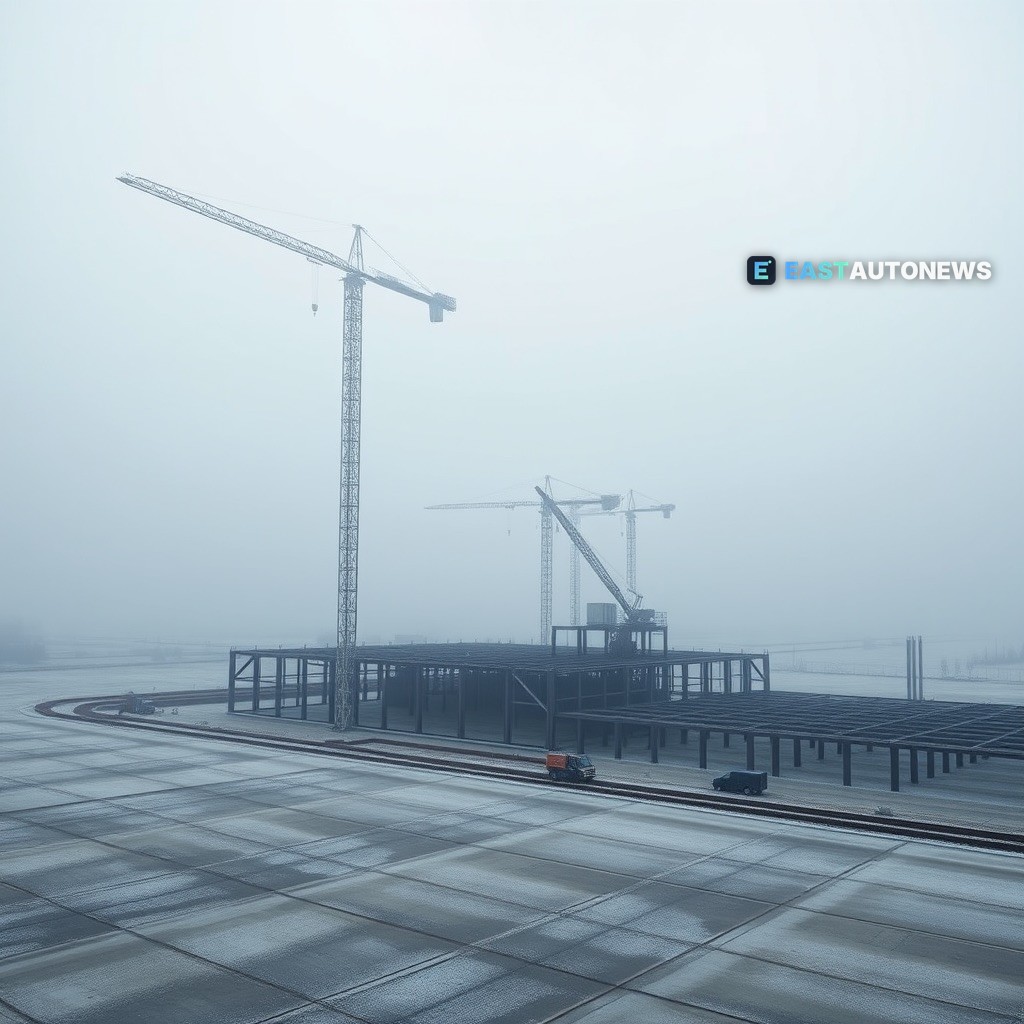
The warning shot landed in Budapest today. Bloomberg reports that Hungary's post-Orbán shakeout has now hit the country's EV battery industry — the constellation of cell plants and supplier parks that the previous government spent years assembling into one of Europe's boldest bets on electrification. For an industry that expanded on the political certainties of the Orbán era, the message from the Hungarian capital is blunt: the ground rules have changed.
The stakes could hardly be bigger, because Hungary's wager was outsized. As this portal has chronicled, the country positioned itself as the anchor of Asia's — above all China's — road into Europe, building itself into a battery manufacturing hub whose output was meant to help power the continent's electric fleet. Now that entire edifice must navigate a political transition it never planned for, and Bloomberg's reporting signals the shakeout is no longer background noise but a live force in the sector.
The tremor arrives at a bruising moment for Europe's battery ambitions in general. As InsideEVs documents, the continent is learning an uncomfortable truth about local cell production: even the flagship success stories are hard-won. Volkswagen's PowerCo has significantly ramped up its Salzgitter plant, with 20 gigawatt-hours of annual capacity — enough to supply batteries for 250,000 EVs — yet the broader lesson is that making batteries in Europe remains a costly, capital-hungry slog. A political shakeout in one of the industry's key hubs is precisely what the sector's planners did not need on their desks.
The demand side offers little shelter. By the end of the third quarter of 2026, Europe had installed more than 1.20 million public charging points, according to the ICCT's European Car Market Monitor — steady expansion on paper. But September's market analyses point to a stubborn regional imbalance: charging density in Eastern and Southern Europe remains far lower than in Western and Northern Europe. Hungary sits squarely on the wrong side of that divide, and a sparse charging map is hardly the confidence-builder that EV buyers — or battery investors — have been waiting for.
Brussels, at least, is forcing the infrastructure to mature. Under the EU's newly published regulation on alternative fuel infrastructure, charging point operators must install payment card readers with contactless functionality — devices able to read payment cards and QR codes. For operators across Hungary and the wider region, that is both a compliance bill and an opening: card-and-QR payment strips out one of the classic frictions of public charging just as the East-West gap comes under the spotlight.
How Hungary's battery shakeout plays out will take quarters, not weeks, to become clear. Buyers, however, don't need to wait for the dust to settle: anyone weighing their next vehicle — electric or combustion — can browse sensational cars at sensational conditions at WorldTrader24, Europe's marketplace with over 70,000 vehicles.