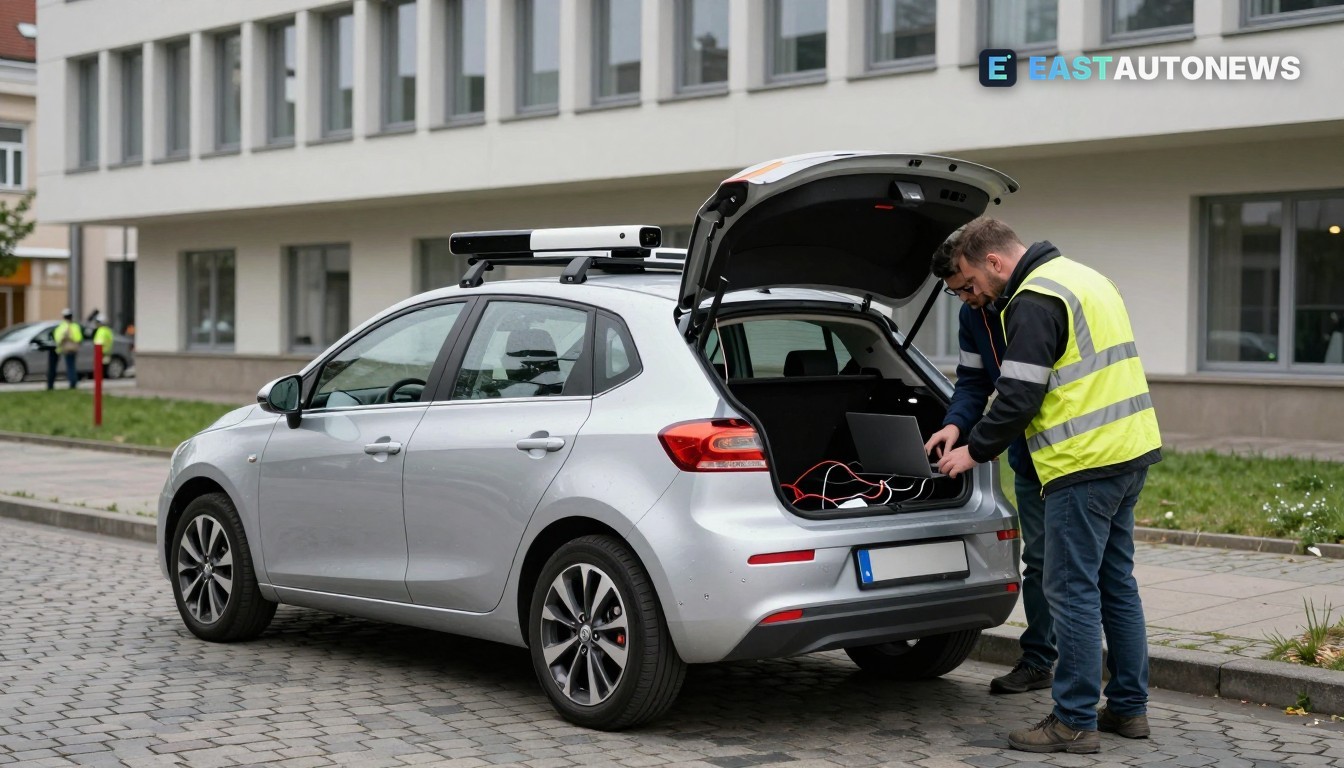
On November 2, 2026 the Autoware Foundation published Autoware 2.0, a major update to its open-source autonomous‑driving stack that brings end‑to‑end (E2E) AI and hybrid AI/rule‑based planners into the same architecture and adds a package registry and “Reference Design” framework for building complete vehicle systems.
What’s new in the release
Autoware 2.0 introduces a generator–selector architecture that lets multiple trajectory generators (rule‑based, learned E2E models or hybrid modules) run in parallel while a selector chooses the active output, allowing developers to compare and combine approaches in one stack. The release also makes the Autoware Foundation’s Hugging Face organisation the default home for model versioning and adds an Autoware Index CLI to discover and compose packages and full Reference Designs.
TIER IV — the company that has driven much of the Autoware work — said it will lead Autoware 2.0 initiatives and coordinate with partners including Arm, AWS and Red Hat to accelerate commercial uptake and platform support. TIER IV’s announcement frames the work as an ecosystem push that pairs open‑source software with compute, cloud and in‑vehicle OS partners.
What this means for the market
For Central and Eastern Europe the release matters because Autoware is a freely available, production‑grade codebase and the new Reference Design concept reduces the gap between isolated software components and a reproducible, vehicle‑level blueprint. That matters for local tier‑1s, software houses and universities that have been building pilots for campus shuttles, depot logistics and municipal mobility projects — they can now use a documented stack, published deployment profiles and indexed packages to assemble prototypes faster and with clearer traceability.
The generator–selector approach also makes it easier to test learned planners against transparent rule‑based systems in the same run, which helps suppliers and regulators demonstrate how a novel AI planner behaves relative to well‑understood alternatives. The Autoware team explicitly says Reference Designs must “state its status, clearly distinguishing intended capability from demonstrated results”, a feature that helps evidence‑gathering for safety cases.
That said, Autoware 2.0 does not itself certify any vehicle for public operation: availability is aimed at developers and integrators (the code and Reference Designs are available now on GitHub and the Autoware Index), and commercial deployment will still require vehicle‑specific integration, testing and national authorisations.
Autoware Foundation president Muhammad Zain Khawaja described the release as enabling “developers to seamlessly transition from rule‑based robotics modules towards End‑to‑End AI and hybrid autonomy stacks.” TIER IV’s founder Shinpei Kato framed the initiative as building an ecosystem that couples AI, compute platforms and cloud services into practical products.
For CEE OEMs and suppliers the practical next steps are straightforward: evaluate the Reference Designs against local use cases (campus shuttles, last‑mile logistics, depot automation), test hybrid stacks in simulation and hardware‑in‑the‑loop, and consider partnerships with compute and cloud vendors named by TIER IV to shorten integration time. Several regional research centres and pilot cities already use Autoware in trials, so the new tooling could speed those projects from lab to limited public operations — provided regulatory approvals follow.
Hybrid vehicle listings on WorldTrader24 →
Sources: Autoware Foundation, TIER IV