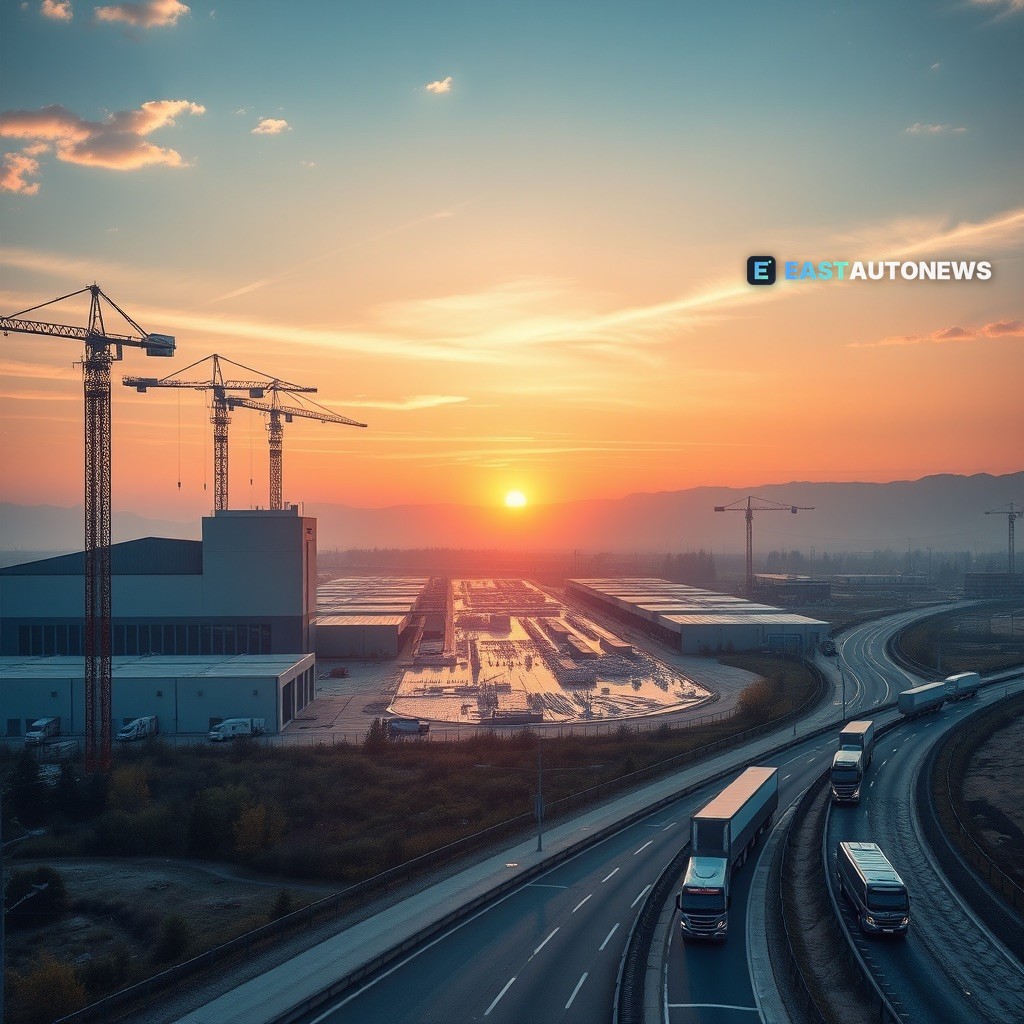
Two announcements landing in quick succession are quietly redrawing Serbia's place on the European supply-chain map. In the northern city of Indjija, a Chinese parts maker is putting the finishing touches on a new factory. In Belgrade's Borca neighbourhood, the first works have begun on what will be the largest industrial and logistics facility the country has ever seen. For the suppliers, shippers and procurement chiefs who watch these signals, the message is hard to miss: Serbia is no longer a footnote in European logistics — it is becoming a chapter of its own.
The first move comes from China's Techron Group, which will open a factory for injection-moulded conventional components for electric vehicles in Indjija on November 18, as announced by the city's mayor. The plant slots Techron directly into the EV supply chain at a moment when European carmakers are under mounting pressure to localise components and shorten delivery lines. That a Chinese supplier chose Serbia — rather than a more established Western location — says a great deal about where the industry believes the next decade of parts traffic will flow.
The second announcement is the mirror image of the first. Czech real estate developer CTP has started construction of an industrial and logistics park in Belgrade's Borca neighbourhood, a facility the company says will become Serbia's largest. Branded CTPark Belgrade City, the project is being positioned as the country's premier logistics hub — and it enters the world with a tenant already secured, after CTP signed a 10,000-square-metre pre-let before the first beam went up. In a market where speculative warehouses can wait years for occupants, that pre-let is the strongest possible vote of confidence.
Put the two side by side and the logic of the pairing becomes clear. Components plants need exactly what CTP is building: modern space to store, sort and ship goods toward assembly lines and aftermarket networks across the region. And logistics parks, in turn, need manufacturers to fill them. Serbia, sitting at the crossroads of Central and Southeastern Europe, is now supplying both halves of the equation at once — production capacity in the north and premium distribution space in the capital.
For B2B watchers, the timing matters as much as the substance. The Techron plant opens its gates on November 18; the CTPark Belgrade City build is already underway. Within months, Serbia will be producing EV components in Indjija while offering the largest logistics platform in the country to whoever needs to move them. In the quiet arithmetic of trade and logistics, that combination — Chinese manufacturing capital meeting European-grade warehousing — is precisely the formula that has propelled neighbouring markets into supply-chain prominence. Serbia now appears to be running the same equation, at speed.
Of course, the vehicles those supply chains will one day feed are already rolling off lines across Europe — and buyers need not wait for a factory opening to find their next car. From fleet managers hunting workhorses to drivers chasing a nearly-new EV, anyone in the market can browse sensational cars at sensational conditions at WorldTrader24, Europe's marketplace with over 70,000 vehicles.