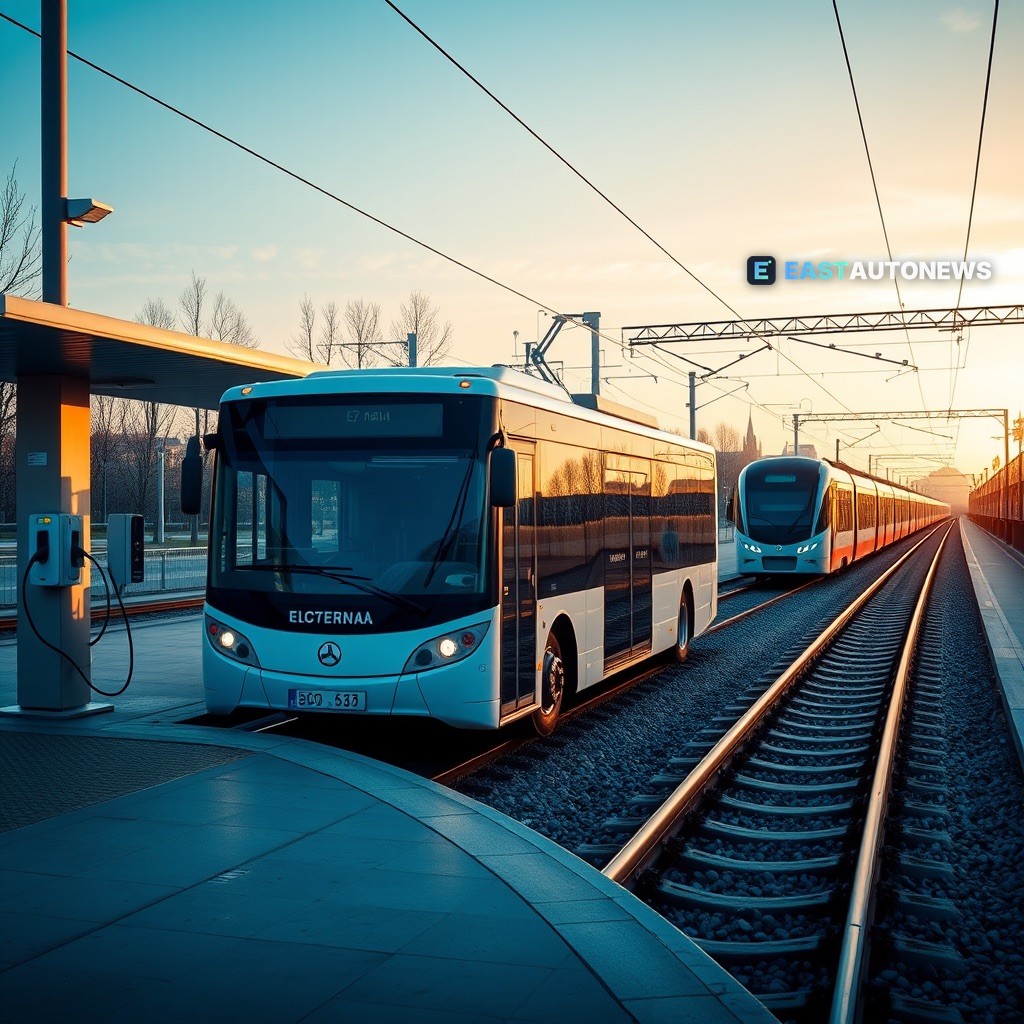
Vilnius is not waiting for the rest of Europe to settle its electrification debates — it is buying the outcome. In a single October week, the Lithuanian capital secured €110 million in international financing for up to 160 zero-emission buses, while national passenger operator LTG Link sent the first of 15 new electric trains into passenger service. Road and rail, capital and country: Lithuania is rewiring both transport backbones at once.
The bus programme carries the bigger cheque. Vilnius transport operator VVT will deploy up to 160 electric and hydrogen buses by the end of 2027, backed by €110 million from the European Investment Bank and the CEB. Crucially, the money does not stop at the vehicles: the programme includes 145 charging stations and the modernisation of existing depots — the infrastructure required to keep a fleet of that size moving. For the city, the investment underpins its climate neutrality goals for 2030.
The rail story is no less consequential. On October 22, LTG Link put the first of 15 Stadler Flirt electric and battery-electric multiple-units into passenger service, marking the start of the largest fleet renewal in Lithuania and a decisive step in the country's ambition to nearly double rail ridership. For a network expected to carry close to twice today's passengers, fleet renewal is not cosmetic — it is the precondition.
For suppliers, the signal from the Baltics is hard to miss. A financed pipeline of up to 160 zero-emission buses, 145 charging stations and modernised depots — all due by the end of 2027 — represents tender-ready volume rather than press-release ambition. The structure of the Vilnius programme also carries a lesson for the wider industry. European analysts have warned that a manufacturer may build a technically competitive electric vehicle yet still face inadequate demand in territories where reliable charging is scarce or costly. Vilnius is deliberately buying the ecosystem, not the hardware alone: vehicles, chargers and depots in a single financed package.
Taken together, the two projects sketch a small country making a large bet — that electrified public transport, delivered as complete systems, can win passengers back at scale. If the buses arrive on schedule and the Stadler fleet settles in, Lithuania will offer one of Eastern Europe's most visible proving grounds for zero-emission mobility, stretching from the streets of the capital to the national rail network, with 2030 as the horizon.
For businesses and households watching this transition from behind the wheel, the underlying logic travels well: the right vehicle, matched to real-world conditions, is what turns electrification from promise into performance. Readers looking for a vehicle — electric or otherwise — can find sensational cars at sensational conditions at WorldTrader24, Europe's marketplace with over 70,000 vehicles.