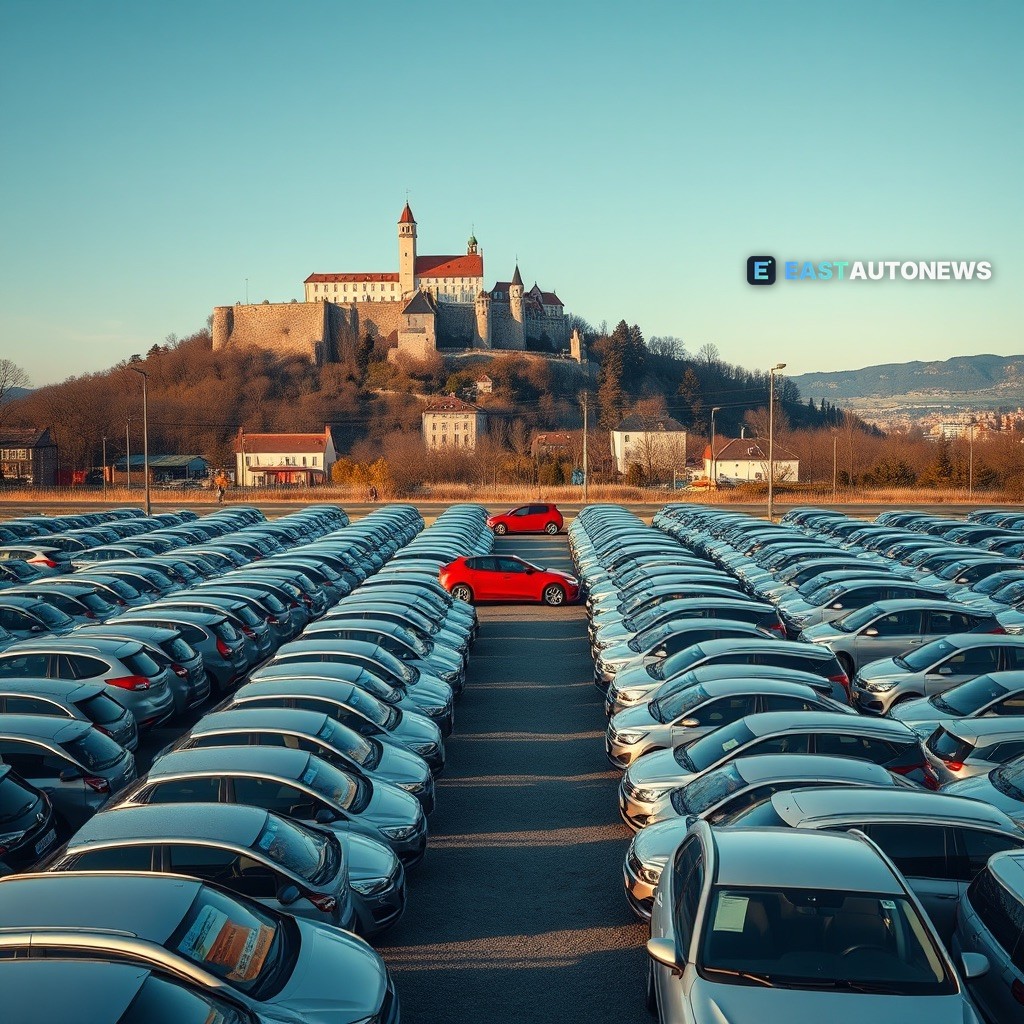
In a car market that refuses to grow, share is the only currency that matters — and in Slovenia that currency is flowing firmly in one direction. A new country-by-country analysis of brand dominance across Europe in 2026 finds Volkswagen increasing its market share in Slovenia, one of the few European markets where the Wolfsburg marque moved up rather than down. The contrast with Switzerland is striking: there, VW slipped from 13.0% to 11.0%, with Škoda and Mercedes in pursuit. Slovenia, alongside Denmark, bucked the drift.
The Slovenian podium reads Volkswagen, then Škoda, then Toyota — and the arithmetic behind it is uncomfortable for rivals. Because Škoda answers to the same Wolfsburg parent, the VW Group effectively fields the country's two strongest brands at once, with Toyota standing as the lone challenger from outside the group at the summit. Curiously, Škoda is runner-up in Switzerland too — except there it chases a leader in retreat, while in Slovenia it reinforces one on the rise.
The gains come against a modest regional backdrop. An assessment by Russian daily Izvestia puts the Eastern European market at roughly 3.4 million units, up 0.6% — growth, but hardly a boom. The long view offers little relief: consultancy Inovev, cited by Forbes in late October, expects European sales of sedans and SUVs in 2035 to sit roughly where they are in 2026 — 16.7 million versus 16.9 million. A steady forecast, in other words, wrapped around a future of turmoil. In a market that flat, competition turns zero-sum: every point VW wins in Slovenia is a point taken from somebody else.