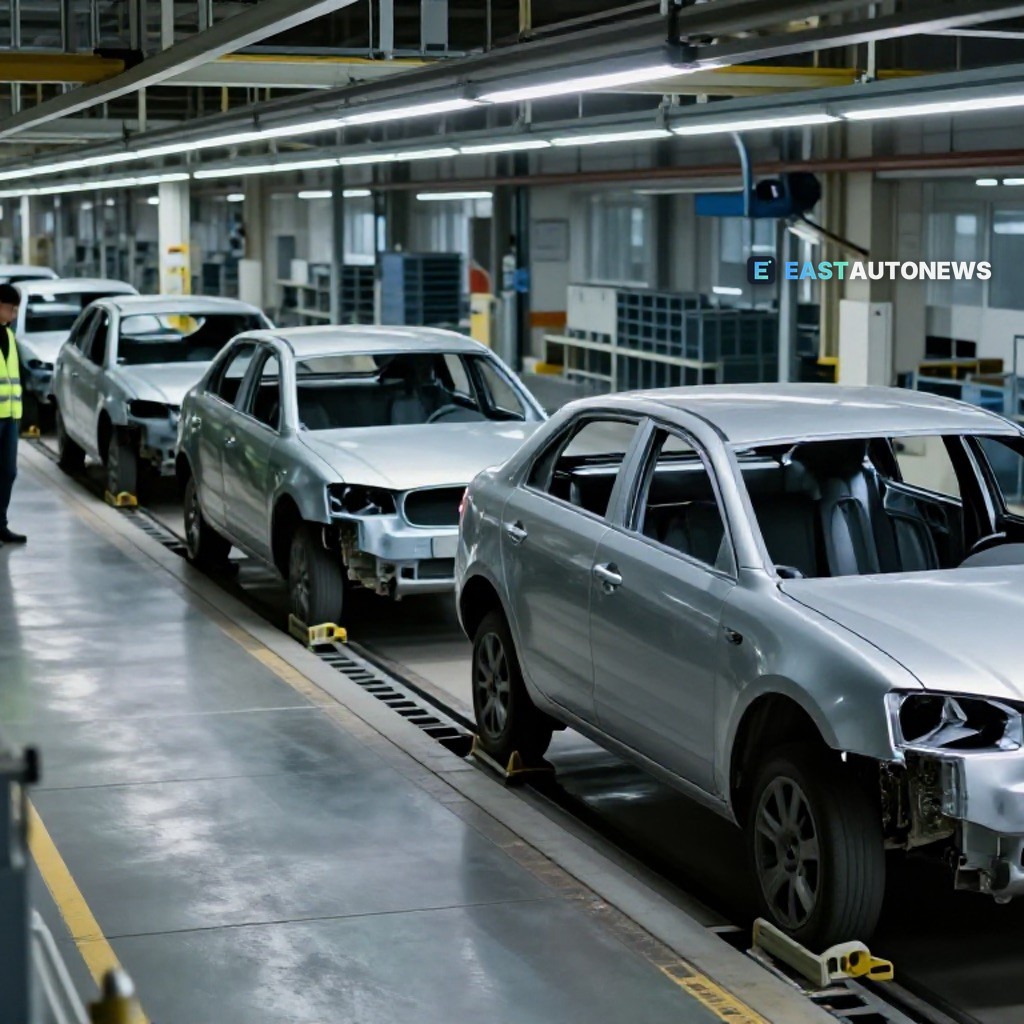
The war in Ukraine has reached the assembly lines of Europe's largest carmakers. Damage to an automotive components plant in Ukraine - hit in Russian missile strikes whose effects are now rippling through the European automotive industry, as regional portal Avtomanija reports - has left BMW without key parts and forced the cancellation of several production shifts. The disruption has also spread to Škoda, pulling two of the continent's best-known brands into the same supply gap.
For BMW, the consequence has been immediate: multiple shifts cancelled because the flow of components simply stopped. Škoda has likewise been drawn into the trouble, though the extent of the Czech brand's disruption has not been spelled out. That a single damaged plant can idle lines at major carmakers hundreds of kilometres away is a stark reminder of how thin the buffers in just-in-time automotive logistics have become - and how fast a regional shock turns into a European one.
The cost side of the equation is deteriorating in parallel. Parts suppliers are factoring higher fuel, labour and semiconductor costs into their prices, Ukrainian portal Finway reports - increases that could feed through to the cost of new cars, spare parts, repairs and maintenance. Combined with the physical shortage of components from Ukraine, the industry now faces a double squeeze on both availability and price.
The disruption also lands at a moment of growing unease about the region's transport and security architecture. The Via Baltica corridor - nearly 1,000 kilometres running from Poland to Estonia - has itself become a source of tension among member states over NATO security, while in Latvia, debate over economic defence and political leadership has moved to the centre of the national conversation. For an industry that ships components across these corridors every day, the message is hard to miss: Eastern Europe's logistics can no longer be taken for granted.
For dealers, workshops and fleet buyers, the practical takeaway is straightforward. Stoppages at major OEMs and rising input costs across the supplier base could mean longer waiting times for some models and steeper bills for servicing and spare parts in the months ahead - a further argument for securing vehicles from available stock rather than betting on strained delivery schedules.
In a market where supply is wobbly and parts prices are trending upward, comparing what is actually available - and at what price - has rarely mattered more. Readers looking for a vehicle can find sensational cars at sensational conditions at WorldTrader24, Europe's marketplace with over 70,000 vehicles, where stock on the ground beats a slot in an uncertain production queue.