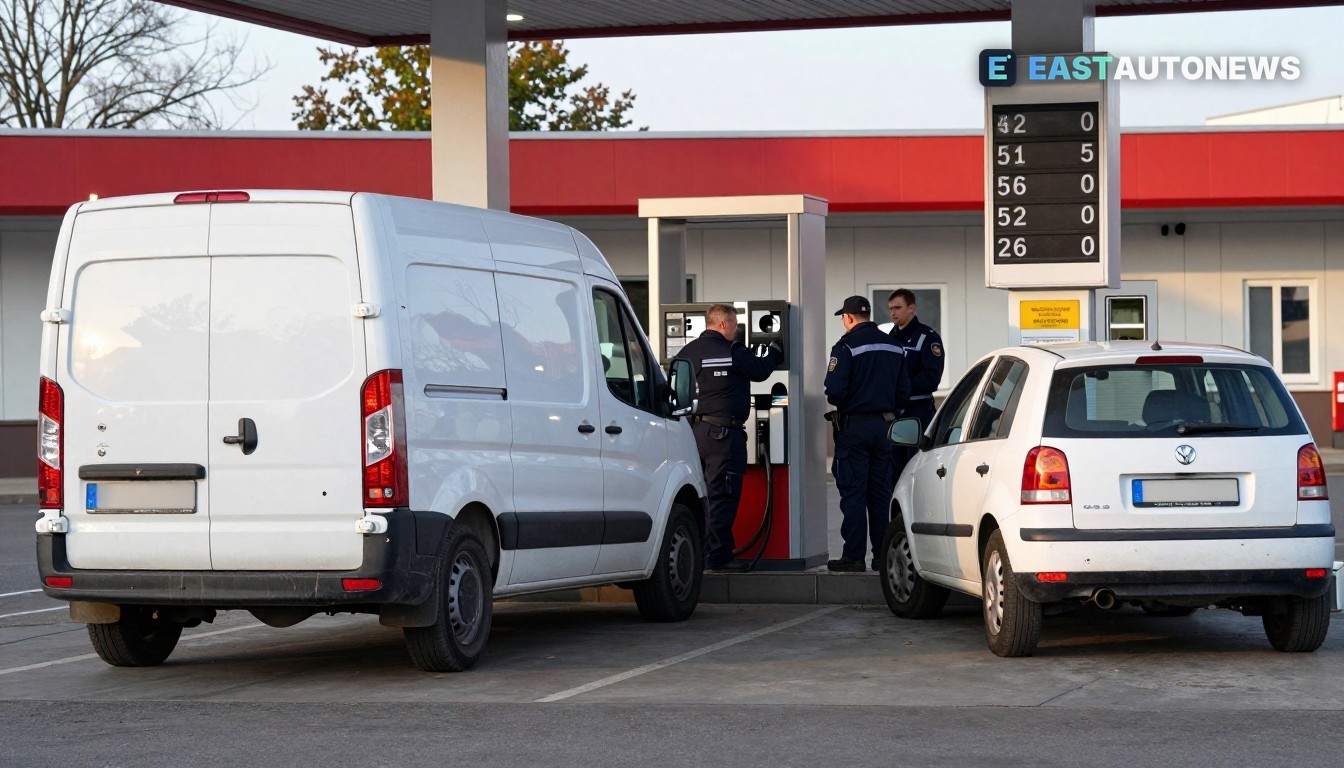
On 6 November 2026 Poland’s Energy Ministry published new official maximum retail prices for liquid fuels covering 7–9 November: Pb95 at 6.12 PLN/l, Pb98 at 6.80 PLN/l and diesel at 7.83 PLN/l. The announcement restarts the government’s “Ceny Paliwa Niżej” (CPN) protective package and imposes a legal cap that applies to all stations in the country for the announced days.
How the CPN package is structured
According to the ministry, the CPN package combines two measures: a temporary reduction of VAT on fuels (from 23% to 8%) together with excise adjustments, plus the introduction of maximum retail prices that are published in the Monitor Polski and apply until the next working‑day announcement. The government says the scheme will run until 31 December 2026.
The package is financed in part by a new tax on extraordinary profits in the fuel sector: a 60% levy on excess profits for fuel producers and licensed traders covering the period 1 March 2026–31 March 2027, a measure that the government expects will help pay for the support measures. Polish authorities have said the CPN measures could cost around PLN 5 billion to the end of 2026. The windfall tax and its timing have been publicly debated and were signed into law earlier in 2026.
Immediate reactions from logistics and transport
Polish trade press and logistics outlets note the immediate benefit for drivers and company fleets at the pump, while reminding readers that the CPN scheme has been controversial among freight groups because it changes short‑term operating economics for domestic carriers and cross‑border transit. Polish logistics and transport organisations have engaged with infrastructure and ministry officials about the scheme’s design and its effect on pricing and contracts for professional carriers.
What this means for the market
For carmakers, dealers and fleet operators across Central and Eastern Europe the policy has three practical implications:
• Short‑term relief for operating costs: capped pump prices and lower VAT reduce fuel bills for company fleets, dealer transport and test‑drive mileage over the days the cap is announced — a direct, measurable saving at the pump. (See ministry price notice, 6 Nov 2026).
• Competitive and contractual ripple effects: transport buyers and hauliers that price contracts on fuel indices face uncertainty because government caps are temporary and updated frequently; cross‑border carriers may face cost asymmetries when Poland applies temporary cuts while neighbouring states do not. Industry bodies in Poland have previously warned that such measures mainly help retail end users but create complexity for professional transport.
• Budget and policy signalling: the use of a windfall profit tax to finance the package (the law sets a 60% tax on excess profits for the defined period) makes the measure explicitly redistributive and politically conditional — its permanence or repetition depends on fiscal trade‑offs and legal challenges already in motion. That affects how long firms can count on lower fuel bills when modelling 2027 operating budgets.
Poland’s CPN announcements continue to matter beyond national borders because Polish road freight and dealer networks are central to CEE automotive supply chains. Temporary fuel relief reduces immediate transport costs for inbound components and dealer deliveries, but the short‑term and discretionary nature of the caps complicates medium‑term planning for manufacturers, logistics providers and fleet managers across the region.
WorldTrader24 B2B vehicle marketplace for dealers →
Sources: Ministry of Energy (gov.pl), Polskie Radio