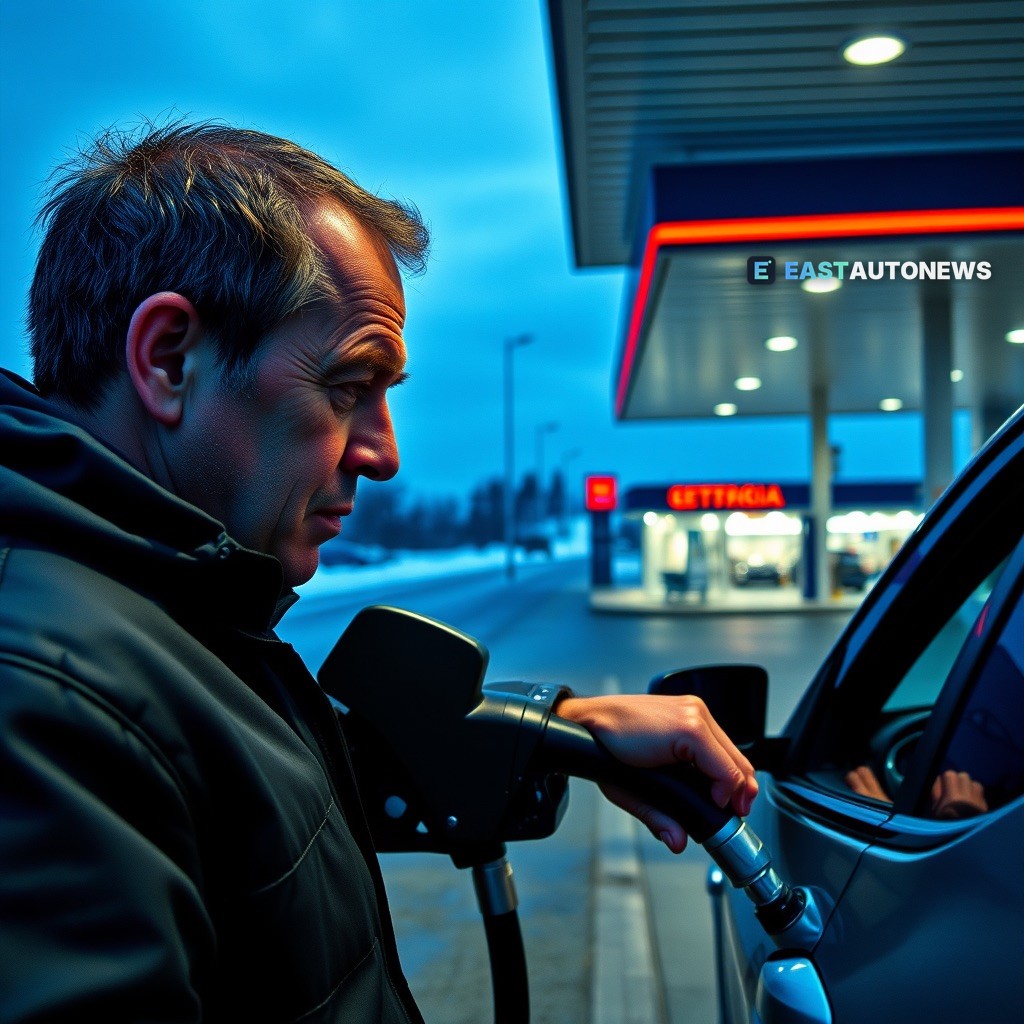
Rebellion rarely arrives with a roar in Estonia; it arrives with a signature. More than 16,000 of them, in fact. The Union of Car Owners of Estonia (Eesti Autoomanike Liit) and campaigner Simmo Saar have gathered signatures on an appeal demanding lower taxes on gasoline and diesel — a remarkable show of force in a small Baltic nation, and one that lands awkwardly in the middle of Europe's electric success story.
Because Estonia, by the numbers, is the continent's poster child. EU new car registrations climbed 5.7 percent to 8.52 million in the first nine months of 2026, September delivered the crossover the industry had long anticipated — electric cars overtaking petrol — and no market in the Union grew faster than Estonia's. Yet the fuel-tax petition reveals the friction beneath the showroom boom: even in the EU's fastest-growing market, drivers are pushing back hard against the cost of filling up.
The timing is uncomfortable for policymakers. In Brussels, lawmakers are already moving to relax the 2035 car emissions rules as the industry presses for greater flexibility, citing mounting competition from Chinese producers. In December 2025, the European Commission answered with an automotive package proposing a 90 percent reduction requirement by 2035 — a significant retreat from a full combustion phase-out. Now a grassroots movement in the Union's star performer is telling national politicians much the same thing from the other direction: the transition is testing wallets, not just technology.
Analysts have warned that regulatory deadlines alone cannot manufacture batteries, lower production costs or preserve supplier networks — that Europe can end up with a more electric market without a stronger European industry. The Estonian petition adds a third caution to that list: policy can mandate electrification, but it cannot mandate enthusiasm. Sixteen thousand signatures demanding cheaper gasoline and diesel are a reminder that combustion demand is not evaporating on schedule, even where the new-car market burns hottest.
For dealers, importers and fleet buyers across the Baltics, the signal is double-edged. Estonia's record growth suggests a market eager to refresh its vehicles; the fuel-tax revolt suggests a customer base still hedging between powertrains and increasingly vocal about running costs. With national tax pressure on one side and a softening 2035 framework on the other, the only certainty is that Estonian buyers — private and corporate alike — will keep shopping hard on price.
Whether the next vehicle in your fleet runs on electrons or on diesel, finding the right machine at the right price has never mattered more. Readers looking for a vehicle can find sensational cars at sensational conditions at WorldTrader24, Europe's marketplace with over 70,000 vehicles.