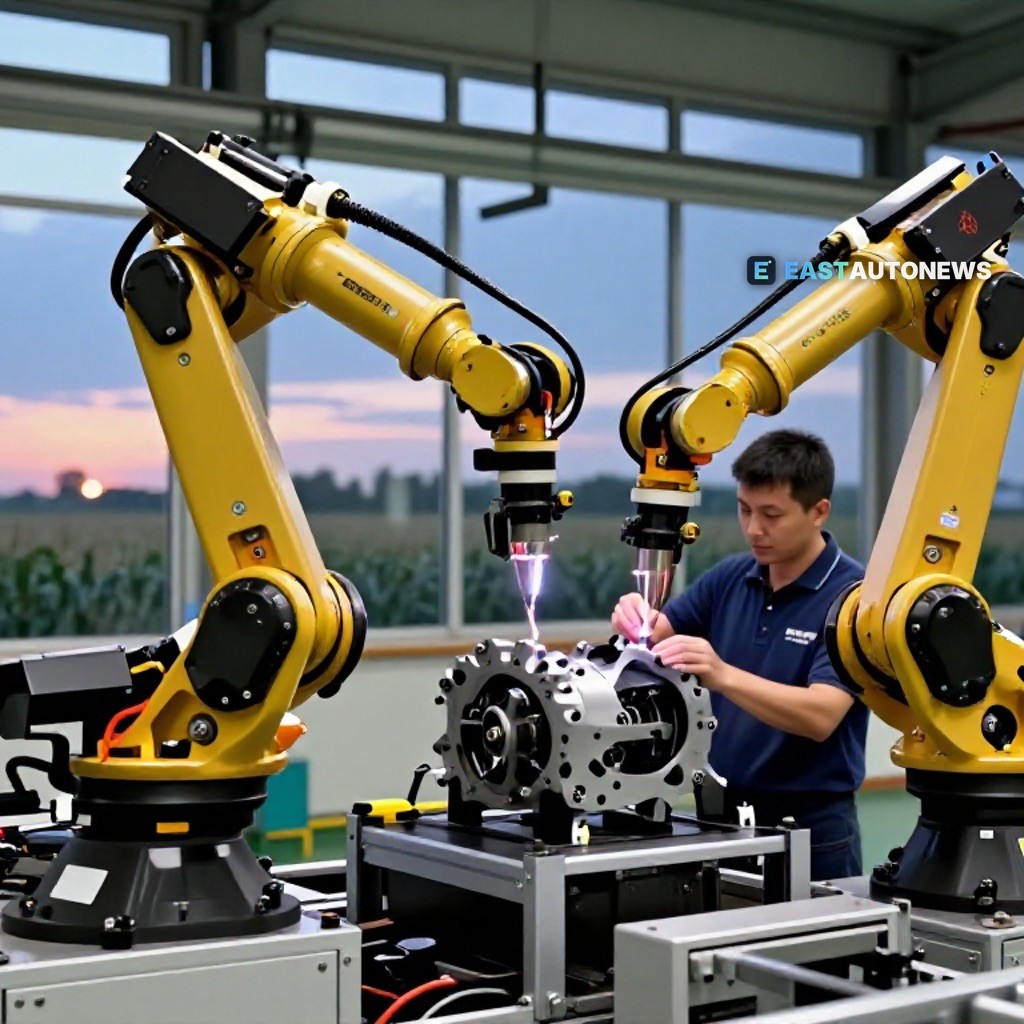
The most telling automotive story in Serbia right now is unfolding not on an assembly line, but in the supply chain beneath it. An automotive components plant there is drawing attention for a genuine level change: after raw materials such as copper and steel, and mass production such as tires, Chinese business is stepping into a high-precision link in European automotive chains. It is a quiet upgrade with loud implications - and it lands just as Brussels rewrites the rules governing who supplies Europe's car industry, and on what terms.
The timing could hardly be sharper. In early November, the European Parliament's environment committee gave initial approval to a retreat from the 2035 combustion-engine ban, scaling back the CO₂ reduction target for cars. The file now heads to the December plenary, where MEPs will be asked to endorse it and grant Parliament its mandate for interinstitutional negotiations with the Council - a process steered by a Forza Italia rapporteur. For carmakers that spent years bracing for a hard cliff edge in 2035, it amounts to a real reprieve.
The deeper shift, though, is industrial policy threaded into emissions law. The softened rules award emissions compliance credits to carmakers that use low-carbon European steel - a mechanism explicitly designed to support Europe's steel industry and stoke demand for it. It sits within a wider package meant to strengthen automotive manufacturing in the EU as it comes under attack from more agile Chinese competitors offering cheaper electrified models, alongside a Commission proposal from December 2025 to simplify technical requirements and testing procedures for motor vehicles. The signal is unmistakable: Brussels intends to define - and defend - what counts as European.
Which is precisely why Serbia deserves the industry's attention. The components plant there shows Chinese capital moving beyond commodities and commodity manufacturing into the precision tier of European supply chains - the very capability Europe's new industrial policy wants to cultivate at home. And it is happening amid political flux: the government in Belgrade may change, but business has kept looking for new markets and continues to search. Investment logic, it seems, is outlasting politics.
For suppliers, logistics operators and OEM planners across Central and Eastern Europe, the sequence to watch runs through December's plenary and the negotiations with the Council that follow. A softer CO₂ trajectory extends the life of combustion and hybrid platforms - and of the parts networks that feed them - while steel-linked compliance credits will redraw sourcing maps around what qualifies as low-carbon European material. Serbia, wired into European chains through high-precision components capacity, sits squarely on the seam where those two forces meet.
However the rulebooks in Brussels and Belgrade finally settle, the market still renders its verdict one vehicle at a time. Anyone looking for their next car will find sensational cars at sensational conditions at WorldTrader24, Europe's marketplace with over 70,000 vehicles.