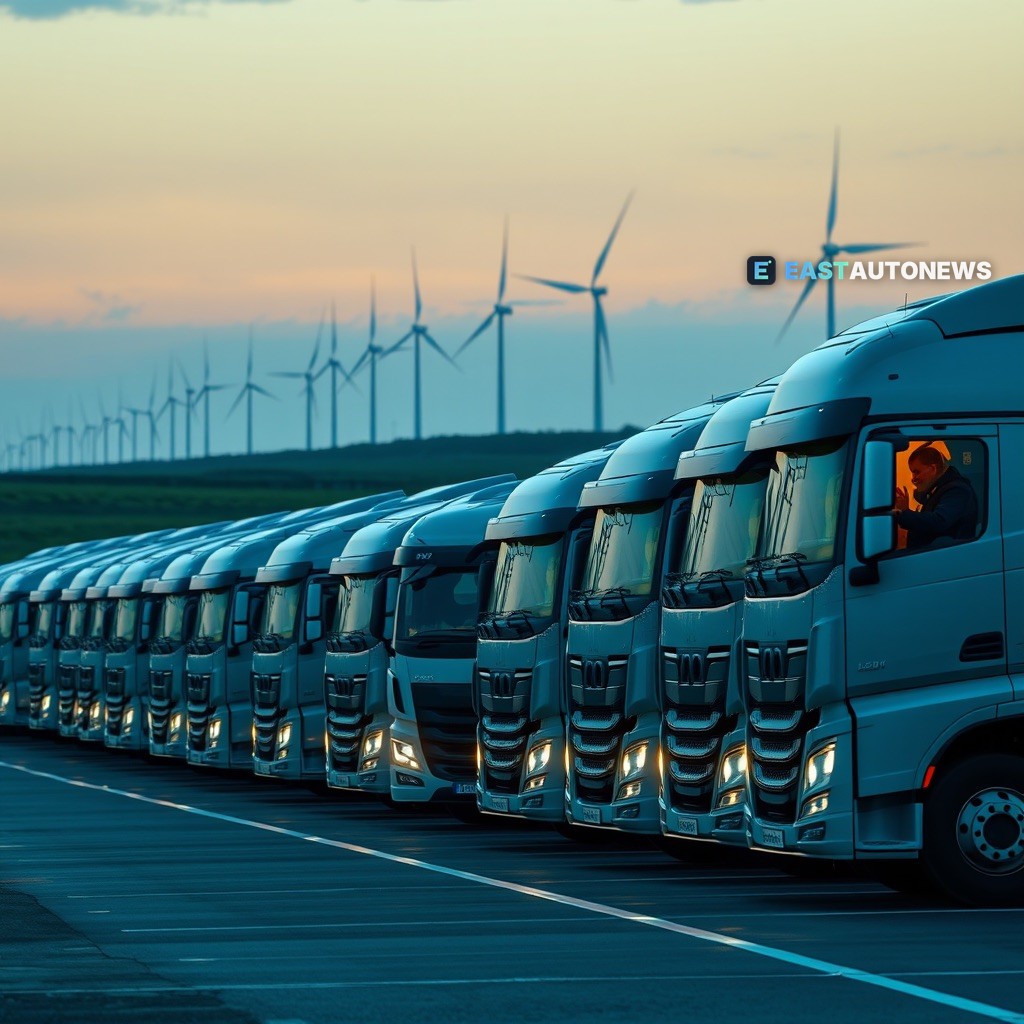
Nine months into 2026, Europe's truck market is bouncing back — and the Baltic corridor is doing much of the pulling. While Britain is being left behind, industry data tracked by trans.info shows the fastest-growing major markets posting registrations up 19.5%, with Poland driving the recovery. Lithuania, however, has recorded even stronger growth, quietly outpacing the region's heavyweight and emerging as one of the continent's most dynamic freight markets.
The numbers matter far beyond the dealership forecourt. New truck registrations are the clearest proxy for fleet confidence, and in Lithuania that confidence is running hotter than almost anywhere in the EU. The surge lands at a delicate moment for policy: analysts argue the European Union's real choice is narrower than the political debate suggests. Brussels must maintain credible decarbonisation while allowing commercially justified technological sequencing — a balancing act that will determine whether today's diesel-era boom hands over smoothly to electrified freight or stalls on the runway.
There is also a warning label attached to the protectionism now fashionable in Brussels. As China's battery and EV sector grows at speed, critics caution that European policies meant to protect the auto industry could end up weakening the continent's competitiveness in electric vehicles. For a market like Lithuania, whose hauliers face the same electrification curve as everyone else, the risk is that defensive rules raise costs today without building the industrial muscle needed tomorrow.