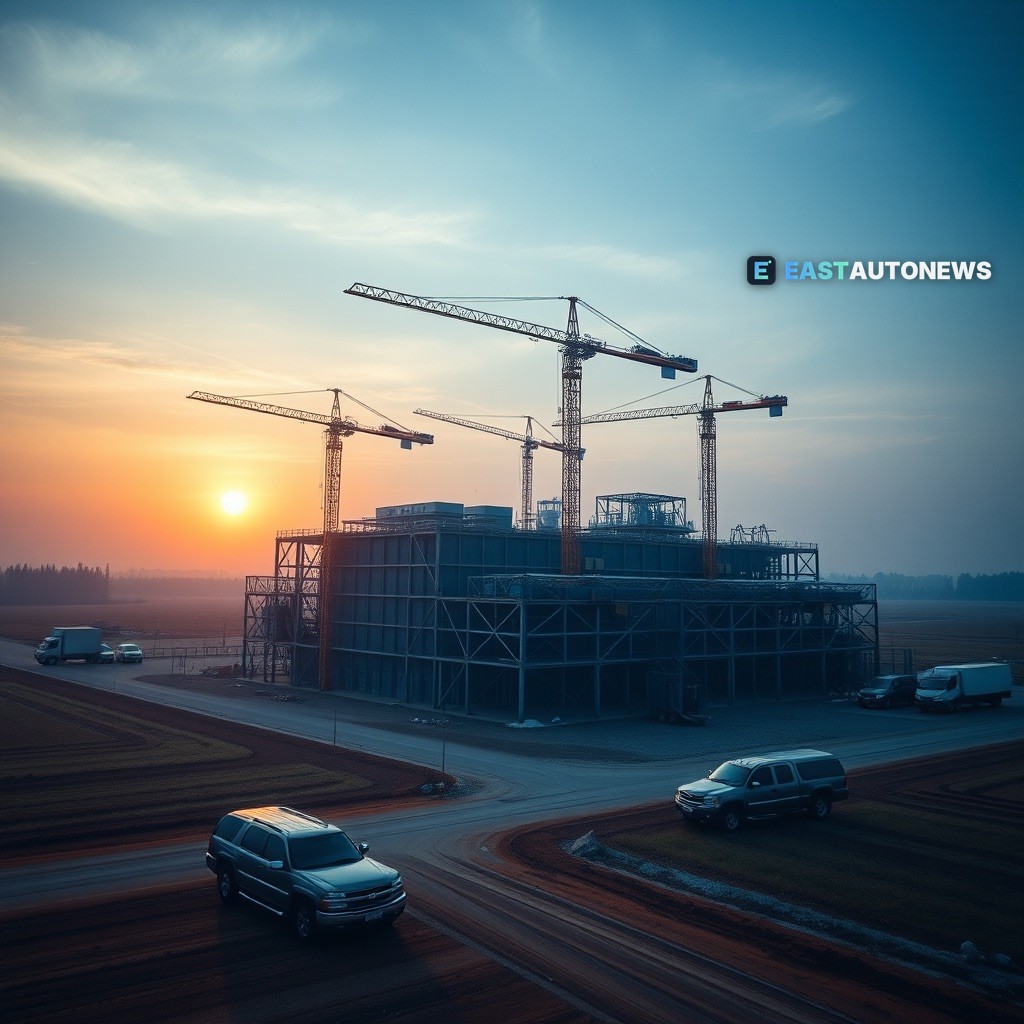
Audi is investing $4 billion in a new assembly plant in Georgia, a commitment that Automotive News reads as a statement of intent from VW Group: the company is determined to reverse its fortunes in the United States. The bet is aimed squarely at offsetting a slump in China and growing competition across Europe, the two markets that have long carried the group's volumes. For one of Europe's biggest industrial groups, four billion dollars of American manufacturing capacity amounts to a hedge on its home continent.
The investment arrives as Europe's own industrial map is being redrawn. According to the McKinsey Global Institute, Poland and Romania are building new productive capacity faster than the rest of Europe, while German investment has all but stopped - a divergence EastAutoNews has tracked in recent weeks. Taken together, the signals are hard to miss: growth capital is heading either across the Atlantic or into Europe's eastern manufacturing belt, not into the German plants that once absorbed it.
The 'Made in Europe' push led by Germany and France adds a further layer of pressure - one that persists even after the compromise that opened the EU's supply plan to non-EU suppliers, as EastAutoNews reported. Under the subsidy criteria, cars imported from Japan would not qualify for EU subsidies, while models built in France, Portugal and Eastern Europe would benefit only if enough of their parts come from Europe, DW reports. Global suppliers warn the approach raises costs and competitiveness concerns, and it makes European parts content the decisive test for tapping EU incentives.
Chinese manufacturers, for their part, are localising on their own terms. A Chinese company is preparing to produce a compact SUV in Bulgaria, and Beijing stated officially in December 2025 that 'Bulgaria is becoming a pivot for Chinese automakers in Europe.' With Bulgaria an EU and NATO member and a relatively small economy, analysts warn the trend could open an internal divide within the bloc over how to treat Chinese-owned production on European soil.
For the region's dealers and fleet buyers, the upshot is a market in motion: where a vehicle is assembled - and how much of it is European - will increasingly shape subsidies, pricing and residual values. Traders recalibrating their stock can benchmark availability and prices across the continent on WorldTrader24.de, the European marketplace listing more than 70,000 vehicles, before committing to new orders.
In a market where assembly sites, subsidy rules and price points are all shifting at once, comparing offers before buying has rarely mattered more. Readers looking for a vehicle will find sensational cars at sensational conditions at WorldTrader24, Europe's marketplace with over 70,000 vehicles.