Romanian searchers asking what "fabrica de masini chinezesti in ungaria" means should read it as "Chinese car factory in Hungary" — and the clearest answer is BYD’s Szeged passenger‑car site. BYD has already begun on‑site trial activity earlier in 2026 and, as of local reporting on 20 November 2026, the company says BYD Auto Hungary employs 900 Hungarian nationals and has opened a Szeged recruitment office to hire roughly 600 additional staffers.
Szeged updates
Local and project trackers show a phased commissioning plan rather than a single start date. City and authority documents reviewed by project‑watchers set five staged trial and commissioning phases: welding, press and paint trial runs are scheduled from late November 2026 into January 2027, further modules including parts halls, battery storage and hybrid assembly are pencilled in for 2027, and the administrative deadline for full commissioning is 28 February 2028. The permit file also records an authorised maximum capacity of 300,000 cars a year (280,000 BEVs and 20,000 hybrids).
BYD has run limited trial production earlier in 2026; outside analysis cites trial activity beginning in January–February 2026 and company statements that aim for series assembly in the fourth quarter of 2026, even as the official, staged permit schedule extends ramp phases into 2027–2028.
What this means for the market
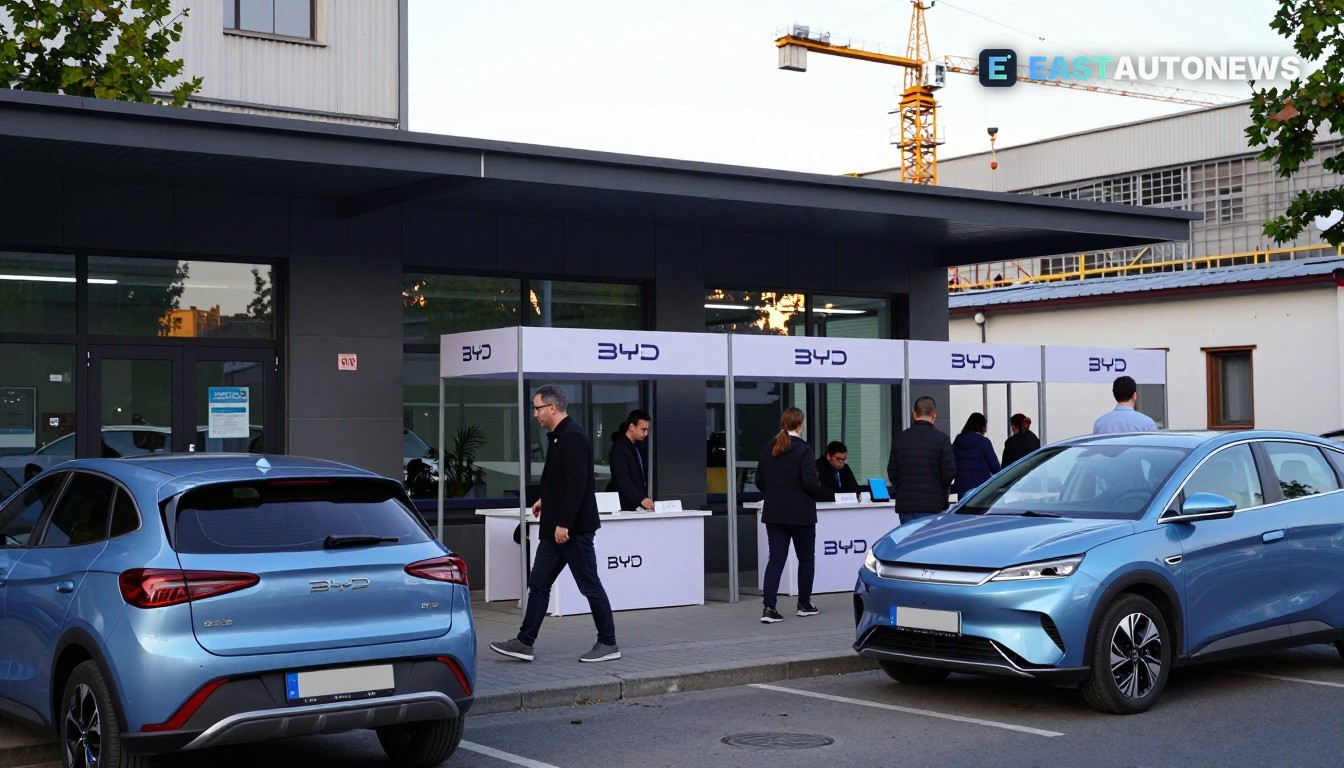
For Romanian consumers wondering whether a Chinese car factory exists in Hungary, the practical answer is yes: BYD’s Szeged site is the continent‑targeted assembly plant. The recruitment push this month — a public hiring point in Szeged and nearby towns — underlines that BYD is moving from construction into local workforce onboarding ahead of wider ramp‑up. Local hiring of 900 nationals and plans to add roughly 600 more signal that the plant will be staffed primarily from the surrounding region.
Strategically, the Szeged plant is central to BYD’s Europe expansion: it will localise final assembly to avoid tariffs and shorten logistics for EU markets, while official papers and analysts warn the project’s value capture in Hungary will depend on how much local supplier content and R&D presence follow the initial assembly lines. Delays and a phased permit timetable mean ramp speed and the date when significant export volumes flow from Szeged remain uncertain.
For readers in Romania searching in Romanian: if you see queries for "fabrica de masini chinezesti in ungaria", the timely, verifiable answer is that BYD’s Szeged factory is the Chinese car assembly operation in Hungary — active in trials since early 2026, hiring locally as of 20 November 2026, and moving through a staged commissioning schedule that stretches into 2027–2028.
Electric car listings on WorldTrader24 →
Sources: Telex, Miépülitt, Budapest Macro Desk