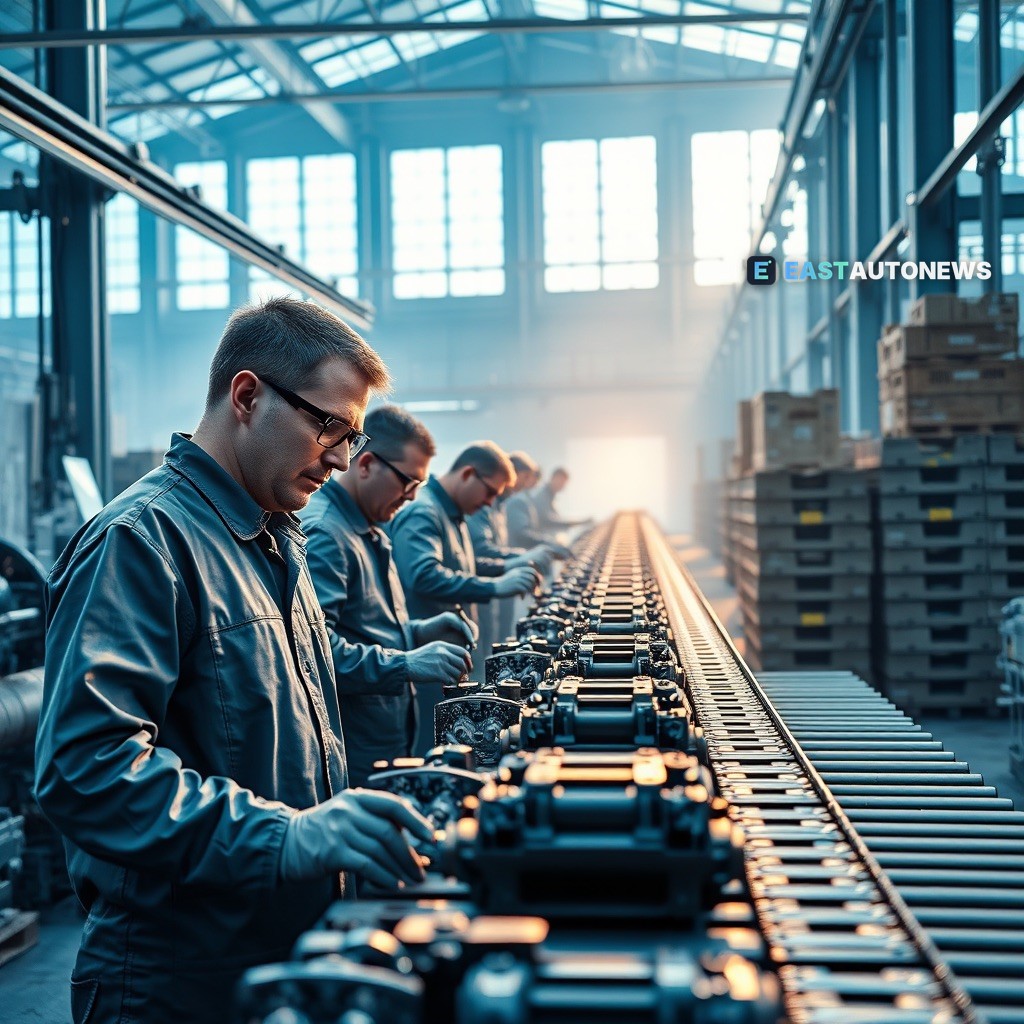
Latvia has never pretended to rival the automotive powerhouses of Central Europe, but its factories are quietly shifting into a higher gear. Calendar-adjusted data at constant prices published by the Central Statistical Bureau show industrial production output in Latvia rose 2.6% in September 2026 compared with the same month a year earlier — steady rather than spectacular, yet unmistakably forward motion for a small economy whose industrial fortunes are tied to the rhythm of the wider continent.
The timing could hardly be more fortunate. According to S&P Global's Europe Sector PMI, Europe's automotive and auto parts sector posted its fastest output growth since June 2021 in October — the strongest performance in more than five years. For Latvian manufacturers whose order books track the continent's industrial cycle, a demand pulse of that size from the EU's automotive core is precisely the kind of tailwind that turns modest growth into genuine momentum.
Nor is the energy confined to the Baltics. Investment trackers such as SeeNews report a steady drumbeat of capacity expansion across Southeast Europe and the Balkans, where companies are pouring money into new production facilities and infrastructure to scale output. The map of European vehicle manufacturing is being redrawn eastward and southward — and Latvia's September reading suggests the country intends to hold its place on that map rather than watch from the sidelines.