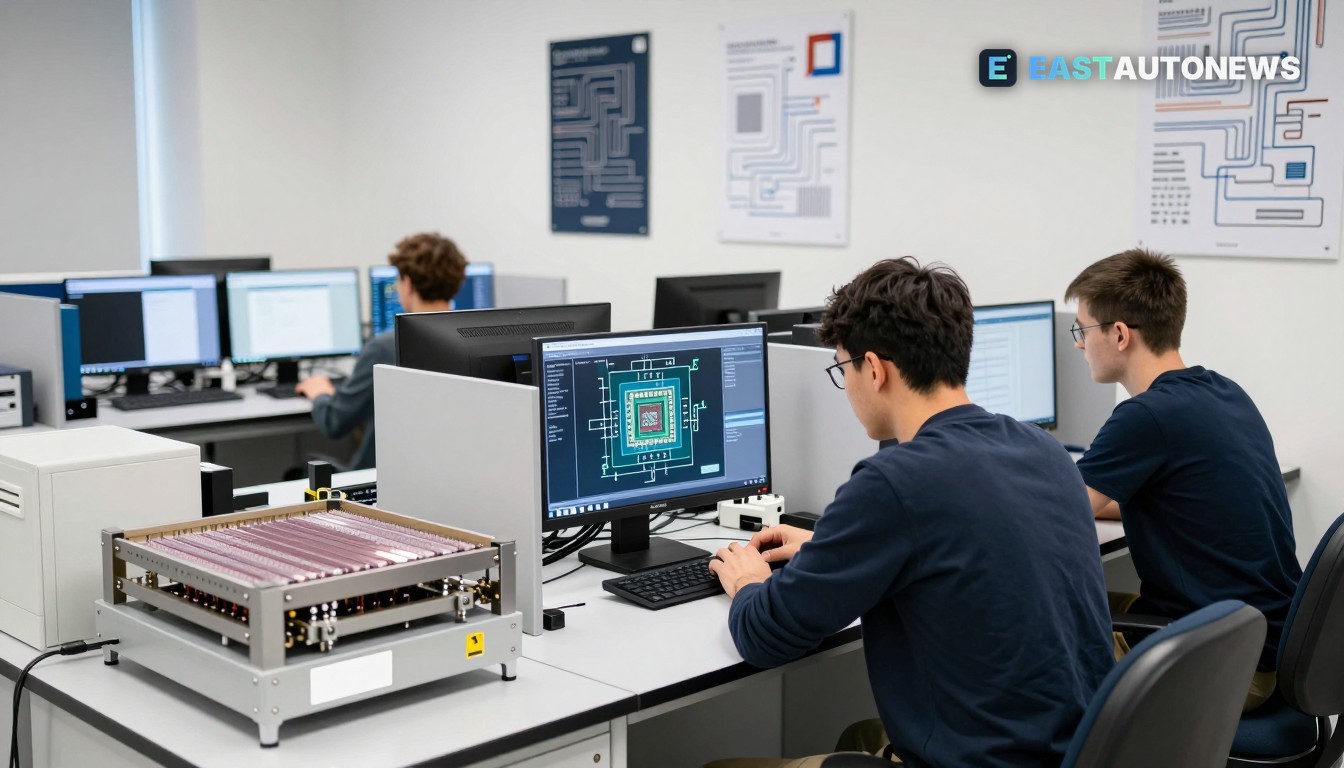
Brussels on 4 November 2026 unveiled a new effort to rebuild Europe’s chip‑design ecosystem: the European Chips Design Platform (EuroCDP), a cloud‑based service intended to help startups and SMEs design, prototype and take chips to market. The Commission said the initiative will mobilise €525 million in investment, of which €440 million will be distributed as grants and €85 million will fund the platform infrastructure, support services and open‑source tools.
What the platform offers
The EuroCDP is run by an imec‑led consortium and gives users access to electronic design automation (EDA) software, pre‑built IP blocks, design support, rapid prototyping and routes to manufacturing capacity — services that are typically costly and hard for early‑stage chip teams to reach. Synopsys has agreed to make its EDA tools available through the platform, a move the company said will broaden access for European semiconductor startups and medium‑sized firms.
Funding lines were published with the platform launch: the first EuroCDP grant call runs from 4 November 2026 to 12 January 2027 with an indicative budget of €50 million. The Commission structured support into levels: Level 1 offers up to €100,000 for very early projects, while Level 2 can provide up to €8 million in EU funding (combinable with national co‑funding to reach grants of up to €16 million). The platform’s public‑fund component is sourced from both the EU budget and participating member states.
Why it matters to automotive
European officials framed the move as a strategic response to an industry booming on AI demand. “We know that Europe can’t strengthen our position in the global semiconductor industry if we don’t succeed in chip design,” Henna Virkkunen, the Commission’s executive vice‑president for tech sovereignty, said at the launch. Policymakers say stronger local design capacity will help generate demand for manufacturing and secure a fuller on‑shore semiconductor value chain.
That matters to Central and Eastern Europe because the region hosts a large share of Europe’s vehicle assembly and a dense supplier network. The carmakers and Tier‑1 suppliers clustered in Czechia, Slovakia, Hungary, Poland and Romania are already absorbing growing volumes of semiconductors for electrification, connectivity and advanced driver assistance systems (ADAS). Strengthening Europe’s chip‑design pipeline aims to shrink lead times, lower costs and reduce exposure to non‑EU supply shocks that in recent years have interrupted production in the CEE auto heartland.
What this means for the market
For OEMs and suppliers in CEE, EuroCDP is not a short‑term fix but a structural step. In practical terms: it should widen the pool of locally available IP and turn prototypes into manufacturable chips faster — an outcome that could ease procurement for vehicle controllers, ADAS accelerators and in‑car AI processors over the medium term. Suppliers that can mount successful grant bids may gain a commercial edge by owning more of their hardware stacks rather than buying finished chips on tight global markets.
That said, the platform’s impact will depend on how quickly design startups scale and whether pilot designs can be translated into European manufacturing runs. The Commission’s launch is the start of a multi‑year push; the first grant window (4 Nov 2026–12 Jan 2027) will be watched closely by Tier‑1 electronics firms and the region’s automotive R&D centres.
Available vehicles on WorldTrader24 →
Sources: Reuters, Synopsys, ChipNL, Bits&Chips, ResearchGate (GVCs in Central Europe)