This autumn, two very different dramas are unfolding on Europe's trade map. In Ukraine, Russian air strikes are choking the economy at its export roots: steel production has shut down, grain shipments have stalled, and — according to maritime data and analytics firm Lloyd's List Intelligence — Black Sea trade has collapsed under attacks on ports, vessels and logistics infrastructure. Meanwhile, China is pushing vehicles onto ships bound for foreign markets at a pace that is reshaping the continent's logistics calculus.
The scale of China's export machine is remarkable. In the first nine months of 2026, Chinese vehicle exports jumped 65.8% year on year to 8.205 million units — even as calculated domestic sales slumped 22.4%. The message to the industry is unambiguous: with the home market shrinking by more than a fifth, foreign markets are no longer a bonus, they are the business case. Europe is already receiving more of those vehicles, and the flow is pressing into ports, inland networks and dealer channels across the continent.
For Ukraine, the timing is brutal. A country whose economy rests on rich farmland, a well-developed industrial base and a highly trained workforce earns its keep by selling abroad — steel, grain, and everything that moves through its ports. Reporting this month details how Russia's air war deliberately targets exactly those chokepoints: the factories, the logistics networks, the harbours needed for exports. When the arteries close, the economy suffocates.
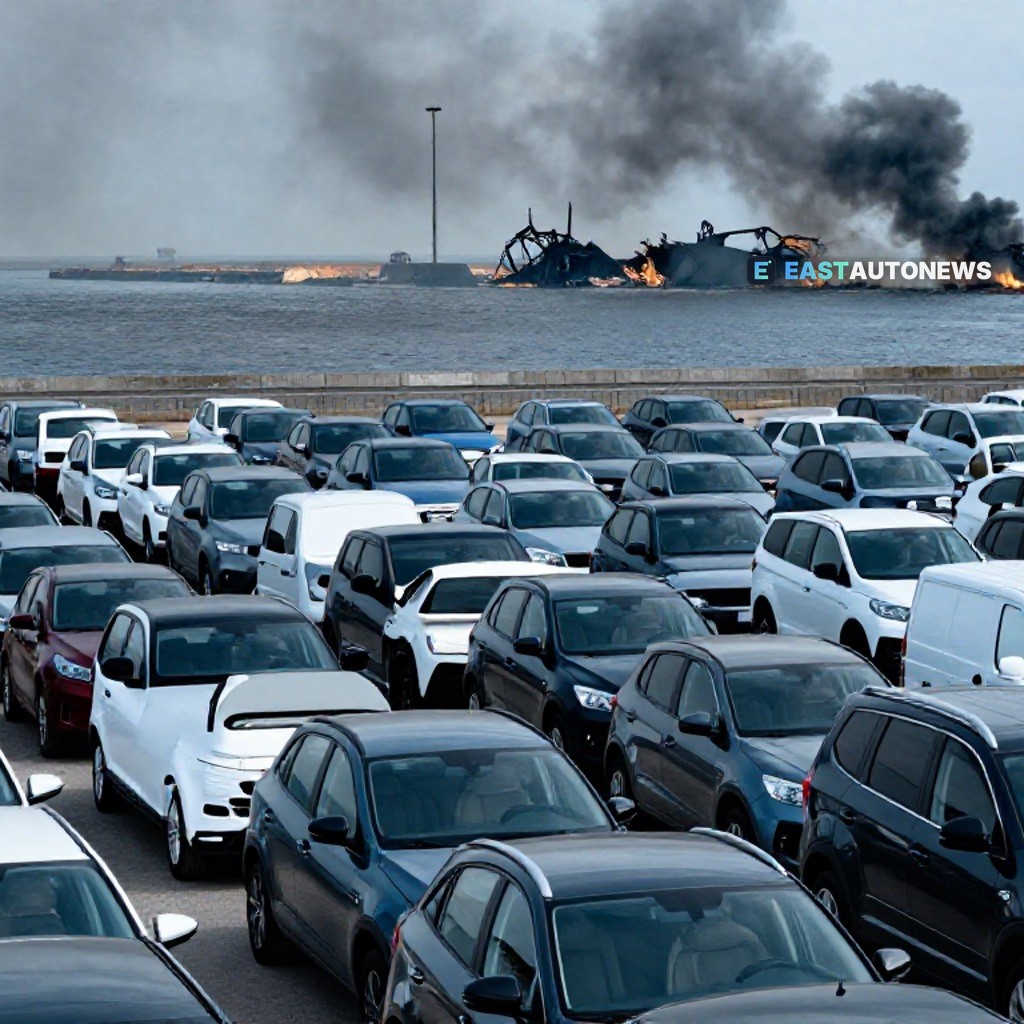
For the automotive and logistics sectors in Central and Eastern Europe, these are not two stories but one. Record import volumes from China are arriving in a European logistics system in which a major node — Ukraine's Black Sea gateway — is effectively offline. Importers, hauliers and port operators are navigating abundance on one side and fragility on the other: more vehicles, fewer stable corridors, and a regional map being redrawn in real time.
The commercial takeaway for the B2B world is stark: resilience has become a product in its own right. Whoever can guarantee dependable delivery capacity into Eastern Europe amid contested infrastructure holds a genuine competitive edge. And when Ukraine's corridors eventually reopen, the pent-up trade of an export-built economy will make them some of the most contested logistics real estate on the continent.
Whatever the macro-currents, one thing hasn't changed: buyers and businesses still need vehicles, and finding the right one at the right price matters even more when supply lines wobble. Those searching right now can find sensational cars at sensational conditions at WorldTrader24, Europe's marketplace with over 70,000 vehicles.