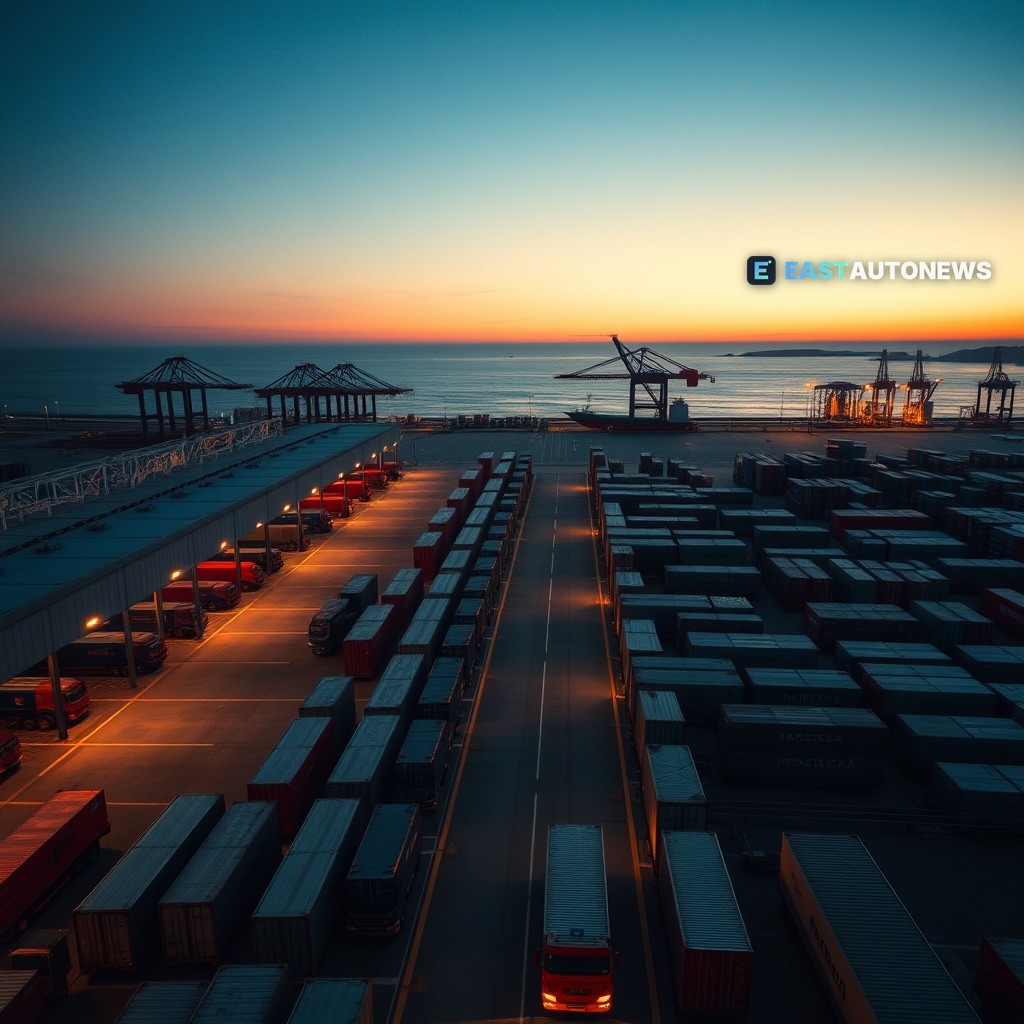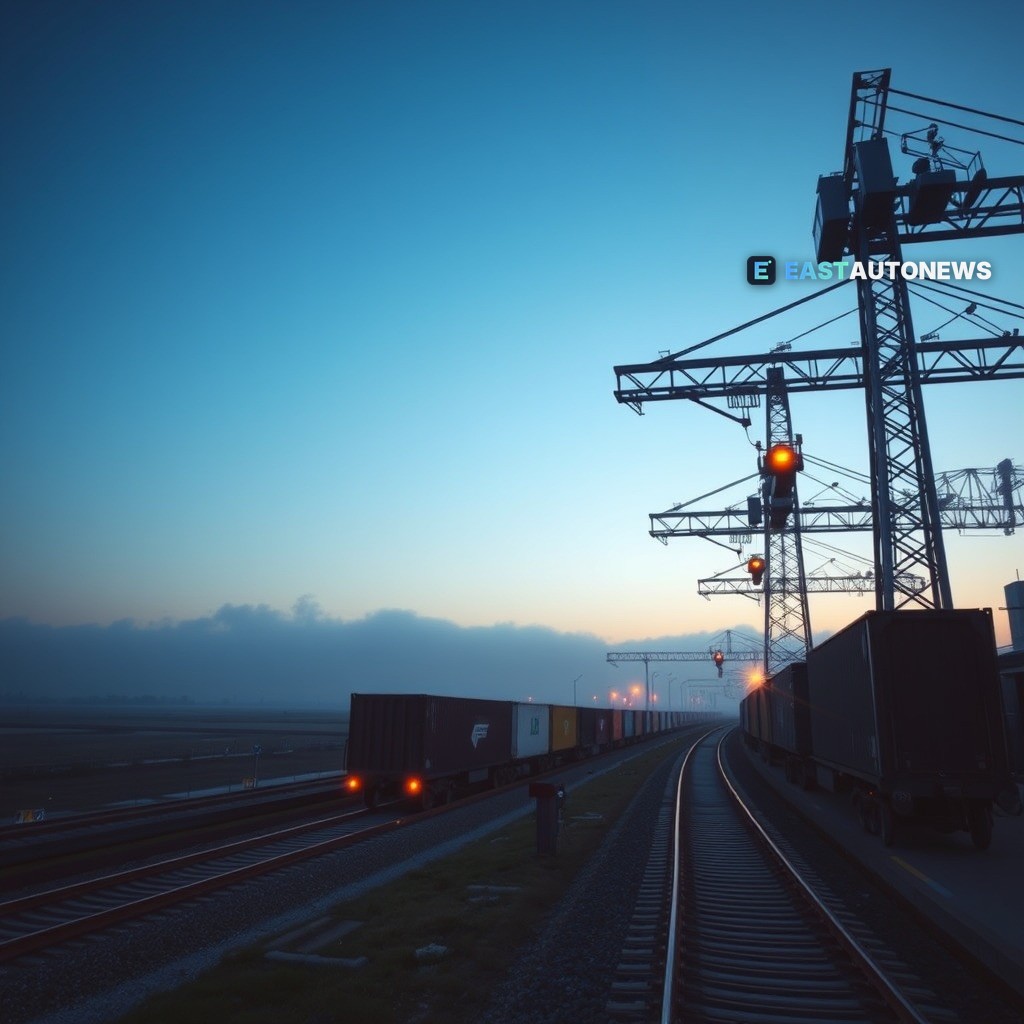
The most consequential arrival in Hungarian logistics this season did not come by ship. It came by rail: CMA CGM's first container train has pulled into the East-West Gate (EWG) intermodal terminal in Fényeslitke, marking a new development in the facility's growing role in international container logistics. For a country better known for engine plants than freight gateways, the French carrier's arrival is a statement of intent.
Hungary is, on paper, a middleweight: a high-income mixed economy generating roughly $265 billion in annual output, ranking 53rd among the 188 economies measured by the IMF. Yet its position makes it a natural crossroads, and the CMA CGM connection strengthens the EWG terminal's claim to a place on international container routes. Every additional rail link turns Hungary from a pass-through country into a freight destination in its own right.
The rail story dovetails with an even bigger industrial one. A census completed on 25 October 2026 counted 334 automotive companies operating in Hungary, spanning major manufacturers and the supplier clusters around its industrial cities. Into this dense ecosystem, China's automakers are digging deeper into Europe — an expansion that marks a new phase in the country's global automotive ambitions and a live test of whether its advantages in cost, scale and electric-vehicle technology can be replicated overseas.
The flagship of that push is BYD's car plant in Szeged, where assembly is now due in the fourth quarter of 2026 — a full year later than originally planned. The delay underlines how hard it is to transplant manufacturing onto European soil. And for buyers outside Europe, nothing changes soon: lead times and prices for China-built BYD cars depend on the export company, the version and the shipping route, not on Szeged.
Seen together, the Fényeslitke terminal and the Szeged assembly lines sketch Hungary's wager: that the country can be both the door and the factory floor for East-West trade. For a $265 billion economy, that is an outsized role in global logistics — one that now has a French container train, and a Chinese car plant, to prove it.
For all the strategic maneuvering, most vehicles on Europe's roads will still change hands through established trade channels rather than new plants or rail terminals. Buyers looking for their next car can find sensational vehicles at sensational conditions at WorldTrader24, Europe's marketplace with more than 70,000 vehicles on offer.